
Translated material
Mikhail Gorbachev: Assessment of achievements
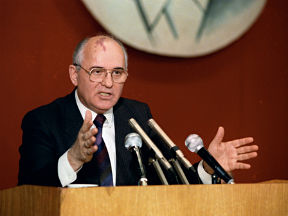
In the second half of the 1980s, during perestroika, every year was more radical for Gorbachev than prediciting. He still spoke, in addition to perestroika, about the support of the “socialist idea”, but it was a tribute to the rhetorical tradition (which, however, was not except for conceptual innovations), and only very superficial observers could take it seriously. In the deed of the Comforter from the Communist reformer, he turned into a socialist-democratic sense-this was a qualitative change. When they say that he eventually received not what he was striving for in 1985, this is superficial inappropriate criticism. On the contrary, one of the strongest features of Gorbachev was a breadth view, thanks to which he managed to form a more complete concept of political priorities and understand that if it is implemented with properness, it will be able to work in a country where there was an authoritarianism for a long time - first the royal, then Soviet.
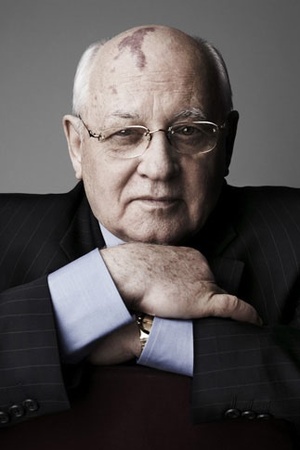
Mikhail Sergeevich Gorbachev
The radicalization of Gorbachev’s views is explained by the action of political resistance and bureaucratic influences, which even the most moderate reforms faced. In addition, this was facilitated by a stream of fresh ideas both in the circle of his advisers and in the whole. This in itself was a reaction to publicity and openness that he was striving for.
The liberalization of the system (especially in 1986-1987) and its partial democratization (especially in 1988-1989) led to the fact that all previously suppressed problems and were dissatisfied with the surface of Soviet political life. The political summons was strongly overloaded. There were failures. The most noticeable of them was economic reform. The beginning was laid, but later years of restructuring, the economy was in a state of uncertainty: it was no longer a team, but an effective market economy was still unformed. The Communists managed the Soviet Union for so long that the transition of the cover was more difficult than in any other communist state-owned Europe or in China. Moreover, when in 1990. The transition of the cover began, it did not comply with the elementary standards of social justice. This also explains Gorbachev’s reluctance to proceed to decisive action, even after he realized the principle of functioning of the market economy (it happened in 1990-1991).
Another failure was an attempt to cross the pseudo -Federal system to this federal education in a need for a needed basis.
Prioritamigorbachev was a political reform aimed at liberalizing the country's resettlement, and building new grounds for foreign policy.
Gorbachev’s political priest did not attach much importance to the relations between nationalities of the Ires, the Soviet Union, until they themselves declared themselves. Know -Blagodari of his political reform, which allowed people to express way to express, without fear of arrests and prison conclusions, and to take a distance to new deputies who intended to achieve sovereignty for the republics - this problem has come to the surface. In the external Political Gorbachev, he was an opponent of armed intervention, so the Soviet -block countries gained independence peacefully. As a result, in the most dissatisfied Soviet republics, especially in the Baltic states, she also became stronger for independence. Their residents began to think that their countries would be able to become independent and abandon communism.
It would be unlawful to Gorbachev for not solving national problems and did not achieve a transition to the Federation on voluntary grounds (this was the goal of an optional union agreement that he proposed). In the party apparatus, it is unable to among the "security forces"-the army and the military-industrial complex, the KGB of the Inovemance of the Internal Affairs-there were fierce opponents of the department of any part of the Soviet Union, especially after the "loss" of Eastern Europe. If you need confirmation, then the fact that among the main instigators of the overthrow of the Yagorbachev was the vice-president, Prime Minister, the chairman of the KGB, the mini-grid and the head of the military industry seemed to be sufficient evidence that Gorbachev took up the unfulfilled task, trying to converting the contradiction between the desire of some subject-murals of the USSR to the most Influence Soviet instances to maintain the integrity of the state. Perhaps Gorbachev would even have a part to make the impossible, convincing the majority of Soviet resources to join the “updated union”, as he called him, if he had not staged by Yeltsin, who began to demand the “independence” of Russia from the Union, although the Russians in that state were the dominant side.

Mikhail Gorbachev was born in a peasant family in the village of Povyolnoye (Stavropol Territory, USSR) on March 2, 1931. In this photo, he with his grandfather Pantelee and grandmother Vasilisa
These failures as such, in my opinion, look insignificant against the background of 12 of the most important achievements of Gorbachev. Of course, other people also made efforts to this, but in the strict -Gerarchical Soviet system they would not be able to do anything if in 1985, after the death of the Kontinin Chernenko, Nyarbachev was elected the leader of the Communist Party of the USSR. From the memoirs and interviews, we know that other members of Politburocernenko were shocked by how radically changed the course of internal and foreign policy on the initiative of Gorbachev. The new general secretary all the time had to use all his power and personal qualities, so that the Politburo and other eliminates collaborate with him.
The list below, claims to be completed (there were other changes for the better), but it was these 12 pubs that made it possible to radically break with the Soviet past; Russia and all the testors owe this, first of all, to Gorbachev.
- The introduction of publicity and a gradual transition from it to freedom of speech and printing.
- The liberation and return of dissidents from prisons and exile, as well as the resumption of rehabilitation of those who were unfairly subjected to repression in the past.
- Freedom of conscience: the persecution of the church ceased.
- Freedom of cross -border communication; Including then foreign broadcasts stopped jamming, there was an opportunity for a more detailed exchange of information, and it became easier to ride abroad.
- The introduction of competitive elections of the legislative power, which began to gain these powers (the decision was made in 1988 and was carried out in 1989; it became a milestone, which noted the transition from liberalization to democratization).
- The development of civil society: various independent organizations and influential groups appeared, which were the result of perestroika, and not its harbingers, as some observers believe.
- The tendency to the widespread establishment of law and order: in particular, the legislation began to extend to the Communist Party, and the supreme power passed from the party to state institutions (in the last two years of the existence of the USSR, the Politburo was no longer de facto chief state authority, but rather an advisory body, whose members were increasingly expressed against Gorbachev).
- The replacement of Leninism and dogmatism is committed to pluralism and free intellectual research (Gorbachev still respected Lenin, but already moved away from the principles of Leninism).
- The cessation of Soviet armed intervention in Afghanistan: the last Soviet soldier left the country in early 1989
- The Eastern European countries participating in the Warsaw Treaty allowed us to become independent and move away from communism on a peaceful basis (the exception was Romania, where Gorbachev’s influence was weak, and the Romanians shot at the Romanians).
- Negotiations and an agreement with Helmut Kole on a peaceful reunion of Germany.
- The reinforcement of these three most important foreign policy transformations was the fundamental change of perspective - the so -called “new thinking”, which Gorbachev promoted in every possible way. He refused to represent the relationship between the East and the West in the form of a game with a zero sum and supported the idea that there were universal values and universal interests. Thanks to this, by 1988 he destroyed the ideological foundations of the Cold War. In 1989, when this new thinking manifested itself in Gorbachev’s activities, the Cold War really ceased.
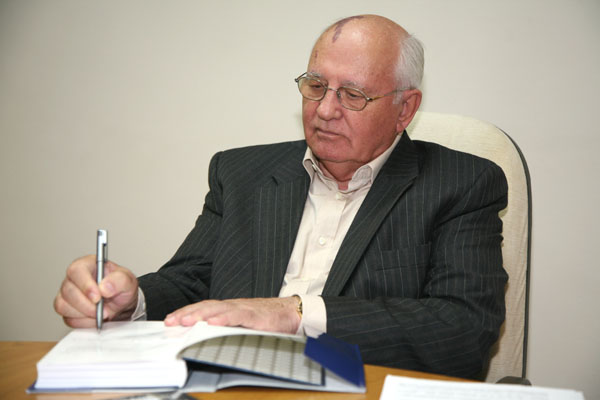
Mikhail Gorbachev in the office at Gorbachev-Fund, one of the first independent brain centers of modern Russia
Having reached the eighty years of reflecting on his political life, Gorbachev has every reason to be proud that he left Russia with a more free country than it has ever been, that he had stopped the Cold War with his decisive actions, thanks to which he had the opportunity to develop more peaceful and fair-fingers-fingers.
And how these capabilities used these capabilities to his native country, as well as in other countries where they mistakenly believe that their military power, and not the pragmatism of Gorbachev, put an end to the scholars and eliminated the threat of a catastrophic nuclear war is already a completely maneuver issue.
Archie Brown (Archie Brown ) - Honored Professor Politology at Oxford University.