
Translated material
Reboot the classics
On the "golden mask" - opera without crinolines
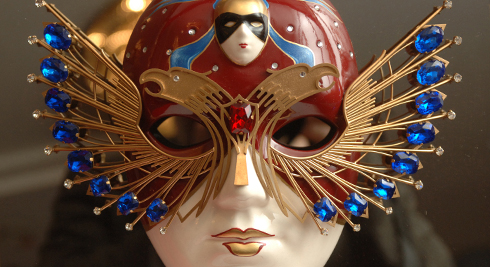
Opera, and nothing more. The Golden Mask festival brings the St. Petersburg Jews to Moscow. The peculiarity of the current season is to replace the heavy "costume" productions of modern solutions
In the Opera contest "Golden Mask" - twelve performances. Almost concert “LoEngrin” from Chelyabinsk (according to rumors, made for seven thousand rubles and differing - in the absence of scenery - an elegant light solution). The massive “run” of the Pokrovsky Musical Musical Theater is the first production of the operator of the composer Nikolai Sidelnikov, who in the Soviet years refused to reduce the five -hour score and did not live to the premiere. The “Socrates of the Socrates” of the Stanislavsky and Nemirovich-Danchenko Theater, where two one-act operas of Eric Sati and Darius Miyo are connected: the history of the poisoning of the philosopher is turned into a circus performance.
But outstanding opera events last season by and large three. Regardless of what the jury will decide and who will be awarded on April 15, these performances will probably remain in theatrical history.
Darkness and emptiness
The hero of the opera “Wotzek”, staged by Dmitry Chernyakov in the Bolshoi Theater (as many as 8 nominations), is not a stupid soldier, invented by George Buhner in 1837 and became the hero of the opera of Alban Berg in 1925. A clear office employee walks along the scene of the Bolshoi Theater, decently dressed, living in a standard apartment with a plasma panel on the wall. Apartments of these on stage 12 - a equipped hive; The hint that there are darknesses next to us. It is precisely darkness, horror, you just have to peer: a person goes crazy in an indifferent environment. The world is no less insane than that becomes a killer of Votzeck. And let the walls of the heroes about poverty with such decorations and costumes first cause a grin. The child does not notice you, carried away by computer games, the wife is ready to change with someone more promising, and humiliations to the share of an office employee may fall less than the share of the recruited soldier in the century before last. “We are poor” - it is not about money. The orchestra led by Theodore Cuentsis yells and rustles, laments and shudders; The expressionist opera does not allow to relax in the theater chair, but pulls the viewer through the whole hell, through which the hero passes. 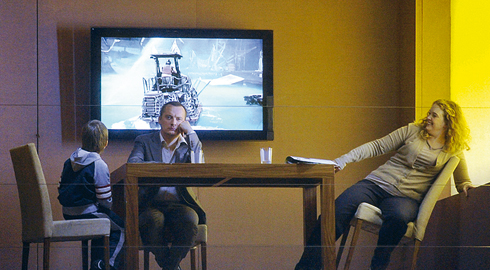
War virus
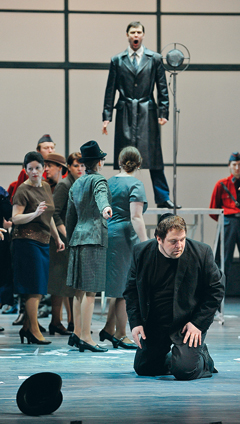
The production group La Fura Dels Baus, invited to the Mariinsky Theater from Spanish Catalonia, turned the six -hour opera Berlioz Trojans (6 nominations), written on the plot of Virgil, in variation on the danger of viruses. Trojan viruses carry death to computers-and the scenery are such that the action is clearly transferred to the insides of some huge computer.
The virus of war brings death to people and is transmitted easier than bird flu - about this, in fact, the whole performance. The absurdity of the war is emphasized by costumes (on the Trojans, a sports protective uniform) and a every minute oddity of directorial decisions (well, why is the poor singer to lift into the air or put in place during the aria?). The viewer is captured by music (Valery Gergiev is not included in the conducting short list only because he refused to participate in the competition once and for all), and what is happening on the stage all the time plunges into bewilderment. But the performance, it would seem, is in the past - but you can’t forget the Cassandra in a wheelchair, a singer dangling under the ceiling on a rope, like an astronaut at the orbital station ...
Moscow will not be able to see this gigantic performance before the main scene of the Bolshoi Theater comes into operation - there are no such theatrical buildings in the capital, where these scenery would fit. The jury will go on March 30 to listen to the "Trojans" to Petersburg.
 |
Actual Middle Ages
The “Jew” of the St. Petersburg Mikhailovsky Theater (6 nominations) in the near future, March 18 and 22, can be seen in Moscow. The opera Jacques Galevi was very popular in Russia in the 19th century (then the Zhivovka was written on posters) and rarely appeared in the XX century - under the name “Daughter of the Cardinal”. The plot was invented by the playwright Eugene Skibe (known to all theaters based on the play “A glass of water”) - and he poured two tons of love in the libretto, five centners of secrets and several a pinch of deadly lies. With deception, it all begins: a young man-Christian, in love with the Jewish girl, comes to her house, posing as a Jew (and such a connection threatens with death to him and her-Galevi’s action takes place in the Middle Ages, and the Mikhailovsky Theater transferred the story in the 30s of the twentieth century to Germany, where things were no better). And the disclosure of a long secret all ends: after the heroine’s execution, the jeweler Eleazar, who brought her up her, informs the court who was authorized by the court that the deceased girl only grew up in his family, but in fact her father was the same cardinal.
The powerful music of the “Big Opera” moved the director, French director Arno Bernard, to the performance is equally powerful, crowded, tragic. The millstones of fate wave the life of a girl in love with powder, and this reads the fate of millions of innocently dead. Jewish religious rituals are reproduced carefully-the famous American tenor Neil Shikoff, the son of Cantor of the main synagogue of New York, brings with him a real scroll of the Torah to the performance. Shikoff's stunning voice is in his eleazar suffering and anger, love for her daughter’s adopted and hard -firm pride. And the impressive, intelligible, smart and temperamental work of the Slovak conductor Peter Ferantz. A holiday for loving opera.