Coffee symphony. The subtle aroma of freshly brewed coffee arouses even the most lazy to life. As a Satanic drink of the Black Continent, he became a divine favorite of all the white light - the New Times traced
Coffee was already poured into cups; But only for Albert was the sugar bowl was still delivered: Monte Cristo and Gaida drank this Arab drink in Arabic, that is, without sugar. Gaida ... took a cup of Japanese porcelain with her thin pink fingers and brought her to her lips with a simple pleasure of a child who drinks or eats something that she loves very much.Alexander Dumas."Count Monte Cristo"
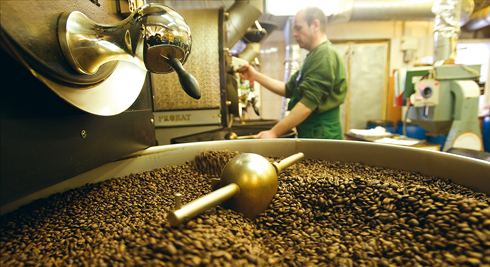
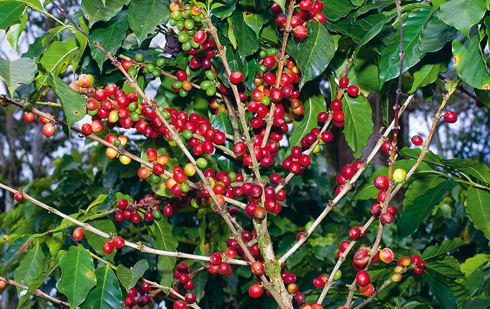
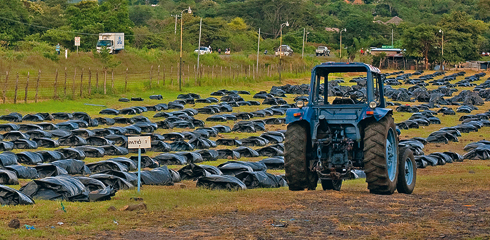
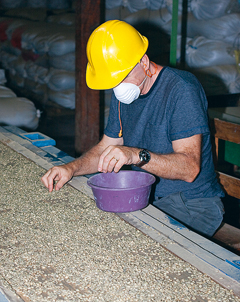
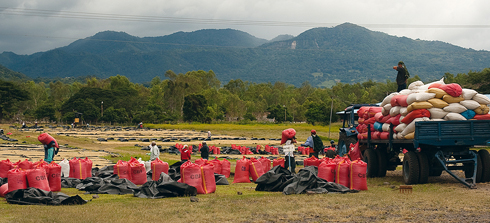
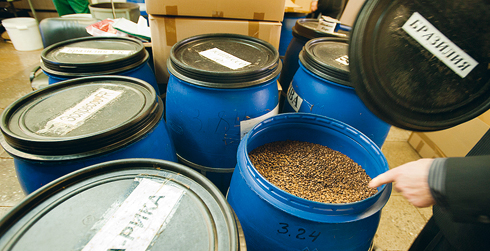
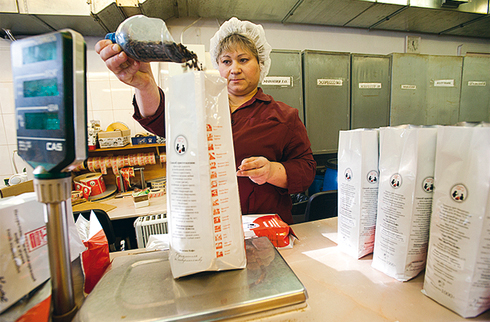
Nespresso coffee machine, which is leading to the Swarovski Coffee machine, and the latest Jura F90 Bean To Cup supercofaurus, which you can order a cup of coffee by contacting it on the Internet, and the most ordinary jezva, by and large, prepare the most remarkable energy drink from ever invented by people. Today's methods of preparing coffee are far away from the cooked on low heat with an indispensable foam of coffee in Turkish or brewed in French in a large coffee pot. But this did not change the essence of the matter - we still love coffee as fifteen centuries ago. Brutal grains Each of us is in love with our appearance. Someone has an affair with a straightforward espresso or the strongest ristretto. Someone likes a flirty cappuccino. Some are delighted with the intricate Latte Machiato - a three -layer drink from espresso, milk and a small amount of milk foam. But regardless of the recipe, coffee of two varieties is prepared - Arabica and Robusta. The birthplace of the first is the highland areas of Ethiopia. Arabica’s grains are oblong, smooth and have a slightly curved letter “s” groove in the middle. A fast -growing and less whimsical robust is grown mainly in other areas of Africa and in Asia. Her rounded grains have a dim aroma, but a lot of caffeine, and it costs cheaper than arabica. Coffee berries are sitting tightly on a branch, and collecting them is not easy There is a variety of coffee that stands apart. This is a "copy." He has no equal in rarity and price. It costs about 10 times more expensive than ordinary coffee. The taste and sensations in the tongue resembles hot chocolate. Luvak is a small animal that looks like a marten living on the trees of Sumatra. He is a small predator, but loves coffee berries, and he chooses the most ripe. The animal was considered a pest for everyone except slaves. They could not afford coffee, a drink of the highest class, and found that Luvak eats more berries than he was able to digest. The grains in the digestive tract of Lyuvak are fermented, as a result of which they have a magical taste, and then come out naturally. Much later, the entrepreneurs recalled this opening of the slaves. “Luvak is a beast the size of a cat. How much will he eat? A handful. After you clean it, dry and fry it, it turns out 10 grams from it. One cup of coffee. It is necessary to have hundreds of thousands of martens to make half a ton of grain. But Lyvakov in nature is very few, and many people offer such coffee, ”warns the president of Montana Coffee Alexander Malchik. - Some even manage to sell coffee that allegedly passed through Thai monkeys. A advertising patch of pure water. " Circular journey About what coffee is in Ethiopia around the VI century. According to the most famous legend, in the distant province of Kafa, a certain shepherd missed his goats, and when he found them high in the mountains, they combined, rode on their hind legs and bleated heart -rending. The shepherd noticed that the goats erect red berries and leaves from the trees unknown to him. And they began to cultivate coffee in Yemen. The infusion of coffee tree berries called the local residents called Qahwa (Kava). In the Arab countries, such a drink has still been preserved - wine based on coffee berries, gavas. It is not very strong, but invigorates and immerses in a state of euphoria. Yemenis invented the first energy. Green grains were crushed into powder, mixed with animal fats and sculpted the bars. In the form in which we drink coffee now, they began to use it in the XIV - XV centuries. The faithful were so reveling in coffee that they forgot about prayer. In 1511, the Cathedral of the Higher Islamic clergy in Mecca cursed this “devilish African potion”, as the imams called it, but coffee continued his victorious procession first to the east, and then in Europe. There he began to spread in the 17th century, after the Austrians kicked out the Turks from under the vein. Running away, they left bags of green coffee. Europeans did not recognize the drink right away, although the “green light” of coffee was given by Pope Clement VIII. He allegedly issued a verdict: “This Satan drink is so pleasant that it would be a pity to leave it in full property of the infidels. We will outwit Satan: we will chute the drink and make it truly Christian. ” Coffee came to Russia under Tsar Alexei Mikhailovich and served as a cure for many diseases, including migraine. Love for coffee was transmitted to Peter I. He forcibly beat the “bitter swill” of close associates. And in 1703 he opened the first coffee house. Catherine the Great not only drank coffee every day, but also used for cosmetic purposes: she mixed coffee thick with soap and cleared her face and body with a scrub. He completed his round -the -world journey of coffee in Kenya, where they began to grow it in the 19th century. Now there are coffee plantations in the fifty countries of Central and South America, Africa, Asia and Oceania. Berry collection Alexander Malchik, who was on almost all known coffee plantations, says that coffee trees resemble sea buckthorn: their flowers, and then the berries appear on the branches closer to the barrel. At the same time, flowers and berries can be adjacent to one branch, both immature green and ripe red. “Green berries cannot be fried, they have a taste of hay,” he says. - Red fruits are very tasty. Sweet. From them, the feeling that in the mouth is something like a ripe cherry that you drink a cup of coffee. On the day of such berries, you can eat 5-6 by force, because they are full of caffeine. Caffeine is contained even in the leaves. I myself collected coffee berries in Nicaragua - in a day I scored a couple of baskets and received one dollar for work. Professional crop collectors - and among them there are children and elderly people - do this, of course, much faster. ” The collected fruits of coffee are sent for processing After the berries are collected, they pass 15 degrees of cleaning and processing. First, they get into cars, where the skin is torn off from them and they are sorted with water. After that they are thrown into the vat, where the fermentation process begins. It lasts a strictly defined time - if the berries are overexposed, the taste will be very unpleasant. Then the rest of the pulp is washed off with a stream of water, and the remaining grains are laid out on large concrete sites and dried in the sun, constantly turning over. It is necessary that out of 60% moisture in them remains no more than 12%. Dried grains are cleaned of the shell and sorted by weight, size and color. Then they cross them again, already manually. This painstaking work is done by women. The selected grains, the taste of which is not in doubt, are poured into jute bags, and then they are delivered to where they are fried and then packaged. After fermentation, coffee grains are dried and sorted, and then again sorted out by hand Shipping of coffee fruits from plantation to Nicaragua Rebel drink Today, coffee houses are fashionable institutions, “pathos”, as teenagers say. And at the same time a very democratic place where you can sit for several hours a cup of coffee with a book or laptop. And once these were the places where thinking people gathered and sunk conversations were conducted. Consumer varieties of coffee are determined not only by the type of grains (Arabica and Robust), but also by the country of origin (Kenyan, Yemensky, Brazilian, Costa-Rikansky, etc.) The world's first coffee shop appeared in Istanbul in 1564. Sitting on the soft pillows in the shade of the Chinar, sipping the hookah and treating the coffee, visitors led conversations, agreed on weddings and transactions and, of course, scolded power. The Almighty Vizier Mehmed Kepryul somehow changed his mind with a commoner and went for a walk along the coffee houses to listen to what they say about the authorities. And I did not hear a single good word. Then the courtyard ordered to close all the coffee houses, their visitors to put him in prison, the owners to sew in bags and throw it into the sea, and ban coffee. But even under the threat of death, coffee continued to drink secretly - and in the end the ban had to be removed. Female question In London, the coffee shop was considered men's clubs for a long time. Women, outraged by the fact that husbands could not be pulled out of coffee houses, in 1674 wrote a “female petition against coffee”: “We have long seen a very sensitive decline in the real English male power ... They never wore such broad pantalos and had no small dignity in them. And the reason for everything is the immoderate consumption of this newfangled, bitter, nauseating, disgusting, barbaric drink. ” The men replied that they did not want to fulfill marital duty not because of coffee, but because their wives have evil tongues. It is not for nothing that the Prophet Muhammad said that after coffee he could "drop forty people from horses and have forty women." The latter, by the way, was forbidden not only to visit coffee houses, but also to drink coffee. It was believed that this drink could make them barren. Johann Sebastian Bach stood up for women. In 1732, he wrote a playful coffee cantata. In her, the daughter beggeds his father: “Ah, daddy, don’t be such a bore! If I do not drink a small cup of coffee three times a day, I will dry out like a hot hot! How amazing coffee is! He is better than a thousand kisses, sweeter than nutmeg! " Coffee or energy? Disputes are still ongoing whether caffeine is harmful or useful. The whole question is in quantity. “Caffeine is a trigger for the release of adrenaline,” our expert explains. - If you drink two cups of cheap coffee or a jar of an energy drink, adrenaline will begin to be produced to such an extent that a person will be overwhelmed. Then the body says: “Something brought me!”, It ceases to allocate adrenaline completely and falls into depression. If you drink high -quality coffee and know the measure, there will be no harm. ” The final stage of coffee production is packaging At the same time, caffeine, obtained in normal doses, has a beneficial effect on the energy balance, which contributes to the rapid burning of fat cells. So from coffee, if you wish, you can lose weight - unless, of course, it is to delve it to the insanity and do not jam it with a plate of cakes.
Coffee-energy (recipe from Alexander Malchik)if you add vitamin C to the Espresso cup of high-mountain arabica, carbonated mineral water, lemon juice, sugar and mix all this-it will turn out to be an invigorating and, most importantly, healthy drink.
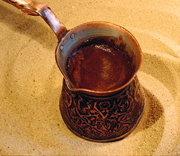
** In Turkish coffee, or in the same way ****The recipe and preparation technology, each true lover finds it experimentally: fortress, sweetness, cooking time. A real coffee machine cells grains only on a hand mill and cooks coffee only in a jezva. Pour freshly ground coffee with cold water and very slowly brought to a boil. Ideally, if not on open fire, but on hot sand. By the way, today you can buy a home "sandbox" for cooking coffee. It is better to put sugar in a jazva, not in a cup. Very strong coffee is served with a glass of cold water.*
** Fortune telling on the coffee grounds ***The rest of the coffee at the bottom of the coffee cup is distributed by rotation along the walls and look at the resulting pattern. Here are some meanings: a cow - profit, a pigeon - a proposal of margin and heart, a snake - treason, horse - road, crow - illness, camel - a rich inheritance, hare - secret date, swan - separation, eagle - victory after a difficult struggle, fringe, ants - troubles and labor.*