
Translated material
Nosypical report
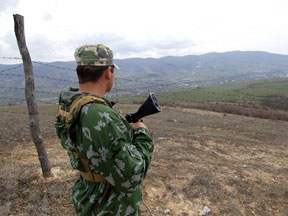
The consequences of the “five -day war” and the and to this day occupy American and European experts to this day. From time to time, they give out their recipes for leaving the political ship, in which Russia and Georgia found themselves. It is far from always proposal to be perceived seriously, since often instead of a thoughtful objective analysis, the addressees of these recommendations (first of all, current politicians and diplomats) are offered extremely politicized assessments, based on emotions, and not on a solid empirical base.
I will allow myself to quote a fragment from a collection of materials with a “speaking” name: “August guns. War in Georgia. " Already in the heading itself, the authors issued the final verdict to the 2008 events. If you follow their logic, then Russia at that time was a political entity, and Georgia only by the object of the application of Russian geopolitical efforts. In the introductory article to the aforementioned collection, the specialists in the Caucasus and Central Asia Frederick Starr and Svante Cornell are: “In the summer of 2008, an unprecedented event took place. For the first time since 1979, the Russian army crossed the borders to attack the sovereign state "[1]. As they say, every word hits the ground. There is only one-minor nuance: in 1979, the Russian Federation did not exist with the name of the Russian Federation, and military units of the USSR-countries with another administrative-territorial configuration, other armed forces, ideology, goals and objectives were introduced into Afghanistan.
If we talk about the participation of the army in military operations outside the borders of Russia, it is surprising how the specialists in Central Asia “looked through” the plot such as the Grandman War in Tajikistan in 1992-1997. Meanwhile, military personnel from the Russian Federation (the 201th motorized rifle division) were involved in this five-year confrontation. The separate Russian military units were to one degree or another in other conflicts (Nagorno-Karabakh, Abkhazia, Transnistria). VETA of communication The absence of “precedents” until 2008 seems very great for us. As well as the thesis of the Russian “military aggression”, since it is waited by obvious simplification.
It would be much more correct to talk about “military intervention” or “direct involvement in the conflict”, which August 2008 has developed for almost two decades. With different type of participation. However, in excessive objectivity it is impossible to suspect the Herossian authors who, as the mantra repeat the thesis about the “threat of genocide” of the Uugust Ossetia and about the foreign policy altruism of Moscow, which took on the “Breybota” about the two peoples of the Caucasus. As a result, “opponents” of this kind fuel a friend of a friend, multiplying a little, useful for an adequate understanding of the situation, stereotypes and cliches.
In this regard, the emergence of balanced -political articles, books or reports is extremely important for conducting a correct and competent discussion, in which fundamentally not even achievable mutual understanding, but by finding the corridors of the possibilities forodiccraft conflicts and transferring them to the channel of pragmatic resolution.
In February 2010, the Center for American Progress (Samuel Charap) and Cory Welt (Cory Welt) took place in the Center for American Progress. The Center for American Progress was founded in 2003 by John Podesta, the former Chairman of the White House under President Clinton. In a very short time, central studio is one of the most powerful “brain trests” on the liberal flankopolitical spectrum of the United States. Samuel Charap today is the "rising star" of American political science. At 30, he is already the main expert of the Center -American Progress on the domestic and foreign policy of the countries of the former Soviet Union, as well as on the study of US policy in this region. He advises a nregular basis on these issues of employees of the American administration. His works were published in Washington Quarterly, Internationalherald Tribune, Guardian, Current History, as well as in a number of other journal newspapers. In September 2010, he was invited to participate in the Valdai International Discussion Club (created in 2004 to discuss various expenses of Russia's domestic and foreign policy, RIA Novosti is patronized). Charpa Corepa Velta is also a well -known specialist in the post -Soviet Commercial Code (he has been engaged in this problem for 15 years, has been owned by the Russian Bogansin Language). He is the Deputy Director of the Institute of European, Russian and Eurasian Research at George Washington University. At the same university, he gives lectures on the problems of the political development of the IIBERSITION OF Caucasian region and Eurasia. Before his current work, he was the captain of the director of the Eurasian Strategic Project at the University of University of Ordjorgtown (2007-2009) and an expert of the Russia and Eurasia program in centrestrate and international research (2003-2007). The Charp and VELT have devoted their February to the activation of American politics in the process of aggregation of three Caucasian conflicts (Georgian-Abkhaz, Georgian-Ossetian and Russian-Georgian). The name of their work speaks for itself “a more proactive us approach to the Georgia conflicts” [2]. But how much the theses proposed by two American experts are Ioriginal? Do they give any “clues” to advance to progress with a sore of the Caucasus?
On the one hand, we cannot call a report and Velta a certain analytical revelation. Yes, indeed, in the report there is no annoying propaganda, quasi -democratic didactism and flat -minded generalizations. And already according to these parameters, the material of the data is served by serious attention and thorough study. However, attempts to expel the black and white picture of the August events of 2008 were undertaken by the US experts earlier. So, last year in the authoritative publication “The American Interest”, an article of political scientists from the Colombian University of Alexander Cooley and Lincolnmitchell appeared, in which they, speaking of Abkhazia, proposed the formula “involvement of shamelessness”. It is also noteworthy that their text was printed in the section by the submarine “aside the beaten road” (off the beaten path) [3].
In June 2010, the Carnegie (Washington) Foundation (Washington) presented the two mentioned author on the basis of their article “A new start for American-Georgian relations?”, The main imagination of which was the need for a wide international amplification without its formal-legal recognition. From the point of view of Kuli Imchell, this would prevent Russian hegemony in the republic [4]. Soon, the presentation of this work in July last year, Professor of the Columbia IAMICS Universities, David Phillips, presented the experts on the judgment of peacekeeping and business: encouraging economic contacts with intears and abhazes. Phillips saw the opportunity to overcome the Geo -Political Dead ends in the development of multilateral economic ties of the Intersgris and Abkhazian entrepreneurs [5].
There is no dispute, all these authors (as, by the way, and the charapis with Velt) stand in the position of "territorial integrity" of Georgia. However, for them this imperative is not reinforced concrete. Moreover, his recognition does not mean for these political scientists the rejection of the political supervision of the former autonomies of the Georgian SSR. So, in his interview with Radio “Freedom”, one of the authors of the February report, Samuel Charp, said: “We are not proposed to change our fundamental position. We support the existing position of the American government on the issues of Georgian borders, the status of Abkhazia of June Ossetia and Russian obligations in the agreement on non -use of force. One fact that the United States adheres to existing positions, which allows them to make these principles more than simply abstract -studies, what are they at the moment. We offer a road that is based on real principles and will not allow unresolved conflicts to just a topic for conversation ”[6].
Thus, the report of the Ivelta Charrapa did not appear from scratch, but on the basis, prepared for a multi -color perception of the events of 2008 and their consequences. At the same time, the work of the two -sores develops, clarifies and deepens the theses of the predecessors, adds a book that had previously missed nuances.
As for the properly recommendations of the speakers, they can be conditionally divided into two blocks. The first is the actual American position in relation to conflicts. It is most detailed in the section “The United States Needs a Comprehece Policy on the Georgia Conflicts” (“US needs a comprehensive policy in Georgia”), as well as in the sections “Changes to US Policy to Facilitate Conflict Resolution ”(“ Changes to the USPO to alleviate conflict resolution ”) and“ Why The Time Is RightFor A More Proactive Us Approach to the Georgia Conflicts ”(which is why the US conflict more active actions in Georgia”). Remembering the authors, “American support for Georgia by military, diplomatic, economic and other ways in itself cannot resolve conflicts. And even more thorough assistance to the United States, along with increased antagonism in relation to the cross, cannot resolve conflicts because of its actions. ” Charap and VELT believe that American politicians hope that the time will come, Russia is aware of the mistakes and change its approaches to Georgia. However, from their point of view, even this will happen suddenly, and Russia will withdraw its troops from Abkhazia and South Ossetia, the conflicts will not be resolved. Moreover, such a scenario can be used to use force and even bloodshed. “In fact, - Pischutchara and VELT,” discussions in Washington often ignore the fact that in addition to the Mossy -Georgian conflict there are also conflicts of Georgia with the Abkhazia of June Ossetia. There is no clear separation of interstate and secession conflicts at a conceptual and practical level. But we should recognize that there are three conflicts in Georgia (with Russia, with Abkhazians and southern otins), which exist at two levels (interstate willow). ” Hence the need for two diversified approaches for American policy in the South Caucasus. This conclusion is further than the recommendations proposed in last year's work Kuli and Mitchell. In a certain sense, this is a new word in the American expert community!
The authors of the report offer the United States to get away from declarative in defense of its own interests and focus on the practical resolution of conflicts. That is, it will be discussed about the activation of American diplomacy and the rejection of the repetition of the mantras about "territorial integrity".
Charap and VELT also advise you to reckon to controversy about who was the first to unleashed military broadcasting in August 2008, and to assign responsibility for the escalation of violence for Georgia, and to Russia. As for the Russian-American format itself, from the point of view of the speakers, Washington should avoid such ascents that arose during the last OSCE summit in Astana (where the Russian Autonomous Republic of Georgia has become an object of public disagreements).
Charap and VELT also affected a painful problem in Russian-American relations, as the military work of Washington and Tbilisi (primarily the issue of selling weapons). In this matter, the authors carefully recommend that the administration take into account the arguments of the American weapons by no means in peaceful targets. In relation to Abkhazia and South Ossetia, Charap and VELT offer the United States to follow the EU example, having begun humanitarian interaction (without political recognition) with partially recognized formations.
The second block of sentences is reported to the mechanisms to ensure security in cooled "hot spots". The authors set their offers in the sections “A Plan for Short-Term Progress” (“Plan of progress in the short term”), “Postwar Progress” (“Patrient Excurs”).
In the framework of this article, we will take a view of the first of the mentioned sections - simply because the second recognizable degree is speculative. Its implementation is possible, only “short -term progress” will be achieved. However, one cannot help but see where the -auditors are turning. Their vision of “post -war progress” is briefly as follows: the minimization of Russia's presence and the internationalization of peaceful settlement. Remembering Charap and Velta, "the parties to conflicts in Georgia have a fundamental understanding on fundamental issues."
However, the speakers believe that all parties involved in the conflict have “one common interest”. And this is the desire to avoid the resumption of armed conflict.
This thesis is extremely important for the American expert community, if only because Charap and VELT remove the time for a kind of “presumption of guilt” for the desire to “warm up the situation.” Chaprap and VELT offer several components for the implementation of “progress of the browning perspective”. This is the obligation of Russia not to use the force of oppression, the conclusion of bilateral agreements between the Georgian government of the Ivliki of Abkhazia and South Ossetia on solving humanitarian issues, as well as “modification of Georgian and Russian policy that impedes progress.” The last thesis looks too journalistic. However, it is clear that the authors of Tbilisi and Moscow are authored by the maximalist planks established by the Geneva consultations (the reluctance of Georgia to sign agreements informally with Abkhazia and Southern Ossetia and the Russian reluctance to give an obligation to Georgia). Thus, Charap and VELT actually propose to Tbilisi to be abkhazia and southern Ossetia as political entities (it is clear, we are not talking about recognizing their sovereignty and independence). Such recognition, from their point of view, should spur Tbilisi to a peaceful solution of the conflict and the creation of a positive reinforcing for the future. The authors do not forget the proceeding of international presence. So, they propose to ensure the access of the mission of European observers in the Akhalgorsky district of South Ossetia and the Galskyraion of Abkhazia. An important thesis related to the “modification” of Georgian policy is tbilisi okolisi from playing the “North Caucasus factor” on the Russian administration. As for the “modification” of Russian politics, the Charap and Vel will recommend Moscow to abandon brutal rhetoric in relation to Georgia, and also to take the path to lifting economic sanctions against this country.
Thus, if you summarize the review, then the report of Charpa and Velta, compared with other recommendations, the submitted issue offers atypical for the American expert community. Among them are the recognition of Abkhazia and South Ossetia by the subjects of the negotiation process (and the peaceful process as a whole), the involvement of these formations is a surrounding country with the United States and the requirements addressed not only to Russia, but IK of Georgia (including relative to the North Caucasus). However, the practical regulations of these proposals do not seem realistic to us. Firstly, according to Charap and Velta, the leadership of the peaceful process is actually crossing the US troops. From the section to the section of the phrases that “Washington needs to be tuned”, “the United States must support”, “administrations should indicate” do not state doubts about who becomes the director of the project in the implementation of the project. In this situation, Georgia is actually the players of the same political league. Meanwhile, Moscow does not consider Georgia (like any CIS Country) as a level of himself. Is it a bad question is a special question. Be that as it may, and Russia claims Narol of the Power of the First Class, she wants to play together on equal terms with the USA, EU, China, India and Japan, and not to be the subject of a regional conflict (as an example, Armenia and Azerbaijan). In this regard, with a political and psychological point of view, the ultimate goal of the report beats past the goal.
All this, however, does not detract from the Niego meaning, not a high level of labor of Charap and Velta. The great advantage of their work is the high quality of the analysis of the premises of the Caucasian conflicts. So, the authors in the section “The Georgia Conflicts: What You Need To Know” (“Conflicts in Georgia: Wonor to Know”) not about the immanent imperial role of Moscow, but about the problems that are rooted in the process of the collapse of the USSR and the desire of Georgia to gain a dependence. Many practical proposals of the authors (especially regarding humanitarian aspects) can be considered and even implemented (such as forming the regime of gas, water, transportation by inter -border regions of Abkhazia, South Ossetia, Georgia). However, the “equalization to Washington” they offer does not give (and will not give) the possibility for the actual cooperation between the Russian Federation and the USA. Cooperations are extremely necessary, but at the same time, which is imposed by the unwrittenness of the States to recognize the special (and even exclusive) interests of Russia in the region of the Greater Caucasus, firstly, as well as the unwilling part of the partnership with Moscow, delivered from didactism, secondly.
I repeat once again, the position of Russia will be able to cause delight or heartburn, but Moscow for two dozen is in fact from the United States, actually only one thing: speak with us like Beijing, Ana as with Cairo. Впрочем, кавказское направление – это лишь часть более общейпроблемы. И здесь чисто по-человечески понятно стремление авторов бытьуслышанными в Белом доме и в Капитолии (они творят не в безвоздушномпространстве, а в определенном контексте с определенными традициями). Но вотбудут ли они услышаны в Москве (и, кстати, в Тбилиси - большой вопрос. Покрайней мере, еще никто не доказал, что интересы США и Грузии - это одно и тоже.
Notes
1. The Guns of August 2008. Russia'sWar in Georgia/Ed.by S.Cornell and F.Starr. NY.London. MESparpe. 2009. P.3.
2. Полный текст доклада доступен: http://www.americanprogress.org/issues/2011/02/georgia_report.html Все цитаты из доклада С.Чарапа и К. Велта приводятся по данной публикации.
3. Cooley A. & Mitchel Toolbox: Georgia's Territorial Integrity//American Interest. 2010.- № 3.
4. Текст и видеофайл презентации доклададоступен: http://www.carnegieendowment.org/events/?fa=eventDetail&id=2958&zoom_highlight=Cooley
5. Текст доклада доступен: http://www.carnegieendowment.org/events/?fa=2982
6. Cit. по: Вартанян О. «Рецепт» для выходаиз тупика //http://www.ekhokavkaza.org/content/article/2311302.html
Автор - приглашенным научный сотрудник Центра стратегических имеждународных исследований (Вашингтон, США), кандидат исторических наук.