
Translated material
On the second reactor of the Fukushima-1 NPP, as earlier on the third, there was a release of white smoke
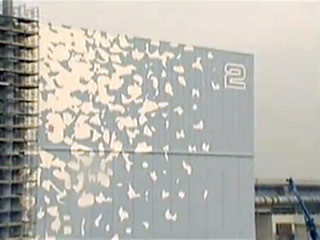
In Japan, on Monday, the second reactor of the Fukushima-1 nuclear power plant was released, Japan's nuclear and industrial security agency reports. Previously, a similar incident was recorded on the third power unit. According to the agency, at the same time, smoke on the third reactor no longer goes. According to the operator-operator of the Tokyo Electric Power (TEPCO) nuclear power plant, after the pair is released, the pressure inside the third reactor did not change. The causes of emissions are both in the third and the second reactor, are not yet known and specified.
The Japanese authorities, meanwhile, continue to assure that the situation is gradually stabilizing. Following the prime minister of Naoto, Kan about improving the state of affairs at the nuclear power plant, the Minister, Head of the Department of Information and Culture of the Embassy of Japan in the Russian Federation Akir Imamura spoke, ITAR-TASS reports.
"Now the first signs of stabilization have been outlined. Water is poured into power units and pools with spent fuel," the minister told reporters on Monday. According to Imamura, power supply can be restored to the nuclear power plant in the near future. "Specialists are trying to connect the power supply cable to the nuclear power plants," he said.
Akira Imamura also stated that at present the number of dead and missing as a result of natural disasters in Japan exceeded 21 thousand people, about 350 thousand people are in shelters. The Japanese diplomat expressed gratitude to the Russian authorities and citizens for the assistance and support provided.
“We are grateful to the Ministry of Emergencies of the Russian Federation, who sent rescuers. The first humanitarian cargo with blankets and drinking water has already come to us. In addition, we are very touched by the actions of Russians who bring flowers and white cranes to our embassy,” the diplomat added.
The fact that a pillar of smoke rose over the emergency third reactor and employees were evacuated from there was known on Monday after 10 a.m. According to TEPCO, the release of gray smoke occurred on the third reactor at 15:55 local time (09:55 in Moscow). The causes of emergency evacuation of personnel are not reported. According to local media, the station of firefighters was called into the station after the first ejection.
According to the Japanese NHK television channel with reference to the words of the General Secretary General of the Japan of Japan Yukio Edano, there are no significant changes in the radiation background after the smoke that arose in the afternoon of Monday at the third power unit of nuclear power plants. Representatives of TEPCO also said that there were no great changes in the readings of dosimeters that control the radiation level of 500 meters from the object. According to RIA Novosti , in addition, deviations in the testimony of devices to change pressure in the reactor on the third block were not recorded.
The Magate believes that the situation remains very serious
The situation around the Fukushima-1 nuclear power plant remains very serious, said on Monday the general director of the International Atomic Energy Agency (IAEA) Yuki Amano at the special session of the Administrative Council that opened here.
As Amano noted, in addition, increased levels of radioactive pollution are registered on the site. However, the General Director of the Magate expressed the confidence that the country could overcome the nuclear crisis.
Despite the accident at Fukushima-1, which again questioned the safety of the use of atomic energy, Amano also stated that the atomic energy will remain an important and competitive industry, ITAR-TASS reports.
There is not a single dead or seriously irradiated nuclear power plant among personnel
Sources in the Extraordinary Headquarters to eliminate the consequences of the accident at the nuclear power plant were informed by ITAR-TASS that there are not a single deceased or seriously irradiated among about 300 people who are fighting at the station for preventing a nuclear disaster.
According to sources, on Monday, another employee who received an increased dose of radiation was recommended to leave the station. The dose of irradiation of this person exceeded 100 millisverts - the maximum irradiation level, which, according to current instructions, a professional nuclear power plant can receive in a year, the TEPC administration said.
Thus, in the list of those who received at the Fukushima-1 nuclear power plant more than 100 millisive devices, 8 people are already on. All of them are TEPCO employees. The maximum, established by law, the annual irradiation norm for an ordinary person in Japan is 1 millisiver. All victims, as sources note, are in a stable state.
On Monday, it also became known that the height of the tsunami, whose strike was subjected to Fukushima-1 NPP, reached 15 meters. This was announced on Monday by TEPCO. According to Japanese meteorologists, some waves that fell on this day after an earthquake to the northeast of the country reached 20 meters in height.
Radiation on the Internet
On Friday last week, the operator of the Fukushima-1 NPP Tokyo Electric Power Co (Tepco) opened an account on Twitter in Japanese with relevant information about radiation leaks and power outages. Less than the day from the moment of the appearance of the OfficialTepco account on Twitter, more than 173 thousand people subscribed to its updates, 117 thousand of them became OfficialTepco subscribers in the first six hours. Now the microblog is reading 232 thousand users.
Meanwhile, in the USA, a group of activists launched the RDTN.orG website, which collects data on the level of radiation in Japanese cities by crowdsourcing - transmitting the functions of collecting data to users themselves - so that the Japanese and world public receives reliable information from first -hand.
As RIA Novosti reports with reference to the Mashable Technoblog, the creators of this resource called on the inhabitants of Japan who were "at the epicenter of the crisis", to purchase a dosimeter showing the radiation background, and then to remove the indicators in their region and publish them in an open access for everyone.
The creators of RDTN.org emphasize that the collected data are not designed to replace official information, but they hope that "information from various sources will help create an additional context for official statements in a rapidly changing situation."
The data entry form contains fields for the data themselves, the name of the device, time and geographical coordinates of the place of removal of indicators. Further, the developers intend to place the data on the map, along with information published by official sources, in order to form a more detailed and relevant picture of the radiation level in the country.
Currently, the site aggregates the data of the Pachube service, which collects various environmental data, withdrawn by meters in real time, and the blog of Marian Steinbach , publishing information about radiation in Japan.