
Translated material
Orbinvt
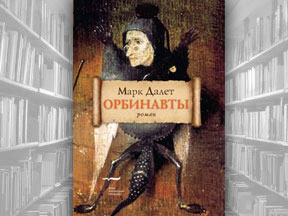
Mark Dalet is an Israeli-Russian writer and translator, awarded in the 1980s two literary awards for poetry in Hebrew and transferred from Russian to Hebrew the works of Dostoevsky, Tsvetaeva, Pasternak. “Polit.ru” publishes a fragment of his novel “Orbinwa” (M.: “New Literary Review” , 2011) , which became the first experience of the author in the genre of “large literary form”. The novel can be equally considered historical and fantastic: the action takes place in Spain at the end of the 15th century; The young Alonso at the insistence of his grandfather runs on the eve of the fall of his hometown, the Muslim Granada, to the Christian Cordoba, to protect the main shrine of the family - the ancient encrypted manuscript “Light in the oasis”. The text contains a secret knowledge of the existence of orbinubs - people who are able to change the recent events, to manage reality.
Introduction
Silent someone will open the door
And the memory of the former faiths will become a burden,
Doubtful - the indisputability of previous measures.
It will seem that you are together with someone
You are conducting a barren dispute. Forget about:
I'm just the wind behind your window.
Blanche La Surs
VIA San Lorenzo, overcoming the attraction of churches, palazzo, mansions overhanging each other, burst out of the cramped maze of streets and lanes, leading to the bulk of the Cathedral of St. Lawrence. The evening service has not yet begun, there were few people in the cathedral and near it, but the parishioners gradually began to arrive.
Some have just come from commercial institutions - the so -called “benches” or “banks” - which Genoa is so famous for, and now, standing in groups of the facade that affects massive arches and sockets, they, slowly entering, in quiet voices discussed monetary and trade affairs.
Two young Venetians looked at the next victim in a group of conversational bankers at the entrance to the cathedral. According to the plan, Aldo was supposed to distract the Genoese thickness with conversations, and Gina - to carefully cut off a bag hanging on his belt. As a result of multiple repetitions, this trick was brought to perfection and still almost never broke away, except for one annoying episode, when a couple was exposed, but Aldo and Ginen managed to easily get away from the chase.
Aldo, mechanically adjusted the fold on an elegant, slightly worn cloak, resolutely headed towards the conversation men when someone grabbed his wrist. The Venetian tried to pull out his hand, but the grip was iron. He dumbfounded, seeing that he was holding a high stranger in the azure pelerin.
- What do you want? He asked in Tuskansky. The local Ligurian dialect of Aldo at the very least understood, but could hardly speak on it.
“I suggest you leave this place immediately!” - the woman said, looking a thief in her eyes.
Tuscany was also not relative to her either. Aldo did not manage to determine her emphasis, but was sure that not one of the Italian kingdoms and republics is her homeland.
Gina stared at them in bewilderment, not daring to approach. A woman, publicly holding the hand of an unfamiliar man, is such a spectacle unusual even for Italy, despite the fact that it has been there for half a century, having begun with the work of the great Florentine masters, new trends were spread, which was evidenced by previously the courage of painting and sculpture.
“As you can see, they look at us,” said the stranger in the blue pelerin. - I think these gentlemen will be very interesting to learn about your intentions. Especially the gray -haired Signor on the right.
She quickly and unmistakably, in the slightest details, set out the plan of Aldo and Gina.
- What do you want? Aldo asked, suffocating with fear.
“Get you a city guard, of course,” the foreigner explained. “But I am ready to let you go on the condition that you will never catch my eye again.”
“We didn’t do anything,” Gina said in a poisonous whisper, who approached them and heard part of the conversation. On a partner who was still paralyzed-either with an unexpected revelation, or the determination of a strange stranger,-Gina looked with contempt. - What can you say to the guards? What were we going to rob someone? How do you prove it?
“You are right,” the foreigner answered calmly. “That's why I will let you go now.” But next time I will let you fulfill the plan and only after that will grab you. If you think that you can slip away, I will not dissuade you. You can take a chance if you want.
With these words, she released Aldo's hand. Gina still wanted to say something, but his partner, rubbing the white-legged brush, hastily strode away.
“This is a witch,” Gina persuaded him, trying not to lag behind. “How else could she find out about us?” And if she is a witch, then we ourselves can pass her a guard.
Aldo objected something, but the woman in the blue pelerin no longer heard them.
The one for which she came to the Cathedral of St. Lawrence every evening, again was not here.
In the early days, she went inside and sat for a long time, admiring the frescoes, or walking around the cathedral, looking into the marble chapel of San Jovanni Batista, where the relics of John the Baptist, brought by the Genoese merchants in 1098, were stored. Of course, she also saw other relics of this temple - a blue dish and a green -glass cup. The parishioners were convinced that it was on this dish to brutal Salome that the once chopped back of the forerunner was brought, and the Cup was one of those used by the Savior and apostles in the Gethsemane Garden during the Secret Party.
All this at first seemed interesting, but managed to bother the tall foreigner since then, and she decided, without lingering here longer, to go down to the sea and take a walk in the harbor, over which the famous Genoese lighthouse reached the height of more than two hundred feet.
The woman’s heart was alarming. The one whom she hoped to meet here fled from her homeland a few days earlier than herself. But, unlike her, he almost did not have funds with him, since he had to leave the country in a hurry, and he went to Geno not by sea, but by land, through France. He could easily grab him along the way, and every day, passing without him, filled the woman with a sense of humiliating inability to take something for the sake of his salvation. There was only a languid expectation. In recent months, she almost believed that everything was subject to her, which was why the experience of powerlessness was especially painful.
Going down from porch to the square, a foreigner in a blue Pelerin met one of her few local acquaintances. A lean man of about sixty, with a skin resembling parchment, Branardo Monighetti, a book trader, was just heading to the cathedral. The foreigner from time to time went into his shop to buy a particular book. She was pleased and easy to talk to him. This Genoese was well versed in literature and never showed curiosity regarding the origin of his customer.
- How did you like the adventures of a worthy English knight, Donna Maria? - Monighetti asked, on whose advice she acquired a Tuscan translation of an extremely popular book in Europe called “The Adventures of Sir John Mandevil”. In the book compiled in the middle of the last century, the author described his journey to different countries, which supposedly lasted thirty -four years.
“It is written excitingly,” answered the one whom the bookseller called Donna Maria, “but it seems that there are more fables in this book than genuine information.”
- What exactly do you consider to be fables? - Monighetti, interested in the theme of the conversation, seemed to be no longer in a hurry to the cathedral. - Do you not believe in the existence of the kingdom of the presbyter John?
He had in mind the powerful king, supposedly ruling a huge Christian state somewhere in the East. Many were convinced that the stories of the presbyter of John are just legends.
“No,” Donna Maria smiled. - About the presbyter of John I know nothing. But all these stories about cyclops, giants, dwarfs, enchanted forests, about people with bundles, about the girl turning into a dragon, about the source of eternal youth, finally ... and at the same time - very interesting and quite convincing descriptions of Constantinople, Bethlehem.
“God's world is great and amazing,” either Monighetti objected or objected. - What are, for example, the recent discoveries of our compatriot, Genoese cartographer Kristulo Colombo, made by him in the service of the Castilian Queen!
At the mention of the great discoverer, the fleeting gleam of some unspoken feeling ran across the face of Donna Mary.
“Did you want to say something?” Monighetti asked quickly. - Did I interrupt you?
“No, no,” Donna Maria assured him. “Continue, Signor Monighetti.” You know how I value your opinion.
Slightly hesitating, the book trader made an unexpected confession:
- Of course, it is difficult to believe in all this. But there are things that you really want to believe in! He said thoughtfully.
“You obviously talk about the source of eternal youth,” the interlocutor suggested.
- Oh yes! - with fervor confirmed Monighetti. “I would not refuse to drink from him.” It is probably difficult for you to understand me, because you are so young.
“Well, what are you,” the foreigner objected. - Nobody would have refused such a gift - neither old nor young. And I can’t be an exception at all. It is simply impossible to reject eternal youth. However, it does not follow from this that such a gift is certainly good. Sometimes we are not able to refuse from what promises inevitable flour.
Looking carefully in her face, as if wanting to read her thoughts, Monighetti said:
- You probably mean that such a gift would contradict the divine plan? - Turning his face to the cathedral, he overshadowed himself with a sign of the Cross and brought his hand to his lips. - Of course, you are absolutely right, and the dreaming of me to a good Christian is not to the face.
“I am not a theologian and not a prophet, the kindest Signor Monighetti,” said Donna Maria. - The will of the Lord is unknown to me. I did not mean this at all.
- And what?
“You see,” the foreigner said slowly, picking up the words, “the unfading youth suggests eternal life, that is, in essence, immortality.” But I'm not sure that the immortal can be happy among mortals. After all, he will inevitably survive those whom he loves. He will have to observe their aging, illness, decrepitude, sometimes conceived with dementia and humiliating bodily weaknesses, and - in the end - an inevitable death.
Monighetti nodded:
- I am already regretting that for a moment I succumbed to dreams of eternal youth. It was a very immature impulse.
Donna Maria appreciated his ability to admit her wrong.
“However, I repeat,” she hastened to add, “I still could not refuse such a gift.” - As you can see, I share your immaturity.
The book -Torgovets shook his head:
“Thank you, Signora, for courtesy, but you are completely right.” Happiness is impossible alone. If I found a source of eternal youth, I would have made sure that anyone who is dear to me was drunk. And anyone I respect.
- And everyone else? - asked Donna Maria. “Would you share only with the chosen ones, but not with all of humanity?”
The question found Bernardo Monighetti by surprise. A blush appeared on his face, and he averted his eyes.
“I don’t know,” the bookseller answered very quietly.
Donna Maria continued to remain in the tonality of this conversation and after breaking up with Monighetti.
Can I be happy alone? It seemed to her that for happiness it was necessary to wish him to others. She did not believe in the achievement of universal happiness, but assumed that without such an intention, regardless of its feasibility, it was certainly impossible to be truly unconditionally happy.
Bypassing the blocking road to the port of Palazzo San Jordo, in which the famous bank was located, Donna Maria was thinking about who she came every day to look for at the entrance to the cathedral. This person once completely changed her life. He discovered her possibilities, which she could not think about.
Sometimes Donna Maria caught herself that she imagines that she was composing a book in which she describes everything that happened to them. Why would she start? What would I talk about in the first chapter? About your childhood? Maybe about how her life developed before meeting with him?
Sometimes it seemed to her that it was necessary to start from antiquity - maybe since the time of the Indian campaign of Alexander the Great or from the period of the Roman Emperor Aurelian.
However, this time before the mental gaze of Donna Maria suddenly appeared the image of a boy. It was the one she waited, but not now, but in that distant time when he was twelve years old and an elderly grandfather in a doomed Muslim city revealed to him the secret of their family.
Donna Maria very clearly imagined a lad who thirsts to master the abilities that seem to him with a magical gift. He is still not aware that happiness is not alone.
Donna Maria imagined minaretians, jagged towers, a city and a boy, who is trying to see this city as her own dream, who was sculpted on green hills. So he wanders through the terraces of the park, and the water of the fountains murmures nearby, foaming in cascades. She runs through narrow channels and fills the ponds.
No, the boy still can’t see the usual landscape familiar from birth as a dream. He is too accustomed to perceive all this decoration around himself with an unshakable reality, the world of forever established objects. The boy’s gaze rises, bypassing the cups of citrus groves and dark pointed silhouettes of cypresses, and he will appear sparkling against the background of a bright sky, the tops of the distant mountains covered with eternal snow.