
Translated material
American soldiers received ammunition equipped with GPS navigation
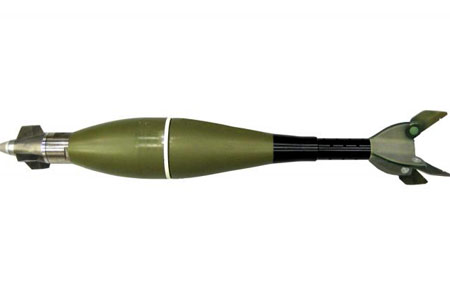
The US Research Center (Ardec) began deliveries to the troops of the first experimental parties of shells with GPS navigation for the 120-mm mortar M120. The accuracy of new ammunition is claimed to be 7-13 times higher compared to analogues who do not know how to independently navigate the terrain.
{pic_1 c}
The APMI system is a typical mortar mine for the M120, supplemented by a GPS dac and plumage in the bow that is controlled by a computer.
If for conventional shells a circular probable deviation (KVO), which characterizes its accuracy, ranges from 76 to 136 meters, then for a new min, this indicator does not exceed 10 meters and should become even less, reports the comprehension with reference to the official website of the US Army www.army.mil .
In April, APMI entered the service of one of the brigades deployed in Afghanistan, and in the next six months, supplies will begin at seven departments.
The use of large -caliber mortars in urban quarters is difficult to obvious: this weapon is intended for “attacks on the areas”, when the low accuracy of the hit is compensated by the large radius of the dispersal of fragments moving along the flooring trajectory.
The militants use this feature, strengthening in the populated areas and hoping that the army will not be able to smoke them from there so simply.
Previously, according to Peter Berke, the manager of the organization Program Executive Office Ammunition (PEO AMMO), which is engaged in the supply of ammunition, in such cases they had to send soldiers, exposing them to additional risk.
True, and now the new shells will only “dilute” existing ones, since they will only be used to destroy spot goals.
The expert also told military journalists that the military does not plan to modernize smaller diameter mines (81 mm and 60 mm).
In general, as experts note, the use of new shells will make it possible to confidently and quickly hit spot goals, such as shelters, dugouts, easily armored vehicles.
The microcomputer receives data from the GPS sensor throughout the length of the trajectory, up to contact with the goal. Before the shot, the system receives the coordinates of the fire position in which the mortar is located.
The introduction of this system will increase the efficiency of the used mortars already used in units. Traditionally, the calculation of data for shooting was a difficult task that turned artillery shooting into art.
Generations of artillerymen used formulas, tables, mechanical and electronic computers, but obtaining accurate coordinates of flying ammunition in real time was impossible.
Now the dynamic guidance of a target projectile is available not only to artillery calculations of the latest systems, but also when using old, time -tested weapons.