
Translated material
"Sweet gingerbreads are always not enough for everyone"
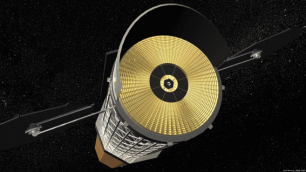
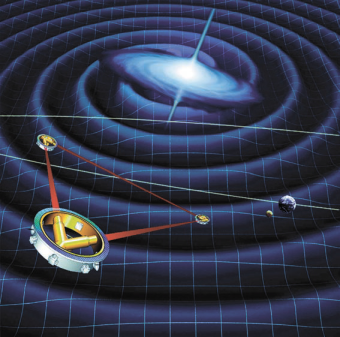
The reduction in the NASA budget (which is the challenge, in particular, wrote in [1]) and the followed tough solutions threatened several very large scientific projects in the field of astrophysics. This became the subject of a stormy discussion in various publications [2-5]. This is primarily about LISA and IXO projects, which were planned as joint projects of NASA and ECA (also, probably, there will be reductions in plans to implement expensive planetary missions, but we will not discuss them here).
The LISA project (Laser Interferometer Space Antenna) is designed to study the gravitational waves of a long length from astrophysical sources. The implementation was assigned in 2025. The cost of the project was approaching $ 2.5 billion, of which 1.5 should have allocated NASA [6].
The IXO project (International X-Ray Observatori) is a new level X-ray tool. Its cost is estimated at about $ 5 billion, from which NASA planned to allocate more than 3 [6]. In addition to the European Space Agency, Japanese (JAXA) also plans to take part in the project. The project was supposed to be implemented in the 20s of this century.
These projects were to ensure both scientific and technological breakthroughs. Their development, creation and implementation should not only give new fundamental knowledge, but would also allow you to develop new technologies. Therefore, in fact, they are so expensive [7]. Now the main severity in the implementation of these programs unexpectedly falls on Europe, which has its own economic problems. The situation in Japan is also far from ideal.
It is not yet known whether the missions will be frozen, completely closed or somehow reduced to satisfy new budget restrictions. Initially, experts, of course, will try to follow the last way - to see how to reduce the cost of projects without closing them at all. What will come of this is not yet clear. Perhaps we are waiting for some new permutations in plans to implement research missions of leading space agencies.
Sergey Popov
1. I. Lisov “Sunset of the American Cosmos”, shells, No. 73, 03/01/2011 http://trv-scieence.ru/20l1/03/01/zakat-amerikokogo-kosmosa/
2. Http://blogs.nature.com/news/thegreatbeyond/2011/04/nasa_disbands_science_teams_to_1.html
3. Http://blogs.discovermagazine.com/cosmicvariance/2011/04/06/nasa-gives-up-on-lisa/
4. Http://scienceblogs.com/catdynamics/2011/04/nasa_wiping_the_slate_clean.php
5. Www.bbc.co.uk/blogs/therePorters/jonathanamos/2011/04/europe-must-stand-tall-on-spac.shtml
6. New Wolds, New Horizons in Astronomy and Astrophysics. www.nap.edu/catalog.php?record_id=12951
7. S.B. Popov is more expensive than pearls and gold. Russian reporter No. 6 2011 http://rusrep.ru/article/2011/02/16/science_gold/