
Translated material
Not in the spaces of space, but deep into the nucleus
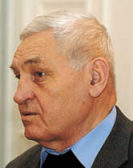
The cosmic theme of the new number and the theme of the previous one, dedicated to public procurement and education, continues the famous Russian physicist and popularizer of science, Dr. Fiz-Mat. Sciences, corresponding member of the Russian Academy of Sciences, head. Laboratory of theoretical studies of the Institute of General and Nuclear Physics of the RNC “Kurchatov Institute”, author of the book “Under the sign of Quantum”, Laureate of the Enlightener Prize 2009 Leonid Ponomarev. Talked by Natalia Demina.
- How did you meet the day on April 12, 1961? Did he become somehow special for you?
“Your question stirred up long emotions in me.” On the day of April 12, I was traveling on a train to Donbass for a wedding to a friend. In the small city of Druzhkovka, where I was born and raised, the train came in the morning and 3 km to the station, after the bridge across the end of the end, slightly slowed down in a bend, just not far from my friend’s house. I jumped from the train, and after 10 minutes we raised toasts “behind our yurk”, and a little later - for Yura and Natasha (my friend also called Yura).
- Did you want to become an astronaut in your youth, or did your generation dreamed of something else? Have you had interesting meetings with astronauts from the first detachment or designers?
- In 1961, I was 24 years old, and I already chose my way - not in the spaces of space, but strictly on the contrary - deep into the atom and nuclei. I did not meet with the astronauts, but my wife was born and raised on Baikonur and was a witness to many cosmic launches.
-Your attitude to 94-ФЗ in the scientific field?
- This is another bureaucratic barrier that contributes to the destruction of science. Since childhood, I remember a poster that has been placed in trams: "Conscience is the best controller!" And if the conscience in scientific groups has disappeared, then such measures cannot be brought up by such measures.
- Can, in your opinion, can the reform of education be successful?
- With such an abstract formulation of the question, of course, it can. But the same devilish details are important: is it needed at all? Who carries it? And what does it consist of?
- What are the conditions for the success of educational reform?
-When the United States reformed its education in the 50-60s (under the influence of Soviet successes in space), they attracted the best representatives of the scientific environment: the Nobel laureates of Feinman, Cooper, etc.-and created new textbooks for colleges and schools. And, of course, they provided teachers with material and public support. The reform is obviously not successful if it is at the head of it is a person who has a graduate student: “Is it possible to engage in science for a scholarship one and a half thousand rubles?” - He answers: “And who makes you engage in science for this money?”
- Should such a reform be conducted from above or below?
- In Russia, all successful reforms are possible only from above (only riots and revolutions occur from below). The whole problem is whether sensible and responsible people will be at the head of these reforms. Under Alexander II were there.
- Who should be at the head of the reform?
- authoritative (not according to the rank, but according to the Hamburg account) people who are also concerned about not the accumulation of wealth, but the good of the Fatherland. I understand that all this is the road to hell, laid out, as you know, with good wishes.