
Translated material
Holidays holiday
A cerebral week begins
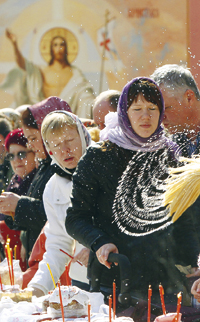 |
Through thorns. A passionate week begins - the last before Easter, the so -called post of passionate week. He completes the longest and strict great post in the Orthodox Church
The post was not invented by Christians - it existed in the Gentiles and the Jews since ancient times. And his essence was not in abstinence from certain food, but in the complete rejection of food and drinking. The post lasted a full day either from dawn to sunset. But from the depths of centuries, information also reached us about multi -day posts - such cases were considered exceptional and perceived as a special feat. This is what the Bible says about the stay of Moses on Mount Sinai, where he received the commandments of God: “And he stayed there (Moses) from the Lord for forty days and forty nights, did not eat bread and did not drink water; And he wrote (Moses) on the tablets of the word of the covenant, tenation ”(Exodus 34:28).
The great post will press the tail (proverb) to the Great Lent for Christians as a period of ascetic preparation for baptism, which usually occurred on Easter. The prototype of the fourteenth was the post of Prophet Moses, but it was established by the church in memory of the 40-day stay of Jesus Christ in the desert, where, according to the evidence, he prayed before he started his sermon and fought with the devil.
They hit sadly, to the shroud. Sadness and joy are confused in me: the Savior will die now ... And the almonds are in the pocket and the eggs of it ... And the smells of vanillas and the ham that have been baked now, and the sad prayer that Gorkin sings, “Judas of the wickedness ... Si-Ribri Paradi-i-I-Isa ...” He was in the new Cossack, he was in the new Cossack, he took the side of the butterfly. To the church.
Ivan Shmelev. "Summer of the Lord"
According to the rules for the great post, you need to prepare in advance, but most often this time was perceived as a period of rampant fun: weddings, youth party, Shrovetide. At the end of the XIX century, the Holy Principles even set the shepherds the task of fighting this “godly” action, but, as we see, did not achieve much success. Therefore, on the very first day of Great Lent, on Monday after forgiven Sunday, it was supposed to smoke the “spirit of Shrovetide”: they washed the house, they covered the furniture with covers, and then they soared in the bath, put on everything clean to meet the post clean. Hence the pure Monday.
Christianity makes a special emphasis on repentance during the post. It was supposed to confess and take communion more often, and the first confession of a child who reached the age of 7 was timed to a great post. Homemade prayer lengthened and increased, people kneel for a long time, sighing and flooding with tears: “Lord and my abdominal lord, the spirit of idleness, despondency, Little Managing and idleness, do not give me ...” Great prayer, read all days, except Saturday and Sunday, determined the main sins with which it was worth fighting during the post.
All entertainments were canceled, women and marriage girls were not allowed to wear colorful dresses, they were supposed to talk in a quiet voice, it was impossible to joke, laugh and sing, flirt with the opposite sex. Old Russian piety also required sexual abstinence. If the spouses “sinned” and undertaken into the post, they could face the ulcerative ridicule of leisure kumushka, and there is nothing to say about the suggestion from the priest. Now priests are approaching this scrupulous issue more individually, taking into account the opinions of both spouses.
Comfortable and devout parishioners at that time were read by the psalter, the lives of saints, and instructive literature. The parables and bypass, for example, such: “Antichrist will come to each other, dedicated to each other, and torture Christians will come before the death. He will take everything into his own hands: earth, water, air, bread. Christian blood will flow in the rivers, and in barns there will be gold and silver instead of bread ... ”
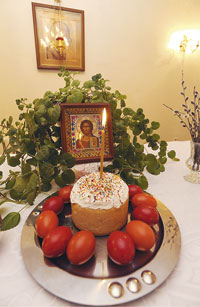 |
| The cake will need 3 tbsp. flour, 4.5 tbsp. Sugar, 6 tbsp. l. Plum. Oils, 4 eggs, 15 g of yeast, a pinch of salt, 3/4 tbsp. milk, 1 bag of vanilla sugar, raisins and centers (it is better to take orange zest cooked with sugar). Yeast, diluted in a small amount of warm water, mix with half flour. When the dial is rises, add raw yolks, lost with sugar, salt and oil to it. Then add the remaining flour and knead for 5 minutes. At the end of the batch, put vanilla sugar, raisins and zuccats. Give the test to come. Put the finished dough in an oiled form at 1/3. When it rises to 3/4 of the volume of the form, it is very neatly placed in a hot oven (200 °) for about 40 minutes. Cover the cooled cakes with glaze (two remaining proteins and 250 g of sugar, beat with a mixer to a density of sour cream). |
We eat lean, but we will dig up all the foreigners who attended Russia in the XV - XVIII centuries (Jacques Marzhert, the mercenary who served in both False Dmitriye, de la Neville, the Jesuit and the informant of Louis XIV, etc.), noted that the great post was of particular importance in the life of the people, and emphasized extreme abstinence. Although everyone chose their own method: some strictly fasted only in the first week (they could have nothing at all, and not just the imminent - meat, dairy products and eggs); Others took food only on Saturdays and Sundays; Someone did not eat until evening; Someone was sitting on a dried manner-bread, water, raw vegetables, even without vegetable oil.
However, if you mentally transfer to the lean market of the XIX and especially the beginning of the 20th century, it can be seen how severity of abstinence depended, if we speak in modern language, on the filling of the food market. A strict post was kept only in villages in Russia never differed by a prosperity. For wealthy segments of the population, the abandonment of the imminent did not mean refusing the pleasures of delicious food - pickles and sweets prepared for the future. For the Annunciation (April 7 according to the new style) it was possible to eat fish. People with wealth allowed this to themselves more often. “The family table has changed. Now fish were supplied in abundance: pike perch, cod, barbel, smelt, bream and, of course, delicacies-white-pink salmon, beluga, sterlet, smoked eel, sturgeon; The soup was fragrant with a mushroom aroma - in truth, all this did not contribute to the killing of the flesh too much, ”Princess Zinaida Shakhovskaya, born in 1906, recalled her children's pre -revolutionary impressions.
The tradition of fasting has completely taken root in modern post -Soviet Russia - almost all cafes and restaurants offer a lean menu - however, about half of our fellow citizens do not understand what the meaning of a great post is. In early March of this year, 49% of VTsIOM surveyed honestly admitted to this (44% of them call themselves Orthodox!). 38% recognize the spiritual content for fasting and 8% believe that fasting is just cleansing the body. And 3% of respondents do not see any sense in the post at all.
“In our parish, from the very beginning we agreed that we did not solve food issues,” says Archpriest Alexei Uminsky, rector of the Holy Trinity Church in Hokhlah. “Each fasts as it considers necessary.” The more educated and more experienced the priest, the more often he repeats - the food is not the main thing in the post. “This is a test of authenticity, a real Christian or not. First of all, one must not be afraid to see all your abominations in order to try to renounce the dilapidated and distorted and grabbing God with all hands, ”Father Alexei sees the post.
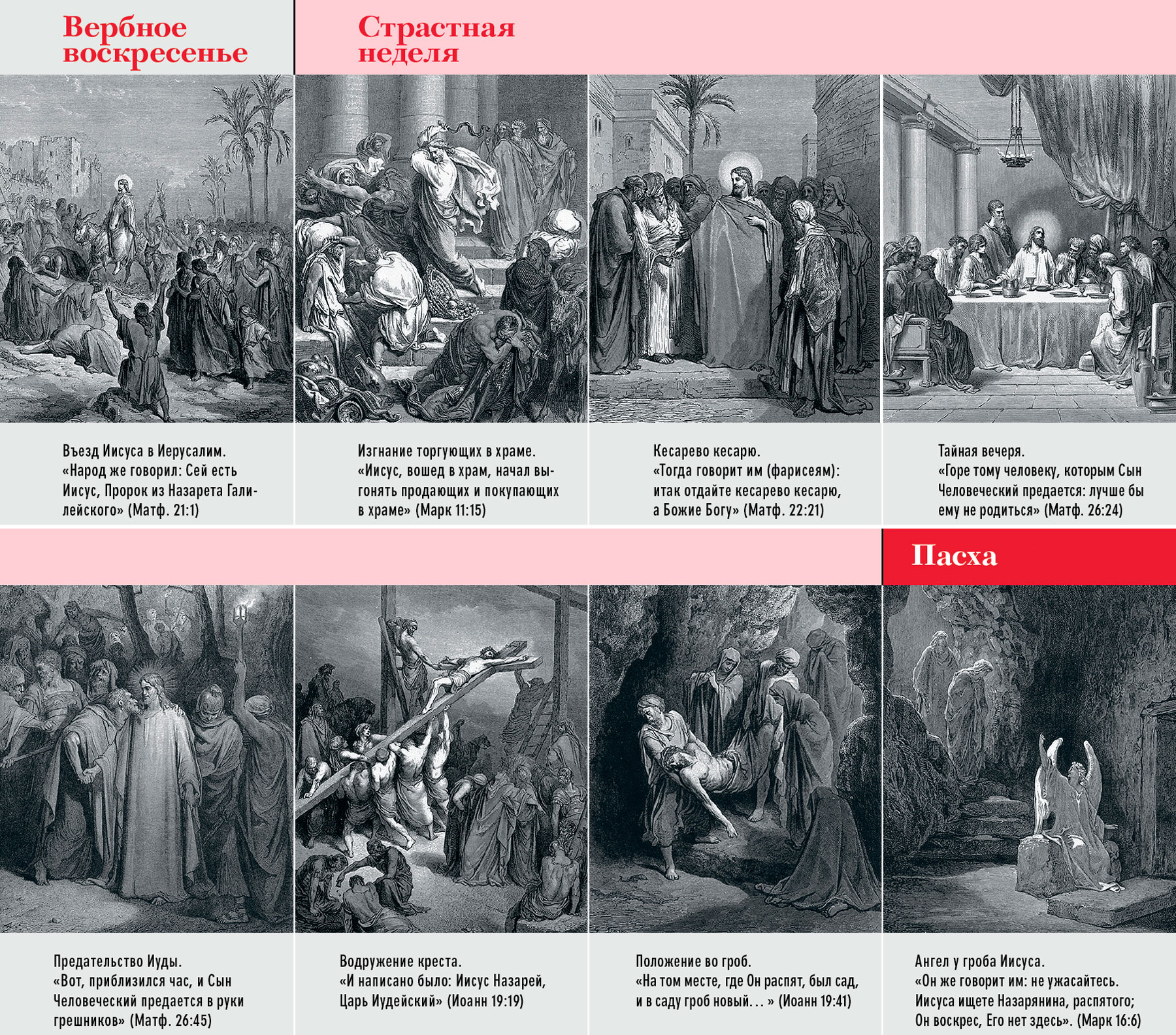
A terrible Monday goes to the yard, the whole way is the verba. (Proverb) on the passionate week, which is revealed by Palm Sunday - the entrance of the Lord to Jerusalem - believers recall the last days of the earthly life of Jesus Christ: suffering on the cross, death and burial. On this last week before Easter, the post is especially strict, and all the days are “great”: the great Monday, the Great Tuesday ... In each of the days (just like every week of the fourteenth), some kind of event of a sacred story is recalled: for example, the betrayal of Judas, in the great (pure) Thursday, on the great fifth (Friday)-crucifixion and diverse) Jesus.
“The Gospel at this moment really comes to life for a person who is striving for Easter, everything becomes completely entered,” says Archpriest Alexei Uminsky. - Each word of worships of a passionate week pierces the whole human being, and he is ready, along with (the apostle) Peter to say: “Lord! With you, I am ready to go to prison and go to death ”(Luka 22:33). Eternity and our time are connected at this moment, and you suddenly understand that the cross, and death, and the resurrection concern you personally. ”
Ekiya Easter - wider than Christmas! On the great Thursday, on a passionate week, it is supposed to paint eggs, on Friday - the Easter cakes, on Saturday - to consecrate them in the church. And on the night of a bright resurrection - a solemn night service with a procession and, finally, the long -awaited, exclaimed three times at the closed doors of the temple: "Christ is risen!"
The Christian Easter received its name from the Old Testament holiday of Passah, established in memory of the deliverance of Jews from Egyptian slavery. The apostles, who began their sermon with the story about the resurrection of Christ, commanded to celebrate Easter. From the first Christians, the celebration lasted a whole week (a bright week). Then the custom of Christ arose, which symbolically should indicate a complete internal reconciliation between Christians.
Goving is a moment in life, repeated, but always new and always equally decisive for our eternal fate. This is the moment when we stand in front of our conscience, we stand in front of the living god, and pronounce the judgment on ourselves. This is ... the moment when, after the distracted life, which we all lead to one way or another, we give ourselves time to break out of the cycle of the usual actions, thoughts, experiences and become before eternity, outside of time, in the face of the one that is life, and really, beauty and meaning.
Metropolitan Surozhsky Anthony (Bloom),
“Man before God. About conscience "
The celebration of Easter came to Rus' at the end of the 10th century and became the main church holiday
* * Catholics have the main holiday - Christmas. . Easter has always been marked widely. The Swedish diplomat and historian Peter Petre de Yerlezunda in his book about the Moscow state, published in Leipzig in 1620, testified: “In all cities and villages of the country, Russians put several thousand barrels and boilers with boiled eggs, painted in red, blue, yellow, green and different other colors, and some of them Soldered and sore silver. Passers -by buy them ... and give each other eggs, kiss and caress them. ” Pursuing the Gospel Testaments to the family feast, it was supposed to call a wanderer - usually the first person oncoming, preferably a tramp. And on the Easter table everything is symbolic: cakes, painted eggs and Easter. Kulich, in fact, is a large prosphora, bread with the image of a cross, a symbol of resurrection. The egg reminds of an eternally reviving life
* According to one of the legends, the first Easter egg was brought by Maria Magdalene Emperor Tiberius. . Easter, cottage cheese in the form of a truncated pyramid, is a symbol of the coffin of the Lord.
After the silence of the bells on the passionate - the whole Easter week of anyone could climb the bell tower and call for his pleasure. This custom is still preserved.
To share Easter joy is better than in words. “A man who has survived Easter joy,” wrote the famous Moscow priest Georgy Chistyakov, “cannot but share it with others ... but it is impossible to share it in words ... It is impossible. It will be a profanity of a miracle. ” He calls for "learning to share this joy in addition to words - his own life; And not only with good deeds, but in general the attitude towards each other and every moment of being. ”
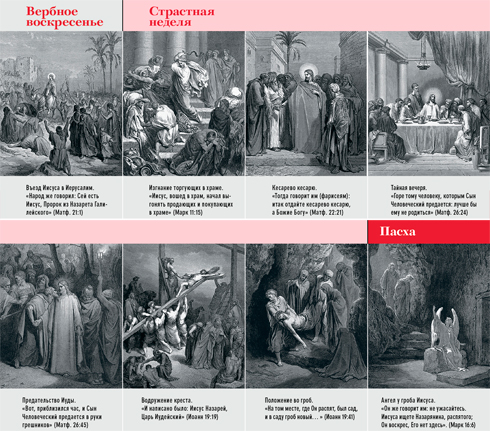
From the illustrations of Gustav Dore to the Holy Scriptures (click to increase)
In the West, the great post has always been and continues to be softer than in the East. After the second Vatican Cathedral (1962–1965), the Roman Catholic Church requires adhere to strict abstinence only in the ash (the first day of the Catholic Great Lent), passionate Friday and Great Saturday. On other days of fasting, dairy products and eggs are allowed. Protestants have no calendar Great Lent at all. They hold the post as necessary - with the illness of the believer himself or his loved ones, in difficult life situations, when making responsible decisions. Usually the post is no more than three days. This is due to the fact that the Protestants have a post, like the Jews, means complete abstinence from food. At the same time, the post is always accompanied by increased prayer.
Easter in eastern and Western Christians, as a rule, does not coincide, because the churches use different calculation methods, the so -called Easter. All the Orthodox churches (with the exception of Finnish, who celebrates Easter for the Gregorian calendar adopted in the West) relies on the Julian calendar and Alexandria Easter. Catholic Easter in 45% of cases happens a week earlier than Orthodox, in 30% of cases it coincides, in 5% - the difference of four weeks, and 20% - a difference of five weeks (there are no difference in two and three weeks).