
Translated material
Monetization effect
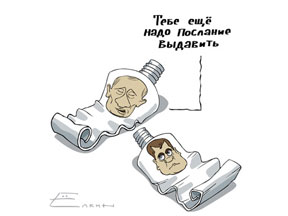
The ratings of the tandem and the party in the authorities set the next records of the fall. The president has a historical minimum, Putin has with monetization of benefits. Of course, they are quite large, but the fall trend cannot be broken. The reason for reducing the incomes of the population and in awkward initiatives of the authorities.
Sociologists from the Public Opinion (FOM) Foundation (FOM) were published by the fresh results of a survey of ratings of Russian leaders and political parties. The picture loomed insignificant for the authorities.
The confidence rating of Dmitry Medvedev fell to 46 points - a minimum from his presentation as a successor to Vladimir Putin in December 2007 (then there were 43 points). At the same time, the number of “completely non -dispersing” updates the maximum for all the presidency of Medvedev, rising to 20 percent. Putin's trust rating is higher, but also sank to 53 percent. The current prime minister was less, according to FOM, in 2003-2005. The number of non -exiting Putin repeated the maximum of 2005 (after the monetization of benefits), amounting to 18 percent.
Thomas are echoed by colleagues from Levada Center, whose surveys also show the fall of the tandem rating in the last year to historical minimums (see Putin's minimum ). However, the Levada Center data records a small (two percent) growth rating of tandemocrats compared to March.
Party ratings also indicate a crisis of confidence in power.
The rating of "United Russia" also fell to the elected level. In December 2007, 41 percent voted for the EP in percentage of all voters (though the protest electorate did not go to the elections and the party received 64 percent and the parliamentary majority in the State Duma). Sociological surveys showed in 2008-2009 the level of support for United Russia of 54-56 percent, decreased in 2010 to 50-51 percent and collapsed in early 2011. Today, the party of the parliamentary majority has a rating of 43 percent. The same speed fall was observed in early 2005 (from 41 percent to 35).
According to the latest data from the “Levada Center” (unlike Thomas, they record interest on the number of citizens who have been determined), over the year the party of the party “sank” by 7 percent and amounts to 55 percent in April, having fallen by March by two points.
This is a tangible risk of falling in the parliamentary elections. Which, of course, does not deny the possibility of manipulating the turnout and the results of the will in separate regions and in separate enterprises, but, coupled with the fall of the country's leaders, it seems already a completely unpleasant result.
Undoubtedly, in the broad masses in their relation to the authorities there is a kind of “monetization effect”, when the fall of the rating becomes a response to some unpopular measures of the authorities. Only now "monetization" what is happening?
The answer “ratings fall due to the lack of growth in the population’s incomes after the crisis and fatigue from expectation” is only partially suitable. Yes, post -crisis ratings recorded some confidence in the supreme power. The turning point occurred at the beginning of this year and explain it with a “bad mood from the winter” (this is how Andrei Isaev, according to the results of the March elections, did : “The party’s rating has recently been seasonal. It was winter, which always leads to a deterioration in people's well -being”) is difficult, if possible.
The effect could also have increased prices for goods and services. According to Rosstat, in March 2011, in relation to March 2010, it amounted to 9.5 percent. Even if the methodology of the Russian statistical department reflects a more or less real picture, growth in individual regions and groups of goods was significantly larger. Meanwhile, the real incomes of the population, having played a post -crisis fall in the last year, froze and even decreased due to inflation. According to the Federal State Statistics Service, income on average in the country amounted to 18,390 rubles, showing an increase of 6 percent by March last year. However, real cash income (that is, with the adjustment for inflation) slightly decreased, amounting to only 96.6 percent of the March level last year.
There are few specially advertised and infringing on the rights of Russians - widely advertised and infringing on the rights of Russians. However, they are observed and in the complex can explain the fall of ratings to record -low (for current Russian leaders, of course) results.
The introduction of paid fishing, a promise to multiply excise taxes on alcohol and tobacco, the obvious profanity of the police reform, the only effect of which was probably a decrease in the loyalty of law enforcement officers of the federal government. All these body movements are the activity of the federal government and many citizens are not quite satisfied with them. And they are even potentially ready to protest (see the nation suffered ).
Power invades citizens without providing anything in return, except for promises. Which causes discontent.
There are few exits in power on the eve of the elections: to fill in dissatisfaction with money or to hope for election pumping and mobilizing the bureaucratic apparatus. Most likely, they will be combined: the increase in salaries to the state employees is already promised, the mobilization of elites before the elections begins. It remains to find out how much the resource of the “Putin stability” resource is enough and what the state will pay for an increase in expenses. It seems that hope is only for expensive oil.