
Translated material
The Ministry of Finance proposes to return the stabund
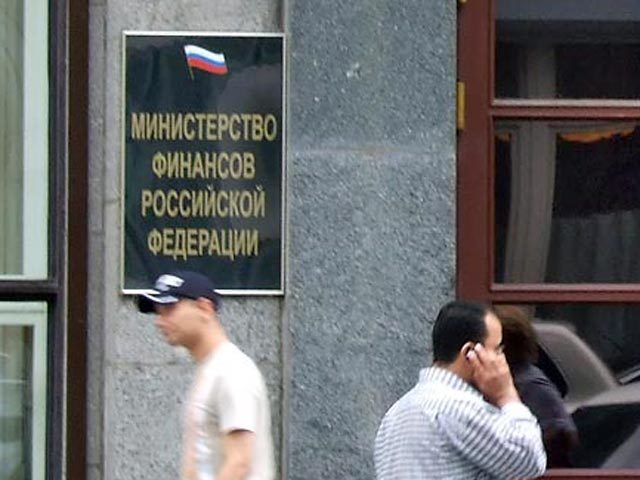
The Ministry of Finance plans to return to the principles of the use of oil and gas revenues that existed in the formation of a stabilization fund and provided for the establishment of the cut -off price, beyond which oil and gas revenues accumulate, Financial Market reports with reference to the statement of the Deputy Minister of Finance of the Russian Federation Oksana Sergienko.
"We will now restore the budget rules (using oil and gas revenues) in the next few months, but the rules will be by the type of how the stab fund has been formed," she said. "That is, we take some average oil price, long -term (...) and from above this price we accumulate oil and gas revenues, and non -oil and oil income is spent to the non -and -gas income," she explained. According to Sergienko, what will be the cutting price of, this is a matter of discussion.
"Our task is to ensure a gradual decrease in the use of oil and gas revenues," she said. According to the deputy minister, when the design of the non -Neniftegazy budget was developed, the goal was to gradually reduce the oil and gas transfer to 3.7% of GDP by 2011.
“When the crisis happened, we have increased the budget obligations, today the deficiency is so high - for 10-15% of GDP it will be preserved after 2015 and even by 2020 will be higher than 20%, that this goal is to ensure a transfer of 3.7% of GDP - only by 2027-2028,” the deputy minister said.
Speaking about the new structure of the formation and use of oil and gas revenues, Sergienko noted that in the next three years it would not be possible to "introduce these rules as strictly as it is necessary to be a balanced budget."
In this regard, she noted, until 2015, intermediate rules will be introduced when the cut -off price will be set from the amount of expenses that must be financed. “In fact, there are expenses, from the opposite we count what the price, transfer should be,” said Sergienko.
“We can introduce rules that would comply with macroeconomics only since 2015,” she said. According to the deputy minister, the transfer will appear calculated at the same time, "that is, we will add oil and gas revenues at an average price plus Neneftegasis and the estimated transfer of the transfer will be obtained."
Answering the question why the Ministry of Finance decided to abandon the principles provided for by the Budget Code, now suspended during the crisis, Sergienko noted that "it is easier to count." "The logic of the transfer of 3.7% of GDP was built on the basis of a long -term leveling, but since we have gained obligations and have very much moved away from the goal, now there is no need to use this rule," she explained.