
Translated material
The mystery of Leo Gumilyov

With all the abundance of memoir and biographical literature, the figure of Leo Gumilyov remains mysterious. The mysterious remains its complete neglect of scientific methods and principles in most works - they are completely absent. Therefore, the scientific community of Russia does not recognize it, although it is frantically popular outside science. The mysterious remains his now undoubted anti -Semitism. It was a painful fact for many of his friends.
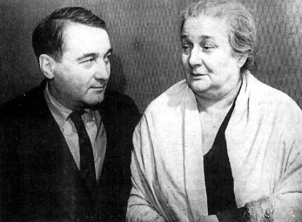
Anna Akhmatova Vinil in everything Soviet power and camp. Her lover of her son Emma Gershtein (2006: 351) 1 recalls:
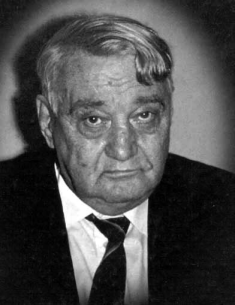
“We have seen for many years a person who has the name Lev Nikolaevich Gumilyov, but although we continued to call him Leva, this was not the levoy that we knew before the arrest of 1938. How Anna Andreevna suffered from this fatal change in his personality! Shortly before her death, in any case in the last period of her life, she once thought deeply, sorting through all the stages of her son’s life from the very birthday, and finally said firmly: no! He was not like that. They did it to me like that. " And in another place: “She was struck by the extreme egocentrism that appeared. “He fell into himself,” she remarked, or: “Nothing, nothing is left, one part -time” ” (2006: 387). Predonov is the hero of the story of Sologub “Small Demon”, a dumb provincial teacher, seduced by demons. Gumilyov not only warned Orthodox Rus' against Jewish danger, but also talked a lot about demons (the priest Vasily - 2006: 308) recalls this.
I identified the camp on the way of thinking of L. N. in my critical article in 1992 (Neva, 4), suggesting that he was a camp Sheherazade, “pushing the novels” to criminals, and the habit of adapt to the interests of his camp public influenced the form and content of his works, giving the orientation of his teaching. This conjecture caused indignation among many ardent adherents of Gumilyov. He could not be Sheherazada! He was a prophet and teacher, leader!
It is difficult to judge this. Gumilyov left very little information about his camp life. And this in itself is also mysterious. “For almost a quarter of a century, I was lucky to be friends with Lev Nikolayevich and study with him, ” said Savva Yamshchikov (2006). - Our conversations were trusting and open. And only two pages of his difficult life, the scientist never concerned: the suffering of the prisoner of the Gulag and the relationship with his mother. " Relations with the mother - of course, not for strangers. Opened only to relatives. Of course, the camp is a difficult topic for memories, but many people consider it their duty and relief of the soul to tell people this terrible there. And Gumilyov is a recognized master of words, colorfully describing past centuries and distant countries, other peoples and all exotic. He visited this exotic world personally, saw everything, experienced, is able to tell everyone. And he is silent. Shalamov, Solzhenitsyn, Guberman, Acceleration, Ginzburg, Mirek and the abyss of other surviving prisoners - everyone writes, tell, indignant, expose. And Gumilyov is silent. Silent not only in the press. Many memoirists note that he almost never talked about his camp life. Nobody.
Usually, those who were categorically dissatisfied with the world abandoned by them, for whom the humiliation of camp life have not remained external factors, but turned into the loss of dignity, a lack of respect for the environment, do not want to recall this segment of their lives. In the camp, where the bulk are criminals, the whole community is clearly divided into castes. Overlated criminals and “authorities” fall into the upper caste. In the middle, in the "men", the whole gray mass. In the Lower Casta, the “Chushkov” caste, whose hopeless life is full of humiliation, beatings and disasters, the weak, miserable, funny, intellectuals, patients, untidy, mentally unstable, violating some laws of the thieves world. They go to the scum, eat scraps, wait for pumpkins and kicks from everywhere, cling in the corners. Thieves are sleeping on the "schools" of the first tier, men - higher and on the floor, flashes - under schools or under the bunks. There is a well -known convenience (isolation, shelter), but the place is considered humiliating, and in the world of prisoners, prestige, semiotic means a lot.
I will not describe this system in detail now - I did it in the book “Inverted World”.
I have no doubt that at the end of his multi -component term, Gumilyov enjoyed the privileges of the old seat and had authority, and if he performed the functions of Scheherazada, then a unique position. But according to my ideas, at least at the beginning of his arrival at the camp, the young Gumilyov had to incredibly badly. According to his data, he had to please the lower caste. The pure intellectual, in childhood pursued by boys (2006: 25-27), with speech shortcomings, buckle (he ironized that he does not pronounce 33 letters of the Russian alphabet). The character is quick -tempered, picky, heavy, inextricable (2006: 121; 265), “he loved to bicker in a tram” (2006: 331) - it was precisely such fell into flaps. He, by the last date, A.F. Savchenko (2006: 156) recalls that Gumilyov’s physical data was very unprofitable for the camp: “The complexion is by no means athletic. Fingers are long, thin. Nose with a hump. He walks around. And in addition to these not very convincing data, Gumilyov suffered from a speech defect: Kartavil, did not utter the letters “P” ... Who is rogging? What social environment are rugging from? " Savchenko replies: nobles and Jews. Both layers are alien to the criminal environment.
Savchenko emphasizes that in this period, “despite such an impressive list of adverse properties, Gumilyov enjoyed great authority among the camp population. In all the barracks, he had good friends who met him with emphasized hospitality ” (ibid.). He tells how the crowded circles were going to listen to his stories (Sheherazadi functions) around Leo Nikolaevich. But all this is because just before the last camp period of political, the criminals were separated, "thanks to which life in the camp became relatively tolerable." And before that? “It was a nightmare” (2006: 167, also 157). But when the criminals nevertheless found themselves in the same camp with political, episodes arose similar to described by the same Savchenko (2006: 168-172): “Ryaba with the guys hits the Jews there,” and this “Jew” was L. N. Gumilyov.
There are direct certificates of the details of everyday life that fit into this reconstruction. Gumilyov told about his discovery of passionarity as follows:
“Once, from under the fours, a young guy jumped out with a young vyhrams. In some joyful and stupid eclipse, he screamed: "Eureka!" It was none other than me. My cellmates sitting above, there were eight people, looked at me gloomily, deciding that I was crazy ... ” (Varustin 2006: 485). And to others he said that “he came up with the theory of passionarity, lying in the“ Crosses ”under the bench”). L.N. said, determined his place in the cell - under the bunks, under the shk.
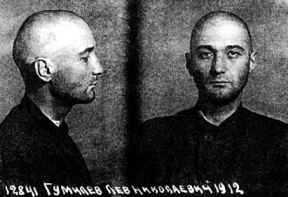
Gumilyov himself recalls the early term that by 1939 he completely “reached”, he became “goner”. In Norillag in the winter of 1939/40, D. Poglotov was sitting with him, who placed his memories in Zapolyarny Pravda (June 23, 1992). Smobletov needed to find his assistant to pull the body of the deceased out of the hut. One ZEK pushed the DOPREGA sleeping board under the bunks, it turned out to be Gumilyov. Smotletov had the impression that Gumilyov had a “humiliating status of the plague”, six. He, apparently, was regularly subjected to the usual humiliation of this Luda. The quicklets describes him as an extremely weakened, ineffable, with a swollen face, this goner barely moved and hardly pronounced the words, was dressed in dirty clothes. He had no things.
Some people question the memoirs of Nastoletov, since he himself was before the arrest of the Chekist (intelligence officer), but these memories are very realistic and consistent with everything else that we know about this period of Gumilyov’s life. It was especially difficult for Gumilyov, because the noble honor, respect of the environment and the consciousness of his high mission were his nature. The contrast of self -awareness with its inability to withstand the vile reality was especially catastrophic for him.
This period inevitably had to imprint on the subsequent ones, when Gumilyov’s position improved when he mastered the status of Scheherazada and achieved the attention and respect of the colaigers, and the colaigers became others. The prisoner of the lower caste never completely passes into the upper eyes of others or in his own self -awareness. He can discard this obsession only with all the surroundings of the camp, throwing back the camp as a nightmare. Therefore, people of this plan try not to remember the camp life, drive these nightmares from themselves, clean their memory in order to recover from the camp.
However, irreversible changes in the psyche are almost inevitable, remain after the camp. Those who withstood the tests and gained respect for the environment did not be below, the influence of the camp past can be strengthening - he leaves the camp, if not kinder, then more than he was taken there. Those who were broken, who could not stand the terrible burdens, could not defend their dignity in the evil environment, were forever bruised by the camp, their general attitude towards people has changed - it became alienated and incredulous, self -esteem began to need constant confirmation, pride became painful. These people are constantly looking for what to show their superiority over others - everything is used: experience, faith, nationality, floor ...
The big fan of Gumilyov and Akhmatova, M. M. Kralin (2006: 444) recalls how Gumilyova first saw Gumilyova at a meeting of the Geographical Society on January 22, 1971, where Gumilyov chaired by Nina Ivanovna Gagen-Torn. She is “the same old, the mother of the camp, like him, sitting on the stage, sipped with small sip of coffee from a small cup and calmly answered the fierce Philippics of Lev Nikolaevich, who had objected to her on all points ... On the sidelines, Nina Ivanovna said that the camp acts differently on the human psyche that Leo Nikohaevich was in this sense. Interrupted for the rest of his life. But, it seems, he himself did not deny this then. ”
I think that everything that is distributed in Russia called the Gumilyovsky doctrine of ethnogenesis has nothing to do with science. These are myths created in the sick consciousness of an extremely gifted person under the influence of the monstrous circumstances of his tragic life. The badness of these talented works, absolutely clear to all professionals, he did not see and did not understand.
Meanwhile, in some of his works, he was a really wonderful scientist who made excellent discoveries - this is work on cyclic changes in the ways of cyclones and the influence of these changes on the life and history of the population of Eurasia. If he focused on these phenomena, perhaps he would be much less noticeable in the mass consciousness, but much more authoritative in the scientific world.
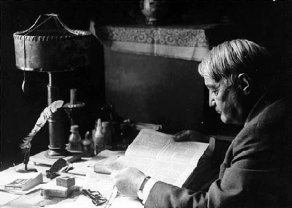
Photo from the site gumilevica.kulichki.net
1 Many memories of quotes. According to Sat: Voronovich V.N. and Kozyreva M.G. 2006. “Living in other people's words ...”: Memories of L.N. Gumilyov. St. Petersburg, sprout.