
Translated material
Memory of E. G. Maksimova
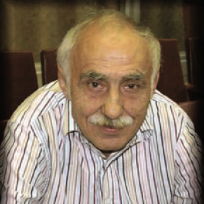
A talented, uncompromising, combat physicist, the largest specialist in high-temperature superconductivity, corresponding member of the department of physics and astronomy of the Russian Academy of Sciences Evgeny Grigoryevich Maksimov, passed away. He was not only a direct student of V.L. Ginzburg, but also inherited the style of the school of Ginzburg - was even more “sharp”, more “notorious” physicist than Ginzburg.
Zhenya was very worried about the fate of our physical city of Troitsk and was very pleased when the mayor of Troitsk was elected physicist V.V. Sidneva. “You know how many years I have known him - 33 years,” he told me. V.L. Ginzburg was also interested in the fate of the Akademgorodok and even wrote out the newspaper Trinity Option.
Since the author of these lines himself is a “notorious” mathematician, our scientific clashes and disputes with Zhenya perfectly reflect the difference between a mathematical and physical approach in science.
For me, mathematics, his comments, like V.L.'s comments Ginzburg, were extremely useful. I always sincerely admired them. I would like his unexpected and witty answers to remain in the history of the clashes of the two sciences (I will highlight them in italics).
We were friends, but I did not believe in physics, and he - in mathematics. The wonderful physicist of Y. I. Frenkel wrote: “We easily get used to monotony and constancy, we stop noticing it. The usual one seems to us natural, understandable, unusual-unnatural and incomprehensible ... In essence, we cannot understand, but we can only get used to it ”(V. Ya. Frenkel.“ Yakov Ilyich Frenkel ”,“ Science ”, Moscow-Leningrad, 1966).
As an example of various logical approaches to science, I will give an episode with a negative review to V. I. Arnold, who sent his article to the housing office. He described this episode in his memoirs. When I was already a member of the Academy and a recognized specialist in quasi-Classics, the reviewer-physicist also gave a sharply negative review of my article and wrote that I don’t understand what quasi-classical asymptotica is.
I'll start with our disputes with Zhenya Maksimov about five years ago in my country house. I speak:
-What is it: in the book of Landau on quantum statistics, two definitions of Bose-statistics are given: one through combinatorics, the other through the symmetry of its own functions of the N-partial equation of the Schrödinger, but how they are connected, the formulas are not given ...
- Well, the first definition is ancient. Now everyone is using the second.
- And if the students ask, where is the connection?
“ And they will not ask, ” Zhenya said confidently.
Superwear and superconductivity are close problems. In 2005, from a purely mathematical concept, I received a paradoxical fact of the ultra -texation of water in the nanotubes. I told Maximov about this. He said: "You will not convince me with your lemmas." I remembered this phrase forever and realized that physicists need to explain differently.
I came up with an explanation that physicists somehow perceived: the rays reflected from the wall of the capillary can be interpreted as a collision of two rays: one-moving right in time, the other-moving backward in time, like an electron and positron (“Positron is an electron that moves back to time” (Feynman)). In their collision, a photon absorbed by the wall is formed, and the movement is inhibited. Therefore, the tube should be such a small radius that such rays do not occur. Then absorption and braking are absent, and superiority arises. This explanation caused physicists the necessary associations.
In the same way, when I sent my article to the UFN, to the room dedicated to V.L. Ginzburg, I asked the new editor -in -chief of the magazine to transfer the article to the review of the “fierce” reviewer - Maksimov. Eugene got down to business, understood everything thoroughly and made me completely redo the article. At the same time, he left not mathematical, but purely everyday arguments and analogies in the article.
The great physicist and philosopher E. Mach said: “Sciences are divided into two parts-into humanitarian and natural sciences ... I must say that I do not believe in this division of sciences” (Ernst Mah, “Popular Scientific Essays”).
I was surprised that Zhenya did not order to remove from the physical article and even approved the everyday analogy with the Fermi-Stalistic, which I brought from Ilf and Petrov. The “12 chairs” describe the situation when the release of goods in one hand is limited: according to pounds of sugar and five pounds of flour. To get the maximum, “the first in line was Alhen. Behind him is his wife Sashhen, Pasha Emilievich, four Yakovlevichs and all fifteen ghostly old women. ” It is clear that from the point of view of the number of sugar and flour acquired by this company, it does not matter in what order they cost - they can be changed without damage. At the same time, it is pointless to the same place to become the same place, and in this sense the “principle of prohibition of Pauli” is observed. Thus, the “ban” we set ourselves because of its expediency.
Zhenya said: “Yes, indeed, the old women are indistinguishable from the point of view of buying goods, and it is ridiculous to one point in one point.”
I brought in detail his statements so that E. G. Maksimov remains alive not only in my memory and that his unforgettable combat character is at least partially reflected in these lines.
V.P. Maslov,
Academician of the Russian Academy of Sciences