
Translated material
General of the Ministry of Defense caused a commotion, chatting the upcoming presidential decree on the teninization
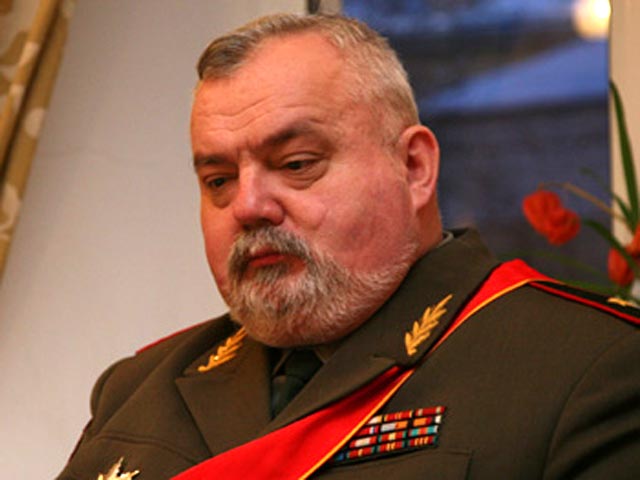
The head of the Department of the Ministry of Defense of the Russian Federation to perpetuate the memory of the dead Alexander Kirilin provoked a violent reaction, opposing the official tenization program, for which President of the Russian Federation Dmitry Medvedev can speak, RIA Novosti reports.
Having admitted that the names of all victims of the Stalinist repressions must be perpetuated in a separate database, the general said that it was incorrect to impose an assessment of the Stalin era with decree. These harsh words immediately caused a commotion among human rights activists , and the head of the Presidential Council of Human Rights personally volunteered to explain the essence of the Red Stalinization program.
- Poll: 26% of Russians believe that Stalin made more good for the country than bad
On Tuesday, in response to the request of journalists to express his opinion on the program, Kirilin said that he saw on the eve of a television program in which most participants voted for the tennisation. But, if the project is accepted, this will just mean a return to Stalin's times, when a person was deprived of the right to independently evaluate various events, the general objected to the supporters of the program.
“Such a program cannot be given official status. I will be imposed by presidential decree, how should I evaluate! Where will we return again? We will also return to Stalin, or what? Now, thank God, not the 30s of the XX century, so that the Directive of the CPSU (b) argue that everything was so,” Kirilin emphasized.
According to the representative of the Ministry of Defense, wide public discussions should be held on this occasion. As the general is sure, in order to adequately evaluate the negative consequences of the Stalinist regime, you can create an electronic database, as was done for the dead in the Great Patriotic War. “All the victims of the Stalinist repressions are fascinated,” Kirilin emphasized.
In March 2011, President Dmitry Medvedev, speaking with a speech dedicated to freedom, at the conference "Great Reforms and Modernization of Russia", condemned Stalin's methods.
“I want to draw attention to the fact that not fantasies about the special path and not the Soviet experiment, but the project of a normal, humane system, conceived by Alexander II. Ultimately, it was he, and not Stalin,” Medvedev remarked, contrasting the king’s liberal reforms with the tough methods of the Soviet era.
Last December, Medvedev on the eve of a visit to Warsaw in an interview with the Polish media, speaking on one of the most painful issues of Russian -Polish relations - the "Katyn cause", also mentioned the last name of Stalin.
The head of the Russian state called frivolous attempts to question Stalin’s guilt in the execution of Polish prisoners of war in the USSR in 1940. “It is quite obvious who committed this crime and for what. And the State Duma returned to this issue again. Stalin and his minions are responsible for this crime. And I have the relevant documents that were received from the so -called“ Special folder, ”Medvedev said then.
As the president noted, these documents are present, including on the Internet and are publicly available with all resolutions. “Attempts to question these documents are doubted, to say that someone had falsified them is simply not serious. This is done by those who are trying to pole the nature of the regime that Stalin created in a certain period in our country,” the president added.
Human rights activists: The representative of the Ministry of Defense, probably, did not read a plan for the decolinization
The head of the historical, educational and human rights society "Memorial" Arseniy Roginsky, who is one of the authors of the plan for teninization, believes that, apparently, General Kirilin simply did not read it.
“The impression is that Mr. Kirilin did not open the program, did not read the sentences, did not analyze them, knows about it in vigor from the noise and Gama that the Communists and QuasiPatriots raised,” Roginsky told Interfax on Tuesday.
"He heard something out of the edge of his ear and draws early conclusions. I can advise him to read the text of the program. If he is a sound person, then he must agree with all points of the program," the head of the Memorial believes.
According to Roginsky, no one can influence the personal assessments of Alexander Kirilin, as no one is going to dismiss him for a personal attitude to Stalin. “One of many dozens of proposals of the program was that government officials publicly cannot deny the fact of Stalinist repressions,” the human rights activist explained.
The head of the Presidential Council for Human Rights wants to personally explain the essence of the program to the general
The head of the Presidential Council for Human Rights, Mikhail Fedotov, expressed his readiness to explain to General Kirilin the features of the development program and calm him down.
"I do not really understand how Mr. Kirilin is so concerned. Maybe he is embarrassed by the possibility of giving official status to the burial of victims of political repression?" - Fedotov told Interfax on Tuesday.
“I am ready and at any convenient time I am ready to meet with Mr. Kirilin, answer all his questions and remove all concern, especially since the program was not conceived as state, but, above all, as a socially -state. I am sure that a person involved in the perpetuating of the memory of the fallen warriors will perfectly understand the highly moral meaning of the memory of the memory of innocent victims,” the head of advice said.
The Presidential Council for Human Rights has developed a plan to overcome the totalitarian past. The document, in particular, implies the decision on the burial of Vladimir Lenin, whose body is in the Mausoleum, as well as the creation of memorials in memory of victims of political repression and the opening of archives.