Date
Author
Владимир Гандельсман; Александр Генис
Source

Preserved copy
Translated material
Brodsky in the New World
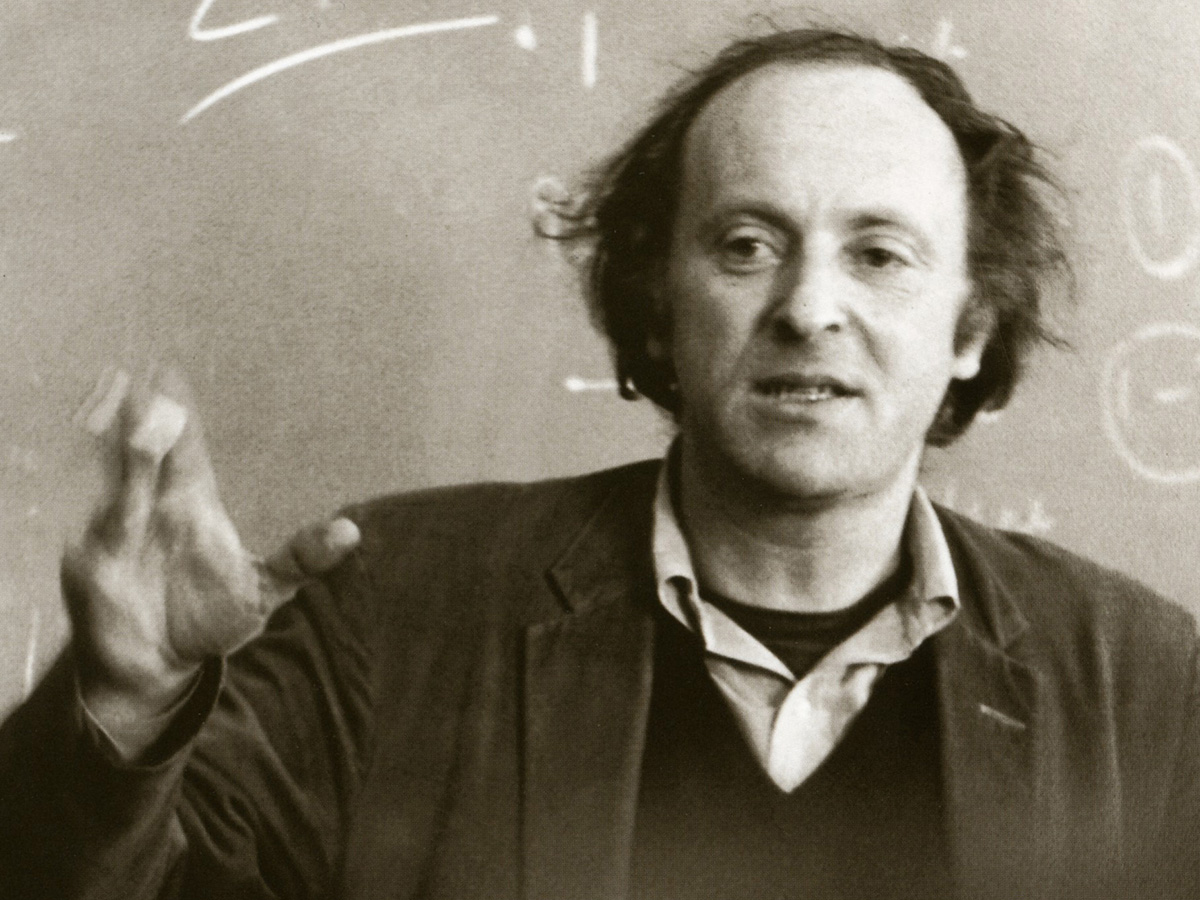
Alexander Genis: Samovar opened on May 24, on Brodsky's birthday. Since then, this date has always been celebrated in a restaurant. But today they remember Brodsky not only here. After some break, the serious American press again remembered him. In the fresh release of the intellectual weekly '', New Yorker '' tells about this in detail the article by Kita (aka Konstantin) of Hessen. But even before that, the attention to the poet was attracted by his biography - a wonderful book by Lev Losev, recently published in English translation. Review of this book by Adam Kirsch, the American poet and criticism, attracted the attention of Vladimir Gandelsman, whom I asked to tell about this controversial and, even, frankly, offensive material.
Vladimir Gandelsman: The artist is called '' The man who is nowhere 'or' 'from nowhere' '. You can say a homeless person - without a specific place of residence ...
Alexander Genis: This refers, probably, '' Citizen of the World ''.
Vladimir Gandelsman: Yes, most likely. Free, independent from the town ambitions and influence of a person who respects any traditions of peoples; respect primarily to the individual, and not to territorial or party affiliation; Not recognizing any privileges on racial, political, national and/or other signs. All this is so in the sense of determining the “citizen of the world '' and all this can be completely attributed to Brodsky. But in the article Kirsha is not the main thing. What the first phrase is already talking about: '' The poet Joseph Brodsky, expelled from the Soviet Union and never felt free in English ... ''.
Alexander Genis: In other words, the author disputes the achievements of Brodsky as an author of English -speaking?
Vladimir Gandelsman: disputes. He notes that Brodsky, after he received Nobel, supported his friends and future Nobel-Sheymus Khini and Derek Walcott, and then says that at least anything is clear that Khini’s achievements are significant or not ... bearing in mind that the achievements of Brodsky and, in my opinion, Walcotta are not obvious. Brodsky, Kirsch claims, looks slurred for an American reader. No approval or influence on young authors, despite the reputation. Some critics, especially in England, generally deny him, call an assessment of his works high and not well -deserved. And most simply ignores as if he had not belonged to the company of Khini or Eshbury.
Alexander Genis: But he does not belong, strictly speaking. Brodsky, as he himself said - an American essayist and a Russian poet. The problem, apparently, is translated.
Vladimir Gandelsman: The problem is translated. There is nothing new for the English -language reader. This is the alphabetical truth that Russian poetry is translated unsatisfactory. Why Pushkin is God for the Russians - Kirsch writes to us, it is incomprehensible. However, if Brodsky belongs to the company of Mandelstam and Tsvetaeva, then he should remain, like them, incomprehensible Americans.
Alexander Genis: But still there is much that distinguishes him from other Russian poets. He lived in America half his life.
Vladimir Gandelsman: And he translated himself. Do not forget-he became the poet-laureate of America. He wrote several original poems in English. As Kirsch says, quite decent. But then the Kirsch says that Brodsky’s translations into English are hardly good for the English -Westerners and that Brodsky never became a master in English, in the sense in which, for example, Nabokov became.
Alexander Genis: This is a rather controversial statement. I have a familiar American, a translator into Russian, very good, by the way, who studied with Brodsky. I asked her, what is Brodsky's English in comparison with Nabokov’s language. She said that Brodsky had a much more interesting language, because he invented it. Nabokov spoke English, and Brodsky spoke his English language, which enriched American speech. But at the same time, we, of course, know, and Losev writes in detail about this in his biography that Brodsky learned his tongue late and independently, unlike Nabokov, who knew the language from childhood and who had tutors. The Brodsky tutors did not have.
Vladimir Gandelsman: All this is true. One way or another, but for many, whose English language is native, for those who at the same time understand the literature, the poetic English Brodsky remains elaborate, not idiomatic and not musical. The talent of Brodsky, writes Kirsch, is guessed intuitively, it is noticeable in its intellectual range, bold metaphors, in rhetorical power - we guess about his genius, but in practice, in poems as such, we do not see him. And the same Leo Losev quotes the famous American poet Robert Hass, who compared the reading of Brodsky poems in English with wandering in the ruins of a magnificent building.
Alexander Genis: It’s all the more sad that Hass knows what a translation is - he is a magnificent translator Rilke. What do you think? Can a Russian poet, being approximately in such a situation, in which Brodsky was, to become an American poet? After all, for you, as a poet, this is also a serious problem.
Vladimir Gandelsman: I don’t think that it is possible to become an American poet in the situation in which Brodsky was. It's not only about the language. The point is precisely in absorption of it from infancy. Only in this case he is instilled with such force that he begins to self -develop, he may not think about himself, not invent himself, he is in free growth. There are very interesting observations of scientists in the study of the processes of mastering the language of the language-somewhere by three or four years a jump is made when it can be stated that the child knows the language. We cannot delve into this question, but it is clear that assimilation does not happen at all like that of an adult studying the language, that is, not by consistent enforcement of units of language or situations. This is the case with the language. And here's something else. You must grow among those realities among which the Americans grow (if we are talking about the American poet) - and these realities should enter your flesh and blood. Well, at random ... - Let's say baseball. Everyday American reality should become part of your life ... But let's get back to the article by Adam Kirsch and Losev’s book ...
Alexander Genis: In whose translation are Brodsky's poems in the American publication Losev’s book?
Vladimir Gandelsman: Yes, this is a very important point that Kirsch is talking about. Excerpts from Brodsky's early verses are translated by Jane Anne Miller. After each poem translated by her, it says “non-poet” '', which can mean: '' non-e likeing '' '' ', but in fact it means'' translated not by the poet himself ''. The author writes that her translations are only detracted from this phrase at first glance, since in fact they are much more poetic, cleaner and convincing than Brodsky’s translations.
Alexander Genis: By the way, I know Miller, she even translated several of my texts. This is a wonderful translator, friend and colleague of Losev at the Dartmut University. But back to the problems of translation. What is the matter? Brodsky claimed, and often categorically insisted that it was necessary to preserve the rhyme (if any) and size in translation. Do you agree with this?
Vladimir Gandelsman: I think this is a misconception, in any case - in no way alphabetical truth. Rhyme and size in one language may not work in another. And in the event that the translator was not able to get into the “top ten '', perhaps this very 'non -ethic translation, which is the translation of Jane Miller ... If this is just a substrate, then this, of course, is not a way out of the situation. I watched in Russia a performance on the “King Lyra '', which was translated by the adaptive. But Shakespeare was a poet! It is pronouncing his poems by prose is to kill absolutely everything. Which was done ... It is possible to mention some comments to the article of Kirsch, given in the Internet version of the magazine. Firstly, unconditional delight about his essay books in English. There is no doubt here. And then remarks like this: '' His English pronunciation was so terrible that it seemed to me that I knew Russian better than English ''. This is written by the American listener.
Alexander Genis: Nevertheless, Brodsky loved to listen. It is said that his reading in English, like reading in Russian, hypnotized the audience, introducing them into a trance and allowing him to understand his poetry better than a simple reading on paper. And what interests you in the article by Adam Kirsha?
Vladimir Gandelsman: Unfortunately, there is not a lot of interesting things, in any case, for me and me. He retells (according to Losev) Brodsky’s biography, a well -known Russian reader and listener. There are discussions about Jewry, which probably would lead Brodsky to irritation. He, as you know, did not want to go to Israel, never visited him, he wanted to stay in Russia, but was forcibly exhibited from it, became a citizen of America and he was buried in Venice. We know all this very well. At the end of his book, Losev quotes Suzanne Umbable: '' Venice was an ideal place to bury Brodsky ''. Because it was truly everywhere and nowhere. Let us recall in the conclusion of Brodsky’s line about Venice:
There is nothing to do here at night. No delicate oak or aria.
A lonely heel is tapping the diabase.
Under the lantern, your shadow is like a trembling carbonarium,
Stuffs back from you
And the steam exhales. We are talking at night
with its own echo; It grows heat
marble, booming, empty aquarium
With fogged glass.