
Translated material
Half a century on the air. 1995
Ivan Tolstoy: On our calendar today is the year of the 95th. Both calendarly and in its tragic content, it began with Chechnya. Where did the Dudaevites get weapons? Special transmission Arkady Dubnov.
Arkady Dubnov: Russian weapons in Chechnya. The version of Marshal Shaposhnikov. Special program of the Moscow edition of Radio Liberty. Since the events in Chechnya occupied the first stripes of all Russian, and perhaps not only Russian newspapers, when all the issues of television and radio-monument begins with reports of hostilities in Chechnya, there are no debate about how Dudaev’s regime was so much weapons that he was still able to resist the Russian military vehicle. But back to Marshal Shaposhnikov. He decided to withdraw the charges on his address on Sunday of January 8, when he appeared on the air of the Russian television channel, presenting the cipher -telegram from May 1992, which General Grachev gave then, appointed by the Minister of Defense of Russia. Cipher -telegram to the commander of the North Caucasus Military District on the transfer of half of the weapons belonging to the district at the disposal of Dudaev.
Evgeny Ivanovich, tell me, you announced the number of the cipher -telegram, which was sent by General Grachev. What was Grachev’s cipher -telegram content? Did she absorb Dudaev to take this weapon or gave the directive to the commander of the North Caucasian Military District for the transfer of this weapon? What the meaning of this cipher -telegram was, and then did you know about it then?
Evgeny Shaposhnikov: She was addressed to the commander of the North Caucasus Military District. The meaning is that it is allowed to convey military equipment and weapons in the amount of 50 percent of the Chechen side.
Arkady Dubnov: And he was competent in such a telegram, I mean Grachev?
Evgeny Shaposhnikov: And who is asking us such questions today, who can what? This is also a question. And take the remaining 50 percent to the territory of Russia. I want to say that the export was organized, and we did not take 50 percent, but took out, if there were about 50 thousand trunks, then Grachev managed to take about 10 thousand trunks.
Arkady Dubnov: So, it was then that Dudaev received the main weapon that he uses today. Did you then know about this shipherram of Grachev?
Evgeny Shaposhnikov: Then I did not know about this cipher -telegram.
Arkady Dubnov: Why do you think Dudaev was then allowed to get so many weapons? What - the attitude to him was quite trusting? Why did Moscow take such a step? Or there was simply no way to bring out this weapon, and still had to do something with it?
Evgeny Shaposhnikov: I think, rather, the second than the first.
Ivan Tolstoy: Since the end of December, 94th in Grozny, there was a special authorized Russian President for Human Rights Sergey Kovalev. Boris Yeltsin was extremely dissatisfied with his reports and stories from there. The whole slender and self -confident version of the suppression of the rebels broke. From the Moscow Bureau, Elena Savelyeva reported.
Elena Savelyeva: Speaking at the Security Council, Russian President Boris Yeltsin, outlining the settlement plan in Chechnya, did not ignore the activities of the Commissioner for Human Rights Sergei Kovalev. The president said that "sharing him, Kovalev, anxiety for the observance of human rights in the Chechen Republic," but "the matter is not only to sob, talk about how difficult people live in a military conflict." According to Yeltsin, "you should more engage in how to create conditions for people in which human rights would be reliably guaranteed." The first of them is the right to life. “For some reason, the Commissioner for Human Rights was silent about this and remembered only now,” the Russian President concluded. But not everyone divided the Presidential point of view of the activities in Chechnya Sergei Kovalev. Says the co -chair of the Human Rights Society "Memorial" Tatyana Ivanovna Kasatkin.
Tatyana Kasatkina: Personally, it seems to me that the president simply does not own the situation. He simply does not know what is happening, on the basis of his report. I believe that everything that was expressed by the President of the Commissioner for Human Rights in Russia Sergei Kovalev is not only completely unfair, but also offensive. Not only in recent years, but in the whole previous life, Sergei Adamovich constantly raised his vote in defense of human rights in our country. Sergei Adamovich repeatedly, being as chairman of the Commission on Human Rights and heading the Human Rights Committee, filed reports to Boris Nikolaevich on a violation of human rights in Russia and repeatedly achieved a personal meeting with him. But he did not receive an answer. And the fact that his voice was not heard by the president, in this, I think, is still not his fault. I have to say that another moment was chosen very “successful”. While Sergey Kovalev with deputies, with his group, sits in Grozny under the bombs, at that time Boris Nikolaevich speaks so badly about him. This, it seems to me, is the top of tactlessness. This is an insult to Kovalev and I must say that this is the position of the "memorial", all human rights activists, and all intelligent people in Russia. I think they will understand this abroad.
Ivan Tolstoy: In the first month or two, many journalists managed to visit in the combat areas. Russian soldier in Chechnya through the eyes of women. The microphone has Lyudmila Vasilyeva-Gangnus.
Lyudmila Vasilieva -Gangnus: Today's war is on the territory of Russia - in Chechnya. How do our soldiers fight in this situation, how do they behave in relation to civilians, to the old people, to women, children, sick and disabled people? I asked this question to the women of Chechnya, interviewing the 52nd witnesses. These are people of different ages, different nationalities, urban and rural, housewives and doctors, large elderly mothers and almost girls. These are women burned by the war, tired of her. What, in their eyes, is he a Russian soldier? About how peaceful people were shot, says a 69-year-old resident of the village of Samashki. Her name is Diamon, he was afraid to name his last name.
Daimon: The husband was killed and now - the girl. And the beetroot was killed in the courtyard in the Samashki, and the house was burned.
Lyudmila Vasilieva-Gangnus: was the mother-in-law killed inadvertently or on purpose?
Daimon: deliberately. And the other - along Stepnoy Street, Ali this one, as his last name? Bunkhoev. They cut the heart, put it. See what you did:
Lyudmila Vasilieva-Gangnus: cut a person?
Daimon: Man. They cut, took out the heart, put it.
Lyudmila Vasilyeva-Gangnus: I met a 36-year-old resident of the village of Asinovka in the Sleptsovskoy hospital. Russian soldiers shot her from a machine gun. She miraculously remained alive. She has a house burned, three children were killed. The older, 11-year-old girl, riot police shot in front of his mother.
A resident of Asinovka: I fled on January 14 on the old New Year, it is not known where I ran. There were 14 children with me. She stuck out a 2-year-old boy, showed them, waved so that they would not shoot. They shot. They are automatically 5.45, they say, which is prohibited, they shot. Both the stomach and the intestines - they damaged everything. And the 11-year-old daughter was killed in her arms.
Lyudmila Vasilieva-Gangnus: it also indicates that drunken Russian soldiers rape women and children.
A resident of Asinovka: And they had drugs. They grabbed the girls, raped them, asked the old women to give them girls at night that they would not shoot, show them the house, tell them the number, they will guard it, but to give them girls for the night. They asked me for my 12-year-old daughter. They took boys 12-13 years old, undressed, made tattoos that the future Dudaevez, the future action movie. They shot at me automatically, and now I came to a second operation. They have no God, no faith, they have no heart.
Lyudmila Vasilieva-Gangnus: No matter how bitter the previous words are, my interlocutors are not embittered. They repeatedly talked about the fact that not all soldiers were ready to kill innocent people. Some simply run away from this war.
Feminine voice: And, well, they beat gangs, they destroy some enemies, but the children and what does it have to do with it?
Lyudmila Vasilieva-Gangnus: Nurses say, doctors of the Sleptsovsky hospital.
Feminine voice: They cannot take away what they cannot take away. This is in Grozny is what my sister personally saw. All this furniture is shot. They put pillows from sofas on the tanks, they hide with these satin blankets. It was all on tanks. What they can destroy is destroyed, what they can take is taken. So, if it was once an army of liberators, now it is an army of invaders. Under socialism, the Russian army was for me, I really prayed for this soldier, I can’t see this soldier now. If my 6-year-old child says: "Oh, Russian soldier, he will kill me now." He sees these tanks, he is hiding. With what feeling will he grow further? He will hate these Russian soldiers. If only they would think about it!
Ivan Tolstoy: year of the 95th. All spring we continued the conversation about another war, about the sacred.
Mark Bernes sings:
There are many songs about the war,
Only you do not blame me
What again, that I am about it again,
What again I sing to you about the war:
Vladimir Tolts: It has long been noticed that war is not the best time to develop culture in totalitarian societies. The dictatorship of the state in the field of culture in the field of culture during these periods is usually intensified for many muses ministers become intolerable. The history of culture in Nazi Germany of the Second World War is a good example of this. And the fact that against this background happened with the outbreak of a war in the field of culture in Soviet Russia, at first glance, to many young listeners today it seems inexplicable today. But here is what my New York colleague Boris Paramonov says about this phenomenon.
Boris Paramonov: In Soviet history, there was one paradox, which, in general, must be recognized as sinister, but which during its existence just contributed to the relief of the Soviet hard life. Pasternak, Erenburg, and Nadezhda Yakovlevna Mandelstam, and Evgeny Yevtushenko wrote about this paradox many times. It is that the years of the war were the brightest period of Soviet history. The reason for this is understandable, if we recall what preceded the war, which was filled with Soviet life before the war, or rather what it was deprived of. She was deprived of the truth and not only in the simplest sense of access to information or the absence of such, and not in the sense of ideological censorship. No, it was much more difficult. The huge country of the Soviet Union was generally thrown out of reality into a utopian space. Soviet life was a fantastic, surreal, subordinate to the implementation of an unthinkable project. This life, with all the signs of their physical appraisal, did not actually exist. The communist project, in its very idea, was a challenge to reality. And this was most burdened by people, even when they themselves did not notice this. That is why the war - the most severe of possible trials - served as a certain reassurance, she returned the country and people to reality. Something real, and not invented, enemies began, actual, not imaginary. And the tasks arose, with all their gigantic difficulties, and not fantastic: to break the enemy, to defend their native country, and not to build communism. This contributed to an undoubted mental rise. Death itself ceased to fear, because it is easier to die for the homeland than getting a bullet from their own hands for a fictional betrayal, for espionage in favor of some Venezuelan intelligence or for trying to undermine the tunnel between China and England. So it was singing in the then song: "Death is not terrible." It was an honest, military, soldier’s death, and not a surreal falling into oblivion, which the Soviet state threatened any of its subjects in the so -called peaceful years. The relief brought by the war was a psychological relief. The war changed the emotional background of the existence of Soviet people to the better, positive side. The world, life, again acquired real outlines. The ideological fog in which everyone lost orientation was also scattered for a while. Now it became clear where to go and to whom to shoot. The route and goal have been determined. Ahead was expected not to wander in the fog and an imminent dead end, a victory was waiting ahead.
Ivan Tolstoy: A radio officer Vasily Semenovich Frank, the brother of our late commentator Viktor and also the son of a famous philosopher, also participated in one of the programs of Vladimir Toltz. Together with his father, both brothers were expelled from Soviet Russia in the 22nd.
Vasily Frank: In general, it was very unpleasant, because I, as Russian, and I always considered myself Russians, and always seemed to be Russian, there were very anti -Soviet or anti -Russian sentiments after they concluded a pact with Hitler at the end of August 1939. But nothing, they lived. But the war began, and I felt that it was my war. Russia was not yet in the war, but I felt that there was a war. I knew what Germany is, what Hitler is, what National Socialism, Nazism is, and tried to get into the English army in all possible ways. I did not succeed, I was not an Englishman. My passport was, oddly enough, Soviet, although my father was forbidden to return to Russia under the threat of death. In England, I was not accepted because I was not an Englishman. Then, according to some form, I managed to get an interview at the RAF Air Force Ministry. And there they asked me, who, what I am. We learned that I was saying in German, and this turned out to be a decisive factor that I was accepted. German fighters, when they were above England, they talked to each other, reported, saw enemy planes. I recorded this and handed it to where necessary - to where they led our, English aircraft.
Ivan Tolstoy: Songs of War. The interlocutor of Vladimir Toltz is the poet Konstantin Vanshenkin.
Konstantin Vanshenkin: shocks of the retreat of the first summer, but - the willingness to defend his land, including the readiness of art. In the very first days, the main song of the war appeared, her anthem "Get up the country huge." And then? Lenin once spoke in the sense that the most massive form of art is cinema. It turned out that this was not so. The movie show requires at least the film itself, boxes with a ribbon, film installation, screen, availability of electricity. But for the performance of the song you do not need any additional tricks. The song became the main art of war. I testify - the army did not actually read. I have never seen central, front -line and even army newspapers. Only a division. Two chapters from Terkin and several poems by Konstantin Simonov remained in the memory. And in the ears - only songs. And here is a very amazing discovery: sorting out the songs of war today, I suddenly found that in our politicized country, the best of these songs were frankly apolitical. That is, there was no direct slogan, demagogy, party mission in them. Not a hint of politics. It was just really good, human songs. What was their obvious dignity. In 1941, the drill song of the defenders of Moscow sounded:
Stalin gave us free rein and strength
Our mighty impulse of the fighting.
Poems for her were written by Alexei Surkov, one of the leaders of the Writers' Union, in fact a party functionary. But he simultaneously writes the poem "Fire beats in a cramped stove." Listen to the music by Konstantin, it became truly a folk song that will not be forgotten. And what is she about? About love for a distant woman, longing for her. Even nothing is said about the war. Listen.
Fire beats in a tight stove,
On the logs of the resin, like a tear,
And sings in my dugout harmonies,
About your smile and eyes.
Bushes whispered to me about you
In snow -white fields near Moscow,
I want you to hear
How my voice is alive.
Ivan Tolstoy: We continue the program. On our calendar is the year of the 95th. Its main events. Our chronicle Vladimir Tolts.
Vladimir Tolts:
- At one of the metro stations in Tokyo, a terrorist attack is performed using neuro-paralytic gas. 12 people were killed, 5,000 were severe poisoning. The organizer was arrested - the leader of the sect Aum Sinrikyo Syko Asahara.
- The explosion of the bomb at the administrative building in Oklahom. 166 people were killed (including 19 children), more than 400 were seriously injured. On the same day, the organizer of the Timothy Mcwage terrorist attack was detained.
- In June, a detachment of Shamil Basayeva takes hostages in the hospital of Budennovsk. After 5 days, having replaced the hostages to journalists-volunteers, the Basayevites leave the city.
- In July, Serbian troops capture the city of Srebrenitsa in the east of Bosnia, declared by the UN Zone of Security. Muslim women and children are transported to Tuzla, men are killed.
-At a peaceful rally in Tel Aviv, Israeli Prime Minister Yitzhak Rabin was killed.
- In January, in California, a loud process opens in the case of a black -haired O.J. Simpson, a former football player accused of killing a wife and her lover. After 10 months, the jury pass an acquittal. The public is convinced that such a decision was made for racial reasons.
- Dies filmmaker Louis Mal, writer Kingsley Emis, as well as for many years the prose writer Vladimir Maksimov and poet Evgeny Kushev related to Radio Freedom.
- Rona Hauard, Casino Martina Skorsze, Cartoon Pokakhontas Mike Gabriel and Eric Goldberg are released on the screens.
- It is 80 years old Frank Sinatra.
Ivan Tolstoy: In the spring of 95, an epoch-making event occurred in the life of the radio: for the first time in more than forty years of activity, freedom moved from the place and its headquarters was transferred to Prague. What was the meaning of this move? The former President of Radio Liberty says - Radio Free Europe Kevin Klowz, who headed the corporation at that time.
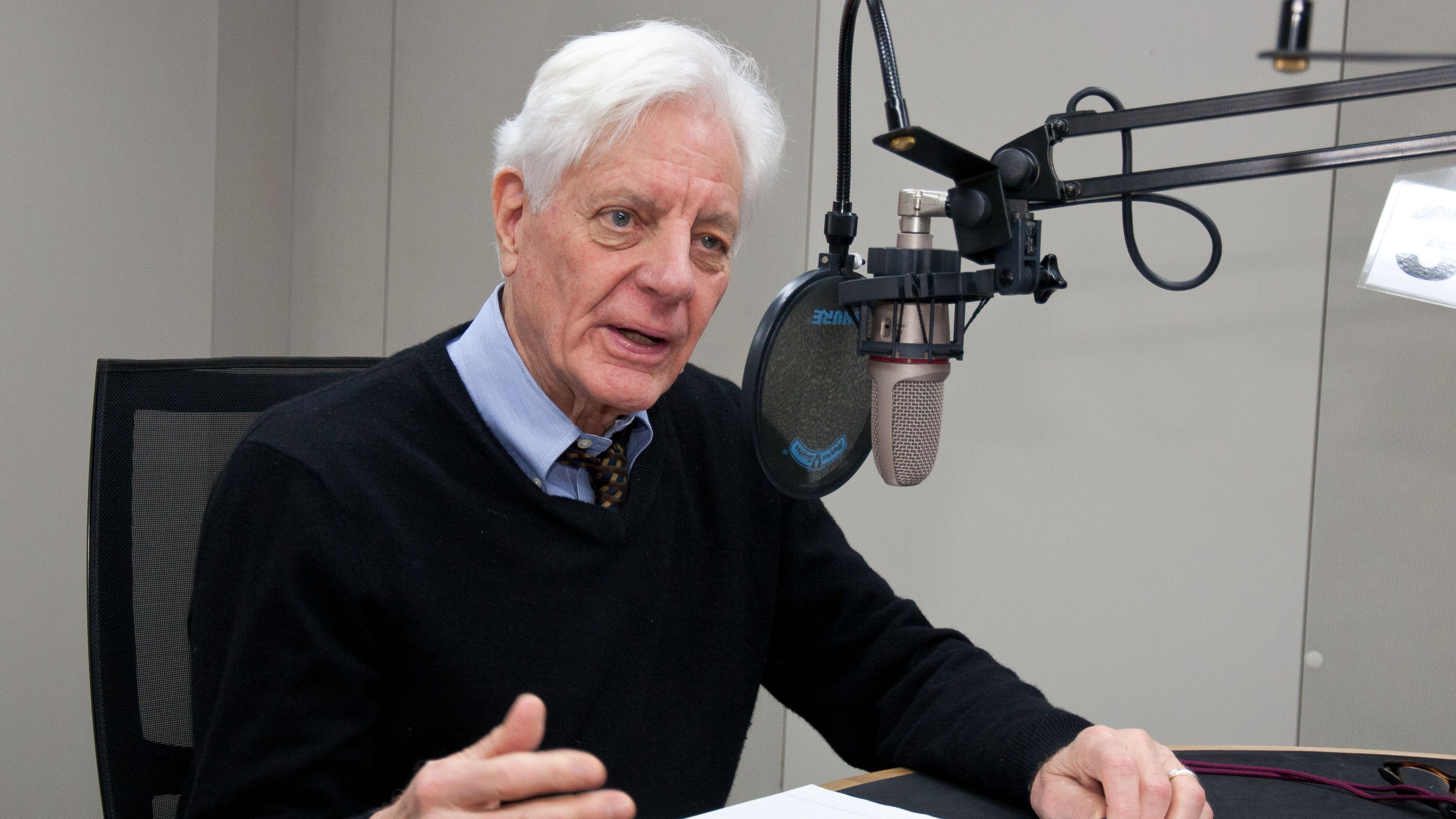
Kevin Close |
Kevin Klowz: I well understood that Radio Liberty - Radio Free Europe should be brought closer to the region that we broadcast, and that there is no longer the opportunity to stay in Munich. Our budget was reduced several times, and the exit was seen in the east. After all, the irresistible border no longer existed, the iron curtain fell, the Cold War ended.
In addition, my predecessor President Eugene Pell had already opened our bureaus in Prague, Budapest, Warsaw and Moscow by that time, so the headquarters move from west to east became a logical continuation of these changes.
And I firmly believed in those days, and today, that the most important task of RSC is an objective report and analysis of events, without imposing their political views, without involving listeners in any polemic. We could fulfill this task with great success in Prague than in Munich.
Такие соображения лежали в основе переезда, и президент Вацлав Гавел идею поддержал, предложив радиостанции просторное здание в самом центре Праги.
Иван Толстой: И 1 апреля радиовещание из чешской столицы началось, а в день торжественного открытия двух объединенных радиостанций присутствовал и сам Вацлав Гавел, бывший, кстати, корреспондент Свободной Европы, навсегда сохранивший благодарность этому радио, которое, передавая гавеловские материалы, гласностью обеспечило ему защиту от тайных преследований.
Переехав на новое место, Свобода открыла и новые программы. Одна из них - "Континент Европа" Джованни Бенси и Елены Коломийченко. Я попросил Елену Коломийченко определить идею передачи.
Елена Коломийченко: И Россия, и Украина - эти две страны провозгласили курс в Европу. На самом деле о Европе знают очень мало. Я хотела бы дать слушателям почувствовать, что то, что происходит в России, это не уникальное, не некое чрезвычайное, особенное явление, а что близкие, похожие, может, с влиянием национальных особенностей вещи, происходят и в Европе. Нет ничего устоявшегося навсегда. The world is changing. Рынок есть рынок, я имею в виду рынок по большому счету, не только экономический. Меняется все, люди меняются, темп жизни меняется. Меняется повсюду. И не надо думать, что то, что происходит там - это землетрясение, а все остальные живут спокойно. На самом деле, большие и маленькие неудачи есть у всех. Как решать эти все появляющиеся новые проблемы или существовавшие старые? Все ищут свои пути. Может быть, из синтеза этих путей можно выработать некие собственные подходы. В этом и есть философия. Мне хотелось просто открыть это окно в европейский мир на уровне бюргера, на уровне среднего человека, маленького человека. А поначалу, когда мы придумывали эту программу, хотелось сделать так, как будто я ученик, который вечно обращается к учителю. Учителем был Джованни Бенси до того момента, как он ушел на пенсию. Такая игра своего рода.
Иван Толстой: А ваше сердце к какому кусочку Европы лежит больше?
Елена Коломийченко: Я не знаю, я больше десятка лет живу в Германии, мне кажется, я эту страну и поняла, и приняла со всеми ее за и против, отдавая неприязненное должное тому, как немцы не очень-то открыты, но они умеют помогать, с другой стороны, в трудных ситуациях. Но мне нравится эта страна, склонность к порядку. Может быть, чрезмерная. Мне этот мир нравится. А если говорить - душевное, духовное, к чему бы я расположена была, - я очень люблю Италию. Италия - это место, где мне всегда хорошо, в любом городе, маленьком, большом, в пятизвездочной гостинице или просто в снятом доме на берегу моря или без всякого моря. Где хорошо, просто атмосферно хорошо.
Джованни Бенси: Период, начинающийся 24 декабря и кончающийся 7 января, можно считать единым рождественско-новогодним периодом. В начале его стоит западное, католическо-протестантское Рождество, в конце - Рождество православное. За день до него - 6 января - западные христиане отмечают праздник Богоявления. Собственно говоря, разница во времени между Западом и Востоком в праздновании Рождества только кажущаяся. На самом деле, и католики, и протестанты, и православные отмечают Рождество в один и тот же день - 25 декабря. Хронологическое расхождение возникло в 1582 году, когда Папа Римский Григорий XIII на основе более точных астрономических расчетов исправил календарь, который до него был упорядочен римским императором Юлием Цезарем. Было отменено 12 дней в октябре, которые стали 13-ю с начала нашего века. Так появилась разница между Юлианским и Григорианским календарями и между старым и новым стилем. Россия осталась при старом стиле до революции 17 года, а русская православная церковь и по сей день. Таким образом, русские христиане отмечают Рождество на 13 дней позже своих западных собратьев.
Когда на самом деле родился Иисус Христос, никто точно не знает. Евангелия сообщают целый ряд подробностей, некоторые явно легендарного характера, но молчат о дате этого изменившего мир события. В этот период люди уже привыкли праздновать. Язычники отмечали зимнее солнцестояние, когда солнце перестает спускаться над горизонтом и снова начинает подниматься. Для древних римлян это был наталис солис - рождество солнца. Оно отмечалось 21 декабря. 4 дня спустя - 25-го - отмечался праздник соль инвиктус - непобедимого солнца. Эти торжества вписывались в общий праздничный период, назвавшийся Сатурналии - посвященный богу природы и плодородия, богу-праотцу Сатурну.
Иван Толстой: Другой новой программой в Праге стали "Ваши письма" с ведущим - Анатолием Стреляным.
Анатолий Стреляный: Говорит Радио Свобода. У микрофона Анатолий Стреляный. Я продолжаю передачу "Ваши письма". Виктор Андреевич Рязанцев из Москвы был так поражен воинственностью коммунистов, с которой столкнулся перед выборами, что решил побороться с ними стихами.
Коммуняки, вперед! Все на выборы в новую Думу,
Торопитесь, пока наш народ до конца не прозрел,
А потом, как всегда, несогласных - в холодные трюмы,
А особо опасных - к стене под расстрел.
А теперь несколько мыслей в прозе, - пишет автор этого письма, бывший военный летчик, член КПСС с 30-летним стажем, сдавший свой партбилет в 1989 году. - Наблюдая за предвыборной возней по телевизор и радио, - пишет он, - хочу заявить следующее. Те 515 тысяч из 18 миллионов членов КПСС, собравшиеся вокруг комсомольца-переростка, новоявленного философа Зюганова, - не коммунисты. Это коммуняки, бывшая партийная челядь, холуи, доносчики, не успевшие награбить переростки-комсомольцы, дети и внуки бывшего партийного руководства. Я бы хотел спросить партайгеноссе Зюганова, - продолжает бывший его товарищ по партии, - как он думает восстанавливать СССР? Я, по праву коммуниста первым идти в бой, участвовал в венгерских и чехословацких событиях, и на деле знаю, что это такое. Я пойду за ним, если он со своими детьми тоже пойдет с автоматом в руках присоединять Литву, Латвию, Эстонию, Украину и другие братские республики.
Так пишет Виктор Андреевич Рязанцев. На его месте я бы воздержался от последнего заявления. Да, Зюганов часто производит впечатление человека, который не верит ни одному своему слову. И жизнь, которую он ведет, это жизнь не партайгеноссе 20-х годов, а нового русского богача. Но разве мы не знаем коммунистических вождей, которые спали на железных койках, укрывались шинелями и с готовностью шли на смерть сами и вели на убой собственных детей?
Какую социальную справедливость собирается восстановить Зюганов, - читаю дальше это письмо? - Себе отнять у Кучмы горбачевский Форос, а мне раз в 30 лет путевку в подмосковный санаторий с жареным хеком обеспечить?
Это письмо меня заинтересовало тем, что в нем - сознание честного коммуниста последних лет существования КПСС. Он вышел из партии и приветствовал разгон КПСС не потому, что понял неосновательность коммунистических идей, а потому что разочаровался в своих вождях, увидел, что прогнил их аппарат. Он, кажется, так и не сделал следующего шага, самого важного - не спросил себя: если бы они были людьми наивысшей пробы, разве от этого стал бы более работоспособным социализм, система, построенная на подавлении свободы?
Иван Толстой: 95-й год был годом столетия кино. Специальный цикл передач отмечал это событие.
Сергей Юрьенен: У микрофона Сергей Юрьенен. К столетию рождения кино. Кинодвадцатка Радио Свобода. 28 декабря 1895 года в парижском "Гран Кафе" на бульваре Капуцинов впервые вспыхнул луч кинематографа. Канун второго века киноэпохи. С августа до конца года по средам в программе Поверх барьеров Радио Свобода предлагает цикл передач о 20 фильмах, лучших, по нашему мнению, за первые 100 лет.
Иван Толстой: Из тех сотрудников Свободы, кто в 95-м в Прагу не переехал, был поэт, переводчик и прозаик Анри Волохонский. Вот одно из прощальных его выступлений у нашего микрофона.
Анри Волохонский |
Анри Волохонский: Кажется, с конца прошлого столетия слухи об одном необыкновенном человеке распространяются в Европе и в Северной Америке. То замолкая, то вновь объявляясь, поддерживаемые устными рассказами, а иногда даже разбрасываемыми кем-то листовками, известия о нем продолжают циркулировать в обиходе нынешнего человечества и по сию пору. Его зовут Баба Джи. Джи - это индийская частица, выражающая почтение. Так что Баба Джи можно перевести, как почтенный или досточтимый Баба. Самое же Баба на многих языках означает "старик" часто в значении отец или предок. Лев Гумилев, описывая монгольские нравы в эпоху Батыя, говорит, ссылаясь на сокровенное сказание, что сына Батыя Сартака, заподозренного его соплеменниками в исповедании несторианского толка, кто-то из ортодоксальных татар будто бы упрекнул в таких выражениях: "Вы, христиане, говорите Абай Бабай. Это соответствует нашему Ава Отче. Бабай означает, несомненно, то же, что и Баба". То же самое можно встретить и в арабских сказках, где упоминается, например, Али Баба и сорок разбойников. Так что Баба Джи должно бы переводиться как почтенный старик.
Однако такое толкование имени или прозвища этой таинственной личности вряд ли верное и, несомненно, не является единственно возможным. Дело в том, что даже по-арабски слово Баб означает также ворота или, торжественно, врата. Пролив, отделяющий Африку от Аравии и соединяющий Индийский океан с Красным морем, именуется Баб эль Мандеб или Врата ужаса, так как в этих местах летом стоит ужасная жара, а лето там продолжается круглый год. В таком значении Баб или Баба может приобретать и мистический смысл. Подобно суфийскому Пути, врата могут символизировать дверь, открывающуюся в особое возвышенное состояние. Тогда некто, именуемый Баб, должен представлять собой осуществленную дверь, и духовное слияние и единение с ним равносильно проникновению через эту дверь в высшие сферы.
Иван Толстой: Одной из первых передач, вышедших в эфир из Праги, была радио пьеса Игоря Померанцева "Любовь на коротких волнах". Ее подготовили режиссеры Фрэнк Уильямс и Наталья Белова, а записали Сайнхо Намчилак и Валентин Гафт. Вот финал пьесы.
Валентин Гафт: Пятница, 14.00. Китик, только что, наконец, послушал Шуберта в исполнении твоего мужа. Спасибо, что дала послушать. Знаешь, как Пруст называл музыку? Сводней. Мне вдруг стало так покойно на душе. Все-таки счастье пишется через Щ. Я больше не случайность в наборе случайностей. Твой муж мне не чужой. Нет, музыка и вправду сводня. Ты только в выигрыше, что он близок мне. Значит, когда-то ты угадала в нем меня. Thank you. Я слушал снова и снова, пока не испытал странного желания познакомиться с твоим мужем, обнять его. Ты скажешь, дурные наклонности. May be. У меня есть старая пленка с голосом Адамовича. Ветхая такая, рвется, когда включаю, я ее даже подклеиваю.
Георгий Адамович: Культура, которая создается в наши десятилетия, есть культура внецерковная, в противоположность средневековой, замечательной культуре, конечно. Представление о мире, которое господствует в церкви, создалось ведь в первые века после Христа, в которые думали, что земля есть центр мира, не допускали существования каких-то сказочных, невероятных и непостижимых миров на непостижимых расстояниях. Между тем, как теперь мы знаем, и все знают, и культура этим и живет - это какой-то беспредельностью и бесчеловечностью мироздания, где земля есть какая-то пылинка.
Валентин Гафт: Разве можно определить по голосу, что он любил не женщин, а мужчин? Разве он звучит иначе? Ну, грассирующий, интеллигентский голос. С осадком серебряного века где-то в носоглотке. Вот у меня рядом на полке, послушай, еще это Перелешин, Валерий Перелешин, он жил в Бразилии.
Валерий Перелешин:
И никогда не звал мужчину братом,
Хотя любил не менее двухсот,
Ища у них полуденных красот,
Особенно я нежен был к мулатам.
Я не ходил к поэтам и прелатам
Для пафоса, для умственных высот,
Мне был милей какой-нибудь сексот,
Попавшийся со взором виноватым.
От Лосского и Франка я зевал
И убегал на людный карнавал,
Дышал толпой и музыкой, и зноем,
А заполночь в дешевом кабачке
С очередным случайным Антиноем
Беседовал о смерти и тоске.
Валентин Гафт:
И никогда не звал мужчину братом,
Хотя любил не менее двухсот,
Ища у них полуденных красот,
Особенно я нежен был к мулатам.
Ну, как, я похож на них? Или вот еще одно признание в любви мужчины к мужчине.
Майлз Дэвис, он и женщин любил. Я бы хотел, чтобы у меня был такой голос. Если бы я бы знаком с твоим мужем, я бы отбил его. Мне уже мало квадратных и кубических сантиметров твоего тела. Мало твоего голоса. Почему несколько кубических сантиметров там, где левая грудь, прекраснее прочих?
Пятница 16.45. Неужели у нас свидание через 49 часов 15 минут. Ты в наушниках? Я что-то понял о нас. О нас всех. Мы отравлены космосом. Это только кажется, что мы воем безответно в эфир. Нет, вой возвращается, как будто там какое-то зеркало. Мы единственные инопланетяне на земле. Все эти голоса, что я посылал тебе - голоса мертвых. Мы работаем на радио кладбищ. Книга, картина - это предметы, но голоса - это призраки, приведения, они бродят по космосу, кряхтят, свистят, шуршат. Жаль, что ты в наушниках, что меня не слышат все. Может, отключишь наушники? Ну, что же ты, мой дико виноградный, вьющийся зверок?