
Translated material
The first fan of radio communications - 2
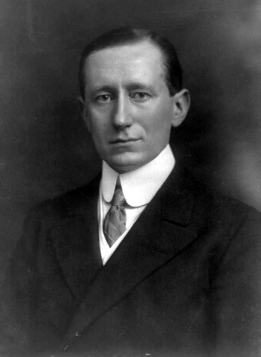
To create devices for wireless transmission of messages using electromagnetic waves, no less than a dozen university professors and self-taught techies in Western Europe, Russia, America and even India were attached. However, radio communications as a successful commercial enterprise was conceived and implemented thanks to the efforts of a young Italian who did not only have academic degrees, but even a school certificate.
We publish the end of the historical essay about the inventors of the radio. See the TRV-HUNDER No. 9 (78) dated May 10, 2011, see
From the very beginning, the young inventor understood that for the success of the project, it was necessary to increase the sensitivity of Cogerer. The problem of the signal source did not bother him, since he was familiar with the emitters of Hertz and Riga, gathered them without any problems and eventually chose the Riga scheme, which he modified somewhat. But with Cogerer I had to tinker. He tried many different metal sawdusts and stopped on a mixture of 96% of nickel with 4% silver. A lot of work was also taken away by the manufacture of miniature glass tubes with silver tactile plugs. Markoni later recalled that one high -quality Cogerer needed a thousand hours of work. Along the way, he realized that Cogerer’s sensitivity can be automatically restored by hitting it with a hammer that set in motion an electromagnet included in the circuit of a standard relay amplifier (it is worth noting that Popov also came up with the same feedback).
At first, Marconi limited himself to the alarm within his attic, but in the summer of 1895 he transferred experiments to the open air (first to the surrounding vineyards, and then to the Swiss Alps). To increase the gear range, he connected to both the emitter and the detector pieces of metal wire, one end of which was grounded and the second was raised on the mast. He called such an antenna device (in Italian Antenna-a pillar), and this term was fixed in the language of radio engineering.
In the end, Marconi managed to achieve a good receiving signals at a distance of one and a half kilometers. After that, it was decided that it was time to go to the public. Mar-Koni wrote about his invention to the Italian Minister of Posts and Telegraph, but received only a polite unsubscription. His mother relied on influential English relatives and therefore on February 2, 1896, together with her son went to London.
British debut
On Earth, Albion Markoni expected a rare luck. Already in the middle of spring, he introduced William the Ethers, who looked in the work of devices brought from Italy and believed in their capabilities. Marconi quickly prepared an application for his invention and on June 2 submitted it to the British patent department. On December 12, the lady spoke about a new form of in touch during a public lecture in the London Toynbee Hall, and the press was seriously interested in the young Italian.
Family ties extremely helped Marconi in terms of commercial. His cousin, engineer Henry Jameson-Davis, gathered in the city a huge capital of 100 thousand pounds at that time; In 1897, this money was based on his first company Wireless Telegraph and Signal Company (three years later renamed Marconi's Wireless Telegraph Company, Ltd). In 1898, in Chelmsford, she opened the world's first radio factory. In the same year, near the southern shores of England, Mapponi spent through solidly spectacular tests of his equipment, during which he exchanged radiograms between the residence of Queen Victoria on the island of White and the Royal Osbourne yacht. In the spring of 1899, an experimental transmission of signals through the La-Channel was made-already at a distance of more than 50 km. And by the fall, the company has already established a connection between radio stations with an antennas of 45-meter heights located 85 miles from each other-almost 140 km!
However, Marconi was not enough. He began to think about transatlantic radioteleography, for which he intended to establish contacts in the USA and Canada. On September 11, along with several engineers, he sailed from Liverpool on the first of numerous travels to North America.
Morzyanka over the Atlantic
In New York, Marconi again proved himself to be a magnificent advertiser. He managed to arrange so that the New York Held newspaper received operational messages from his team from extremely prestigious sailing races to the America Cup. The transmitters were installed on two steamboats, the reception station was on the shore, and the editors were constantly aware of what was happening. This witty action immediately won Marconi to recognize the American press. A year later, his new Marconi International Marine Company began to install equipment on ocean ships (it is interesting that the first of them was not English, but a German ship - Kaiser Wilhelm Der Grosse liner). And in July of the same 1900, the British Admiralty signed a contract for the equipment of 26 warships and 6 coastal stations. In general, success was followed by success.
Then Marconi began to prepare an experiment that was supposed to demonstrate the possibility of transatlantic radio communications. Almost all of the then experts then considered this venture doomed to failure - it was believed that not too long radio waves would not be able to go around the earth's surface. Marconi could not know that high in the atmosphere was open only in 1924. The layer reflecting radio waves with lengths over 20 m, and hardly even heard about the hypotheses of the existence of one (first expressed in the 1880s). But he fanatically believed in the feasibility of super -old radio communications and was not afraid to invest 50 thousand pounds in this project. At the southwestern tip of England, in the county of Cornwall, and on the island of Newfoundland, near his administrative center of St. Jones, radio stations were built. On December 12, 1901, Marconi and his assistant George Kemp said that they heard a signal sent from England in the telephone tube and accepted by a 150-meter antenna (by preliminary arrangement, the station in Cornwall sent on a frequency of 820 Kilortz a letter S-three points encoded with a mormania). Now it is impossible to establish whether they really dismantled the three clicks against the backdrop of a strong statics or convinced themselves of this and others, but the message about success turned into a world sensation.
By the end of 1902, Marconi installed on Cape Breton in the Canadian province of New Scotland and in the United States, on Cape Code, stationary radio stations with powerful radio equipment, whose performance did not cause any doubt. The first radiogram from Canada was sent to England on December 15, 1902, and from the USA (Message of President Theodore Roosevelt to King Edward VII) - January 18, 1903
In 1902, Marconi made his last major invention. Using the work he knew, he designed the radio wave magnetic detector designed for ship radio equipment. This device, which went down in the history of radio engineering under the name "Maggi", was patented in June 1902 and a year later debuted on the Italian cruiser "Carlo Alberto". Magnetic detectors quickly changed coherers and for a dozen years were widely used in ship radio equipment (then detector and tube receivers appeared).
Marconi and Popov
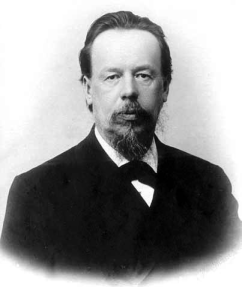
The creation of radio communications turned out to be a long process with many participants. Alexander Popov occupies an undoubted, but still not the most prominent place. He independently found the opportunity to automatically restore the conductivity of Cogerer after passing the radio -impulse using relay feedback - but Markoni did it, and completely independently. Like Marconi, Popov used grounded antennas for receiving and transmitting signals, but he himself admitted that he gleaned this idea from Nikola Tesla. During the demonstration of his devices at a meeting of the Russian Physico-Chemical Society on May 7 (April 25 according to the old style), 1895 Popov expressed hope for their use for signal transmission, but immediately made a reservation that more powerful sources of radio waves would be required. But Marconi chose a more effective strategy (increasing the sensitivity of the receiver), which turned out to be the key to his success. By the time Popov first transmitted a text message on the radio (either Henry Hertz or just “Herz”), which happened again at a meeting of the Russian Physical and Chemical Society in December 1897, Marconi went far ahead. Such is the historical truth.
However, both Popov and Marconi have generally fulfilled their dreams. Marconi became a world celebrity, a magnate and a millionaire, which he achieved. Popov became a professor of physics of the St. Petersburg Electrotechnical Institute, and shortly before his death was elected his rector. Marconi did not strive for an academic career, and Popov was not interested in business. As they say, to each his own.
Living classic
In 1909, Gulelmo Marconi was awarded the Nobel Prize in Physics (together with the inventor of the Cathode-Rainmother Karl Ferdinand Brown). By this time, he had already begun to retire, and after the First World War he completely rested on his laurels. The era of lamp electronics came, which he was interested in, but did not understand too much. Marconi swam around the Oceans on his own yacht Elettra, experimented with short-wave and OHV apparatus (frankly, very amateur), received many honors (so, back in 1914, the king of Italy granted him the title of senator, and 10 years later-the title of Marquis), became close to Benito Mussolini, which in 1930 in 1930 in 1930 in 1930 in 1930 in 1930 in 1930 in 1930 in 1930 in 1930 in 1930 in 1930 in 1930 in 1930 in 1930 in 1930 He made him the first president of the newly established Italian Academy. However, angina pectoris began to pester him, a disease that brought his father into the grave of his father. Marconi died after the most severe attack of the thoracic toad on July 20, 1937, leaving behind worldwide glory and the condition of half a billion Lear. After the state funeral in Rome, with the participation of Duche himself, his body was transported to the villa Griffon and there were betrayed by the earth (a year later, the neighboring town - Sasso Marconi was named in his honor). On the day of the funeral, the world honored the memory of Gulelmo Marconi with a two -minute radio monastery.