
Translated material
Boris Stegman and his "Robinsonada"
Boris Karlovich Stegman (1898-1975) is an outstanding Russian ornithologist and natural scientist, a student of “himself” Peter Petrovich Sweskin, the author of many research, and not only on ornithology. He owns the famous “brief determinant of the birds of the USSR” (together with A.I. Ivanov) and recognized by the classical labor “Fundamentals of the ornithoehegographic division of the Palearctic” (1938).
Acquaintance with the book of Stegman “In the reeds of the Balhashiy” (M., KMK, 2004) turned out to be rare luck for me: reading the texts “On Nature” remained in my distant childhood, and the name of Stegman did not say anything to me at all. Luck in this case is, first of all, a meeting with the author’s personality and acquaintance with the history of his life, unique even at that time.
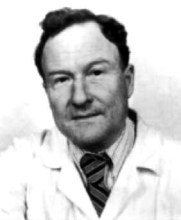
Stegman was a beautiful, physically strong and courageous person, with a wonderful sense of humor, gifted with a rare combination of excitement and a sense of proportion. He began to work in the Department of the Ornithology of the Zoological Institute of the USSR Academy of Sciences in Leningrad in 1921 - at first a drug and only since 1928 - a researcher. In 1934, he was awarded the scientific degree of a doctor of biological sciences on the totality of published work (without defense of the dissertation).
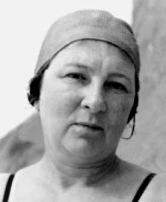
He was elected an honorary member of the German, British and American ornithological societies. The nomination of B.K. Stegman to the corresponding members of the USSR Academy of Sciences, but in 1938 he was arrested and spent a year and a half in prison. Liberation and rehabilitation, however, did not bring him complete freedom - at the beginning of the Patriotic War, he, like all Soviet Germans, was expelled from Leningrad.
Together with his wife, Tatyana Sergeevna Savelyeva, Stegman was in Alma-Ata. Why an ornithologist with a world -famous name later was charged with the obligation to study the biology and fishing of the ondaters, recently imported into the Balhash, remains unclear. Perhaps Stegman agreed to work in the river delta or precisely because then this area of Kazakhstan was inaccessible and unimportant, so that it was possible to “get lost” there? ..
One way or another, Stegman spent in the river delta or five years - from 1941 to 1946. After the end of the Kazakh link, he could not again become an official employee of the ornithology department. In the list of Kazakh zoologists awarded the Stalin Prize for the introduction and fishing of the ondaters, we will not find the name of Stegman. Steg-mana staged a job at his institute in the city of Broke I.D. Papanin, the famous polar explorer, who has long used the grace of the highest authorities.
The book “In the reeds of the Balhashiy” (M., 2004) , as it were, was published in 1951 in the Kazakh State Publishing House, but survived in the only “set -in” copy: the entire circulation was destroyed for “political” reasons, which are ashamed even today.
The surviving copy of the book was found and our contemporary Petr Petrovich Strelkov, a chedrobiologist from St. Petersburg, edited it. He wrote a wonderful preface to the book, and the artist T.P. Kapustina made successful drawings to the book.
As and when, in the conditions of the Jelturg biopunction, Boris Karlovich Stegman managed to write not only this book, but also a considerable number of scientific works - it is difficult to imagine.
It is worth telling about the everyday life that surrounded the Stegman-Savelyeva family in Balhash. The conditions in which Boris Karlovich and Tatyana Sergeevna lived for five years are not even remotely reminiscent of the most risky expeditions that are so fond of describing, for example, English natural scientists.
After all, it is obvious that in the future of a long sedentary life and public service it is precisely the employer-in this case the Soviet state-should at least take care of, for example, to provide a horse in Jelturang, to supply at least salt, flour, agents, soap and fuel.
How naive you are, reader!
The biopunct was not provided with almost nothing. If Stegman had not brought cast iron and galvanized basin with him, then there would be definitely nowhere to take them. During the first year of life, even salt had to save on Jelturans-it was enough only for cooking, but not for blanks in which there was an acute need. Soda, replacing soap, Stegman evaporated from the shallow duct. Later, a salty lake was also discovered.
Any “outputs” - behind the fuel for the stove, for hunting, to remove the plans of the terrain and various observations - had to make on foot and, accordingly, returning, dragging the cargo to himself - whether it be fuel or shot roe deer.
To provide himself with food, Stegman constantly hunted a bird, but he never had his hunting dog, so he had to climb into the water every time. The horses appeared only two years later.
Life and work were, if necessary, concentrated at 15 meters of living space in a house where there was not a single right corner. And the work, which included, in particular, microscopic studies (they were conducted by Tatyana Sergeevna), and on the other hand, the tapering of the skins of the ONDATRA, required compliance with rather special conditions.
At the same 15 meters, Boris Karlovich always shaved a day later; They worked there, washed, cooked food, washed.
Of course, no - no literally! - Relations with the Great Land ...
In the most terrible circumstances - whether it was a disease or a steppe fire - remained to hope for himself. Sharply continental climate - severe frosts in winter, heat in the summer; The lack of detailed maps of the area and the simplest camping equipment. Even the ropes made Stegman himself.
A particularly strong impression is made by Stegman's story about the construction of a hand mill, which was then eagerly used by all caring hunters - the state supplied citizens not with flour, but only with grain.
And meanwhile, P.P. Strelkov in the preface noted that Stegman, most likely, from censorship reasons, significantly softened the description of the real living conditions on Jelturang!
Boris Karlovich Stegman was a man of his time and, moreover , a Petersburg: in passing he compared the impression of the shadow of the impending beast with the silhouette of a concert piano; In another place, the Pushkin line “with the clicks of the swan” appears - and the explanation that these clicks are not so pleasant for hearing, how could it be imagined.
Book B.K. Stegman, being a wonderful interesting reading, is also a monument to the nature of the Balhashiya, as it was half a century ago. Now - desertification, salinity of soil, increased mineralization of water, pollution of pesticides, poaching - as in the Arals, and in other places.
And one more, but a very meaningful detail: the publication of the book B.K. Stegman paid from personal funds Dr. Kurt Bauer (Vienna), an ornithologist of a global scale.