
Translated material
Scientists explained why Antarctica became an ice desert
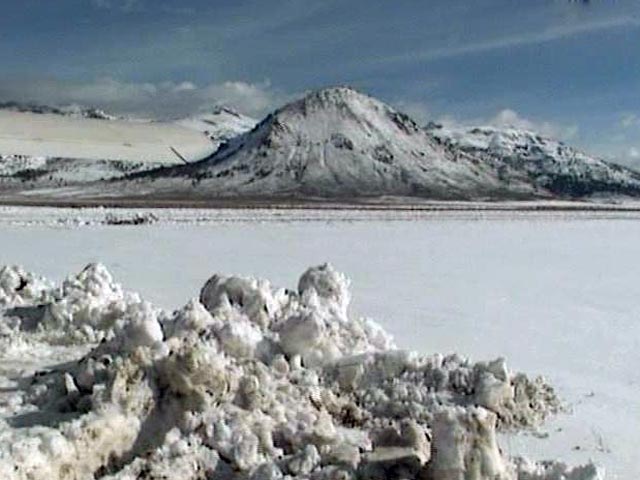
Antarctica turned into a desert covered with a multi-kilometer layer of ice, due to the circulation of ocean waters off its shores. This was written by Science magazine, the publication of which is referred by RIA Novosti .
Antarctica in the past was rich in Flora and Fauna - on its territory, in the forests of a moderate climatic belt, marsupial animals lived. However, 33 million years ago, the continent quickly covered with a thick layer of ice. The authors of the study, a group of scientists under the leadership of Miriam Katz from the Rensseler Polytechnic Institute, found that the cause of this environmental disaster was the emergence of an Antarctic circumpolar current that closed the continent into the ring. It was previously believed that this current arose after cooling, about 23-25 million years ago.
“We found out that the antarctic circumpolar course began to influence global circulation of water in the ocean much earlier than expected. The importance of this discovery is that it allows you to connect the influence of the underlying circumpolar current and the beginning of the era of global cooling,” Katz said.
The emergence of this current (which is also called the flow of Western winds), as American oceanologists write, entailed the formation of a modern four -layer oceanic water structure.
The ocean temperature and air temperature on the ground are closely connected. The higher the temperature of the water, the higher the average air temperature. At the same time, global oceanic currents strongly affect the temperature difference in equatorial and polar waters. At times before the appearance of the circumpolar current, the difference in water temperature of the equator and off the coast of Antarctica was half as much as now.
However, now the circumpolar course prevents the penetration of the warm water of the southern-Atlantic current into the spacolar regions, "pushing" it back into the Atlantic Ocean.
Until recently, temperature changes were triumphed mainly by the residues of plants and animals. The extinction of heat -loving species indicated a possible cooling. On the other hand, we can always say that in the past organisms lived in other conditions, and extinction was connected not with cooling, but with something else.
Later “thermometers” were found, which allow more objectively judging the conditions of the past. So, this can be done by determining the isotopic composition of oxygen in ancient organisms. In addition to the most common isotope of oxygen with an atomic weight of 16, there is an isotope with an atomic weight of 18. In the remains of ancient organisms, the content of severe oxygen changes depending on the temperature of the water in which they lived.
Scientists believe that global climatic changes occurred when Drake's Strait between Antarctica and South America arose, and the Tasman Strait expanded sharply between Antarctica and Australia, which made one continent in previous geological eras. It was the appearance of the through path around Antarctica that opened the road to the circumpolar flow that froze the continent with an ice hat.
Oceanologists have discovered evidence of the existence of this course in fossilized remnants of foraminifer - unicellular marine organisms. A comparison of oxygen-18 and the ratio of magnesium and calcium in these fossils with samples from the northern regions of the bottom of the Atlantic and Pacific Ocean showed that after the current, the temperature of the dentarctic waters fell by 2-3 degrees. This cooling led to Antarctica to a modern state.
"The reconstruction of the climatic conditions of the past will allow us to explore how our planet reacts to modern climatic changes," says Katz.