
Translated material
Spain became a victim of a "cucumber war"
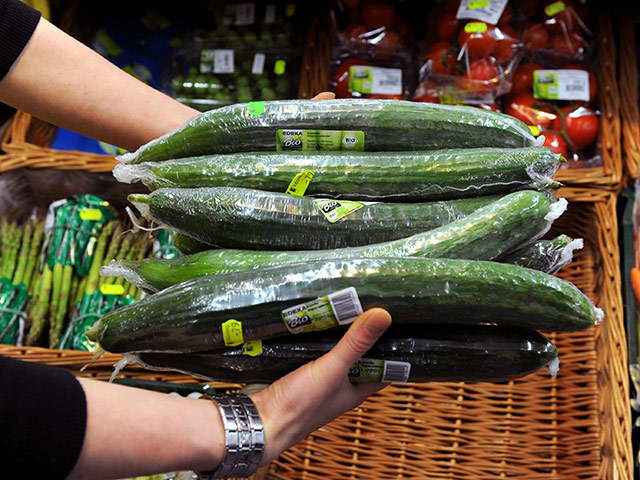
The epidemic of acute intestinal infection in Germany risks spreading to other European countries. And the matter is hardly the negligence of sanitary services. Trade relationships between European countries are so complicated and intertwined that it is very difficult to establish the source and spread of the infection, Bfm.ru business portal reports.
Hundreds of poisoned Germans (there are several deaths), presumably, became victims of Spanish cucumbers. In any case, it was in these vegetables that the researchers discovered an unusually aggressive variety of E. coli. It is called enterogemorrhagic Escherichia wand, ehec.
Often the bacteria of Escherichia coli was considered in the intestines of people and warm -blooded animals until recently was considered relatively harmless. It is not yet clear what made her change her properties. For the first time described in 1977, it caused intestinal disorders from time to time, but never with such intensity and such a strange scheme: more adults have suffered from the new EHEC strain than children than men.
The bitter irony is that for the most part, supporters of a healthy diet, who prefer vegetables and fruits, fell ill. Microbiologists note that the strain that infected the Germans is immune to most antibiotics. According to one of the hypotheses, the intestinal wand, which can be detected in the cow of manure, became aggressive under the influence of chemicals and antibiotics used in animal husbandry.
Having studied the gastronomic preferences of patients, the specialists of the Robert Koch Institute suggested that tomatoes, leaf salad and cucumbers could cause severe symptoms, including renal failure. Given the geography of poisoning, the doctors initially suggested that the fertilizer that were used on farms in the north of the country was guilty. Intensive checks began that did not bring results.
The Government of Spain does not exclude that it will demand from the German authorities monetary compensation for the "huge damage" that the Spanish agriculture of the "speculation" of the Germans about infected Spanish cucumbers has inflicted on the Spanish agriculture. Such a statement was made by the Secretary of State on Agriculture and Water Resources of Spain, Josep Pouche.
The Spanish side believes that the German authorities act irresponsibly, when they unequivocally assigned the fault of the death of ten people from the food bacterium, allegedly contained in cucumbers from Spain on the Spanish agricultural producers. According to Madrid, there is no clarity regarding the origin of enterogemorrhagic intestinal wand, EHEC.
“This is absolutely unacceptable. This is irresponsibility and wildness,” the El Mundo newspaper quotes the word of the Spanish official. “It is impossible to demonize a serious, reliable production system based on hearing.”
In many articles, the Spanish export agriculture occupies a leading position in Europe and the world: the Spaniards produce the most olive oil, strawberries, oranges - the list can be continued for quite some time. If, in addition to all the troubles of the Spanish economy, Europe now limits the import of Spanish vegetables and fruits, this will be a heavy blow to Madrid.
According to Josep Pukhu, EHEC intestinal wand has still been detected only in Southeast Asia and Germany. On the territory of Spain, the malicious stick has never been seen.
There are three possibilities of infection of EHEC cucumbers: it could happen in Spain, which still remains to be proved; Bacteria could get to cucumbers during the transportation of vegetables, and finally, infection could occur directly in Germany, the newspaper El Pais writes.
Meanwhile, panic spreaded from Germany to the Czech Republic, Hungary, Luxembourg, Denmark and Austria, which also entered the Cucumbers of the Spanish company Frunet, purchased by wholesalers from Germany. In Austria, for example, all Spanish cucumbers, as well as tomatoes and eggplants, were seized from 33 stores on the eve. In Denmark, the authorities turned to representatives of retail trade with a request to remove Spanish vegetables from the sale.
In addition to Germany, cases of infection with a stick EHEC, which affects mainly women, are noted in Britain, Sweden, Denmark and Austria. A fatal outcome is recorded only in Germany. Most of the infected Escherichia sticks in these countries have been in Germany the other day.
Among the infected bacteria in Germany is the Spanish athlete Elena Espsko. On May 22, she participated in a marathon in Hamburg, now she was hospitalized in the Hamburg clinic. In an interview with EFE, the Begunya said that before the gesture in her mouth, she did not take cucumbers, but she ate tomatoes.
In total, the number of EHECs in Germany in Germany is today about 1000 people.