
Translated material
Schengen barrier
Europe is trying on the boundaries again
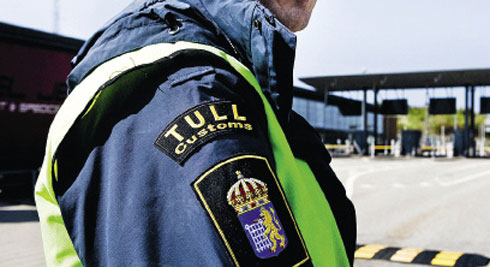
Danish customs officer on the bridge over the Eresund Strait, sharing Denmark and Sweden
Rumors roam Europe: at the nearest session of the European Parliament, amendments to Schengen agreements that expand the rights of countries participating in the protection and protection of their borders can be adopted. The porridge in the 500 millionth European Union was brewed by 5 million Denmark, which restored border and customs control in connection with the influx of non-ribal immigrants from the countries of Maghreb. For details, the author The New Times went to the Danish-German border
“What is your name, Mr.? Bi-jaja? Blahs! Sorry. We cannot let you into the territory of Denmark. In addition, we must break through the database your driver’s license - it will take 10-15 minutes. ” The 54-year-old, senior inspector of the Denmark Customs Service, enters a small mobile trailer, leaving a 30-year-old Kosovo Albanian Bedgeta Ziovas at the entrance. Passport Zhivas "forgot" at home. But he had a driver’s license issued for some reason in Slovenia. In the car of friends-tribesmen who naturalized in Germany, he tried to drive to neighboring Denmark, where his other friend successfully got a job in a pizzeria and called to himself. In Germany, troubles managed to live six months - illegally. He did not know anything about the decision of Copenhagen to restore border control on the border with Germany and Sweden - "they did not show about it on the German TV."
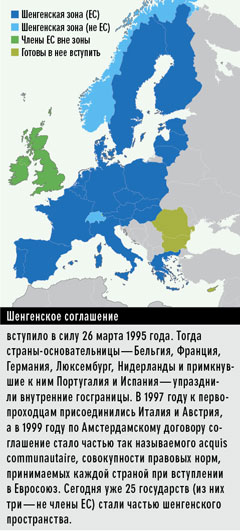 |
Follow the regime a month ago at the largest automobile border checkpoint Pattburg between Germany and Denmark reigned desolation - cars slipped it on both sides without reducing speed. And then one night-from May 11 to May 12-everything changed. Mobile houses appeared on the sidelines, the movement was dispersed in stripes, at the entrance and exit strips - glass booths with customs officers. Immediately behind the checkpoint on the Danish side, cameras with scanning devices are installed, reading car numbers. "Many illegal immigrants managed to detain?" “This is the fourth in a week,” the customs officer nods towards the Albanian, “there were two more Africans and one Chinese.” The entity is admitted that “in 10 years he has already managed to forgot, what the border is, and the youth needs to be taught everything again”
* * Denmark entered the Schengen space in 2001. . The cars stop only selectively, and even then mostly heavy. Fogs - mainly with Italian and Eastern European numbers, but it happens, as in the case of Albanian, they are delayed "non -capacity". “There is no passport control as such,” the entity explains. - I just have the right to ask for a passport from any passenger at my discretion. Or ask to open the trunk. But the main thing is that we demand from everyone so that cars reduce speed when crossing the border. ”
The decision of the legal government of its country is the Pershum supports: “In Denmark, there are only 5 million populations - we cannot afford to become a second Italy
* Since the beginning of the year, according to unofficial data, almost 35 thousand illegal immigrants from Tunisia and Libya arrived on the closest to the shores of Africa. . Although these guys, ”the customs officer nods again at illegal Albanian,“ I understand perfectly: they have no choice. ”
Who is to blame? How and why did the Danes make their decision? “In early May, we learned a stunning news: the Italians, not wanting to accept refugees from the countries of Maghreb, simply gave them six-month tourist visas, they, in addition, gave 100 euros of the“ lifting ”-and allowed to walk around Europe,” said the New Times, the head of the right-dressing Danish fraction of the Dnip Gave. - The French began to unfold trains with refugees on their border. We acted tougher, but, you must agree, more honestly. Now Brussels accuses us of violating the Schengen agreements, although in fact the Italians were the first to violate. ” By the way, with the thesis about the fault of Italy, they agree and some colleagues of Mr. Tulsen gave in Germany. “This is Italy, and not Denmark provoked the Schengen crisis,” said the NEW Times, an expert on the domestic policy of the German KhSS-Peter ul. And he proposed to introduce an inspection of all flights from the Apennine Peninsula inside the Schengen zone. He, apparently, forgot that after the Yugoslav and Kosovo crisis, Germany first took up to 300 thousand immigrants from the Balkans, and then also gave them apart in the amount of several thousand euros, if only they would “voluntarily” leave the country ...
Ultimatum- Danish journalist Lars-Eric Kovalski is sure: the decision to restore border control was dictated mainly by internal political reasons. “Mr. Tulsen gave a half -truth. And the whole truth is that his faction at the end of April actually presented the Ultimatum to the government: either it covers the border, or the “Narodniks” blocks the “plan of economic measures until 2020” in the parliament. But the journalist admits: 73% of the Danes, according to the latest sociological surveys, supported the May decision of the government
* According to the results of the 2007 parliamentary elections, the Danish People’s Party received 26 deputy mandates and two ministerial portfolios, and 15.3% of the dates and two places in the 2009 European Parliament. . The popularity of the right in Denmark is growing. A couple of months ago, the Danish People’s Party, for example, achieved a rise in the cost of 150 times the cost of courses (from € 30 to 4,500 in terms of Danish crowns to a single euro) to learn the Danish language, which can now be deported without knowledge of the country. “Of course, our government, of course, knew the fact that many immigrants may not have the amount of the amount of immigrants,” said Lars-Eric Kovalski. “Nevertheless, now it states that it was this decision that allowed the Danes to save € 6.7 billion, which would otherwise be spent on benefits and housing for visitors.”
Temporary - the permanent European Commission condemned the Danish demarche as the “undermining the foundations of the European Union”, although the Schengen agreements directly refer to the right of a country to suspend their action “in connection with emergency events”. This was done, for example, during football championships, meetings of the Big Eight or the NATO conferences Italy, Germany, Belgium, the Netherlands, Portugal, Latvia, Lithuania. But the influx of illegal immigrants in Brussels and Strasbourg, firstly, apparently, is not attributed to such circumstances. And secondly, they are afraid that the temporary decision of the Danish authorities will become permanent. And they are afraid not without reason. “I know that talking about this in Copenhagen is going on: in the draft budget for next year, 270 million kroons (€ 37 million-The New Times) is allocated for the full arrangement of customs and border posts,” Lars Eric Kovalski confirms these fears. “Such amounts are not temporarily expended - voters are rebelled.” In addition, according to his information, in early June, Denmark is expected to arrive at parliamentarians from Switzerland, led by ex-minister of justice, vice president of the right Swiss People's Party Christoph blocher. The goal is to prepare a "project of a joint application for withdrawal from the Schengen space"
* According to the results of the MIS Trend survey, 59% of the Swiss advocate immigration and only 25% advocate joining the European Union. . Both parties want to achieve the issue of revising the Schengen agreements for the nearest session of the European Parliament in June, Lars-Eric Kovalski explains. "I think they will succeed."
Natalya Frolova and Boris Yunanov took part in the preparation of the material