
Translated material
Truth in the cooler
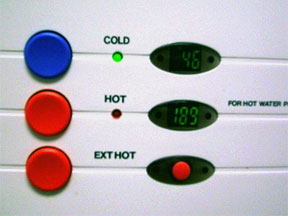
The Ministry of Finance explained to employers that it is possible to force employees for water from the cooler, but it is necessary to keep records of consumption. This letter does not have the forces of the law, and it is unlikely that the practice of water for water will be implemented. Since the water in the cooler is part of the office culture, which is not able to change either a separate businessman or power.
The Ministry of Finance admits that the cost of water drunk from office coolers can subtract from the salaries of employees, writes today, June 3, RBC Daily. The publication refers to the letter of the Ministry of Finance of May 13, 2011 No. 03-04-06/6-107, which is given the answer to the question whether drinking water acquired by organizations for its employees is subject to tax.
The letter states that the organization can calculate with employees not only with money, but also with material benefits - for example, pure water. The company, according to the Ministry of Finance, should take all possible measures to take into account the water employees drunk in order to subtract its cost from the salary. At the same time, if it is impossible to take into account the water drunk with the employees, the income to be taxed by tax on individuals does not arise.
Office workers may not panic. The focus of the letter is that it is by clarification and the strength of the normative act is not in the genre. Employers will not be able to massively enter a fee for water on the basis of this document.
The Ministry of Finance receive dozens of such letters daily and for each ministry is obliged, according to the current legislation, to answer. The press service of the Ministry of Finance talked about a letter from a citizen with a loud title of almost the "mistress of the sea", who asked to give 100 percent of the shares of Russian Railways.
In terms of water in the cooler, there is a story of excess nervousness of a particular business owner.
According to the letter dated December 2, 2005 N 03-03-04/1/08 The costs of acquiring cooler and water can be taken to reduce the amount of income only when, upon the conclusion of the sanitary and epidemiological service, water from the crane in the office is unsuitable for drinking. If a specific employer is dissatisfied with the fact that the water is drunk by employees just like that, and the profit is lost, then it, the employer, is the problem.
In general, the problem of the author of the letter concerns the entire tissue of office culture. The selection of the employer is clear: either do not buy water to the office, or do not require fees for it. Not a single business owner, dear to personnel, will additionally load employees with a water fee, otherwise a significant part of them will leave the enterprise sooner or later. According to the generally accepted office practice, the employer pays for the cost of maintaining the office and the right of employees to drink clean water is one of the articles on office maintenance.
Attempts to change the office culture, it seems, are initially doomed to defeat. It has developed spontaneously and will change only in the form of a certain consensus of employers with non -resistance of a significant mass of employees.
And state regulation here, by and large, is powerless - there is no reason for the intervention of the legislator.
In the same category, the scandalous proposal of Mikhail Prokhorov also takes place to increase the maximum duration of the working week from the current 40 hours to 60. The plan is understandable: for the legislation does not allow this, and this happens, then why not allow? But in practice, there are a lot of processing where, and are usually regulated by an informal consent of the employer and employee. The conflicts that arise are resolved, as a rule, without the intervention of government agencies, in the form of the labor inspectorate and the prosecutor's office.
The resolution of labor conflicts with the involvement of the state is usually associated with a completely frank abuse of its power by the employer (non -payment of salaries, illegal dismissal, very high requirements, and so on). No wonder about 90 percent of labor disputes is allowed not in favor of the employer.
Until the presence of water in the cooler is considered employees to be employed by the employer’s responsibility, to demand to pay money for it is unlikely to take anyone seriously. Neither video cameras nor a special person will help - it is easier to quit than to demolish such violence from the employer.