
Translated material
Georgia is ready to start a dialogue with Russia
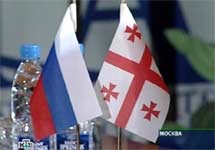
Georgia handed over to Russia a note on readiness to start a dialogue in accordance with the recommendations of the UN International Court in The Hague, the Air Force reports with reference to the Georgian Foreign Ministry. The note was transferred through a representative of Switzerland, who acts as an intermediary due to the fact that the diplomatic relations between Moscow and Tbilisi were interrupted after the armed conflict in August 2008.
On April 1, 2011, the UN International Court refused to consider the lawsuit of Georgia against Russia. “The court rolled in ten votes against six that he did not have a competence to consider the claim,” said the chairman of the court of Hissasi Ovada. The main reason for the impossibility of considering the claims of Tbilisi by the judges of the Supreme Legal Legal authority of the UN called that the Georgian side filed a lawsuit, having previously attempted to resolve this issue through negotiations with the Russian authorities.
The lawsuit was filed by Georgia on August 12, 2008, immediately after an armed conflict with the participation of Russia. Tbilisi accused Russia of violating the International Convention on the elimination of all forms of racial discrimination of 1965. Earlier, representatives of Russia stated in court that accusations of ethnic cleaning, which, according to the Tbilisi version, appeared for more than 15 years only after the war in South Ossetia. Russia, in turn, accused Georgia of the genocide of the Ossetian people, the corresponding case is investigated by Russian law enforcement agencies.
Russia hoped that the submitted lawsuit of Georgia would not be adopted for consideration on the merits. As the Minister of Foreign Affairs Sergey Lavrov, "lawyers in an international court, said in October 2010, if they are impartial, they will come to an unambiguous conclusion that the whole case is a policy, and not an attempt to get some kind of judicial result."
The President of Russia signed decrees on the recognition of the independence of South Ossetia and Abkhazia at the end of August 2008, shortly after the end of military operations. Since then, the independent status of the two republics, except for Russia, was recognized only by Nicaragua, Venezuela and the Republic of Nauru, the dwarf state in micronzia. According to the media, Russia simultaneously signed agreements on the provision of large loans with all these countries. All other states of the world, as well as the official Tbilisi, still consider South Ossetia and Abkhazia part of Georgia, occupied by Russian troops.