
Translated material
Olga Slobodchikova: Do not quarrel, boys

Olga Slobodchikova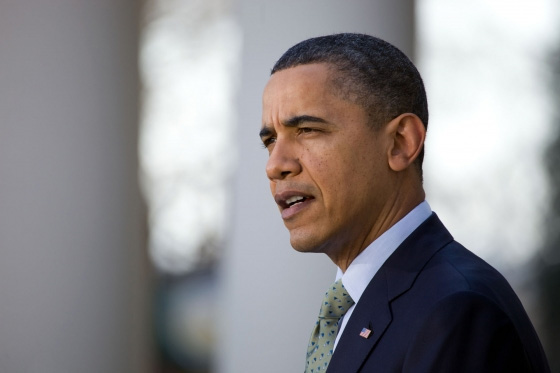 Barack Obama. Photos of the press service of the US President
The uncertainty with the ceiling of the public debt threatened the payment of pensions to the Americans. Already in early August, about 70 million pensioners, people with disabilities and wars of wars in the United States may be left without paying payments.
The benefits should be paid on August 3, that is, the day after the expiration of the extreme period of increasing the state debt plan. “I cannot guarantee that pensions will be paid on August 3 if we do not solve this problem. Because in the treasury it may simply not be money, ”said President Barack Obama in an interview with CBS .
Recall that the US budget deficit exceeded the limit established by Congress on May 16, overcoming a mark of $ 14.3 trillion. Since then, Obama has been trying to convince congressmen to increase the ceiling of public debt by 2.4 trillion, but they refuse, demanding from Obama a plan to reduce government departments. If the President and Congress do not agree until August 2, the country will be in the dangers of technical default.
On Tuesday, the leader of the republican minority in the Senate, Mitch MacConnell, threatened that Obama should not count on a deal with the Republicans as long as he holds the presidential post. “I have no doubt that while this person occupies an oval cabinet, the real solution to the public debt problem is unattainable,” Huffington Post quotes. In response to these statements, Obama said that he will be president at least until 2012, and decisive actions should be taken now. “He will have to explain to me how we will survive the default, because I will be the president for at least 1.5 years,” Obama retorted. “It is unlikely that the American people are ready for the fact that the leader of the Republican Party in the Senate simply does not want to deal with the president.”
Obama confirmed that he was ready to meet with the “at least every day” congressmen in order to reach a consensus about the public debt. “I think that we can solve this issue, but if the other side does not go to any concessions, it will drag on for a long time,” he said. According to CNN , there was a little progress in the negotiations: in particular, on Tuesday, the Republican congressmen were satisfied with the Presidential plans to reduce the costs of the federal medical insurance program. At the same time, the main stone of the stumbling block in the negotiations of Obama and Republicans remains - tax policy. The president wants to raise taxes, while the Republicans are categorically against this.
At Tuesday negotiations, MacConnell unexpectedly proposed an alternative solution to the problem, AP reports. According to the senator, in extreme cases, it is necessary to transfer the authority of the Congress in the field of public debt, as a result of which the White House will be fully responsible for raising the “ceiling”. Despite the radical nature of this idea, the Republicans liked it. So, the main opponent of Obama, the speaker of the House of Representatives of Congress, John Boehner praised McConnel for a “good job”. “I think everyone will agree that we need a backup plan in case we never come to an agreement,” he emphasized.
Barack Obama. Photos of the press service of the US PresidentThe lack of results in the disputes of Obama with the Republicans, who already dubbed the Partisan War in the press, forced the largest businessmen to contact the parties with an open letter. “Now the time has come for our political leaders to discard disagreement and act in the interests of the country,” the associations of businessmen, including the US Chamber of Commerce.
At the end of June, the International rating agency Fitch Ratings promised to revise the forecast for the sovereign rating of the United States, changing it to “negative” if the state does not increase the ceiling of the state debt until August 2. At the moment, the country's rating is estimated at the AAA level, and as a result of default, it can decrease to “B+”. “The default of the largest borrower in the world will be an extraordinary event, and will threaten financial stability both in the USA and around the world, especially against the backdrop of a European debt crisis,” said Fitch David Riley specialist.
“The ceiling of the state debt” is a unique definition of a budget deficit limit that exists only in the United States. According to the law, the Congress raises the ceiling of the public debt, which allows the Ministry of Finance to release additional bonds to pay debts and financing various projects, which were previously approved by Congress. For the first time, the maximum debt level was determined in 1917 and has been constantly increasing since then.
Since the beginning of the 2000s, the ceiling of the public debt increased 10 times, that is, much more often than in previous years. This was caused by expensive wars in Iraq and Afghanistan, programs for helping “young democracies”, as well as due to the global financial crisis of 2008-2009. By 2008, the public debt reached 10 trillion mark, when, due to the recession, the amount of taxes collected significantly decreased, and the government had to spend hard funds on social needs.
Technical default is a situation when the borrower violated the loan agreement, but physically he can fulfill this contract. Unlike ordinary default, it does not mean bankruptcy of the borrower.