
Translated material
For a well -deserved rest
According to the website of the European Space Agency (ESA), the operation of the ERS-2 spacecraft (international number 95-021A), the oldest satellite from the European Space Group of Remote Awarding of the Earth (DZ) was stopped. The ERS-2 satellite was launched on April 21, 1995 and successfully worked in orbit for 16 years, repeatedly exceeding the estimated 3-year service life.
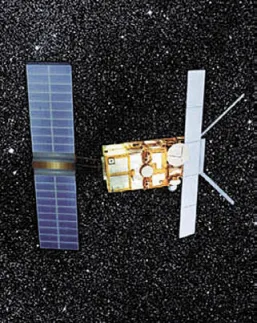
Several DZZ devices were installed on board the ERS-2, including IK and microwave radiometers, slurry, radio highlight, a device for measuring the concentration of ozone in the upper layers of the Gome atmosphere. The main payload was a radar with a synthesized aperture (RSA), which worked in the C-band of frequencies and made it possible to form an earth with a resolution of 30m in a strip of 100 km wide.
ERS-2 satellite was created on the basis of the first European Radar satellite ERS-1 (1991-2000), which also successfully completed the flight program, far exceeding the estimated life. For several years, the ERS-1 and ERS-2 satellites, equipped with the same type of radars, worked together and carried out tandemic survey of the Earth, forming interferometric pairs of radar images to calculate the digital relief model and evaluate displacements of the Earth's surface.
Based on the experience of the ERS-1/2 devices, the world's largest Envisat satellite in Europe was created in Europe, operated to this day.
Radar Ers-2 continued to work until the moment of disconnection. The reason for the termination of operation was the spinning of the on-board supply of the fuel of the motor installation, which is why an uncontrolled satellite could pose a threat to other operational DZZ devices operating in the morning sunny-synchronous orbit.
In accordance with the policy of reducing the threat of a clash of existing satellites with the EUROPEAN CODE OF CONDUCT ON Space Debris Mitigation), the ESA management has decided to transfer the satellite on the remaining reserve of fuel from the working orbit with a height of 785 km to a lower with a short term of the ballistic existence.
In the period on July 4-6, the heavy load of ERS-2 was turned off on the commands from the ground and a series of inclusions of on-board engines was started in order to transfer the satellite to low circular orbit, 550 km high. As of July 10, 2011, the apparatus was in orbit 757 x 759 km (periga x the apogee). The operation to reduce the height of the ERS-2 orbit will continue until September of this year, after which all the equipment of the satellite will be disabled.
After stopping the operation of ERS-2 in orbit, there will be 9 radar satellites, whose information is available on the world market: Envisat (ESA), Radarsat-1/-2 (Canada), Terrasar-X/Tandem-X (Germany) and Cosmo-1/-2/-4/-4 (Italy).
Nadezhda Pupyusheva,
Press Secretary of the ITC "Scanex