Translated material
Kyrgyz methadone
If a person who had not previously used heroin tried methadone, he would have felt a bitter taste, strong nausea and, in principle, could die. Methadone is a synthetic drug from the opioid group, which, unlike heroin, does not cause euphoria in the receiving it. In Russia, the circulation of methadone is strictly prohibited, but in some former republics of the USSR, including in Kyrgyzstan, methadone is used to treat heroin drug addicts.
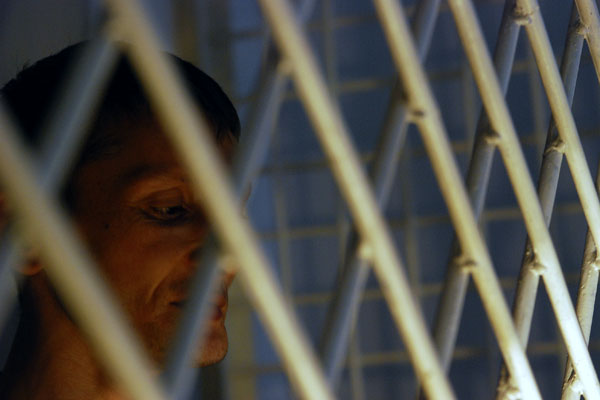
Every day, at 9:30 in the morning, from the building opposite the colony number 47, a nurse comes out in a white coat. She is accompanied by two guards, carrying a small canister in their hands. After passing after a few cordons (“Go only on three!”), The nurse goes into a special office. There, through the lattice from it, starting from 10 hours, prisoners are in turn behind the methadone. They put their hands in a special hole in the grate, call their number and sign in the journal, after which they take a plastic disposable glass with the drug.
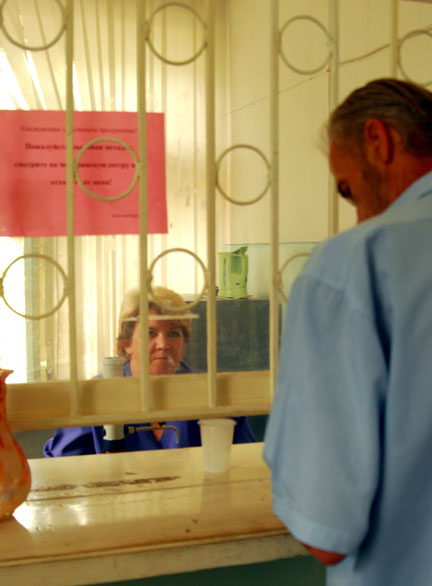
“The methadone is already 2 years old, before that heroin is 7 years old. I like everything, I will continue in the wild, ”one of the prisoners mutters, dropping his eyes and trying not to look into the cell. It is asking him, especially for journalists, the head of the colony. Another prisoner, Yuri, who looked 40 years old, and before, before he was caught for theft, passed the replacement therapy. Now he had to sit out for 2 months and he assures that he is not going to return to heroin. He is replaced by a gray -haired old man who slyly examines journalists and prison staff. A colony employee asks how much he was injected.
“20 years,” the old man smiles predatoryly.
“What is better: heroin or methadone?”, The colony employee asks the following question.
“Both,” the old man drinks a glass, crushes him in his hand and grimaces: “Both are better.” The dose of the methadone that is given to him is the largest in the colony.
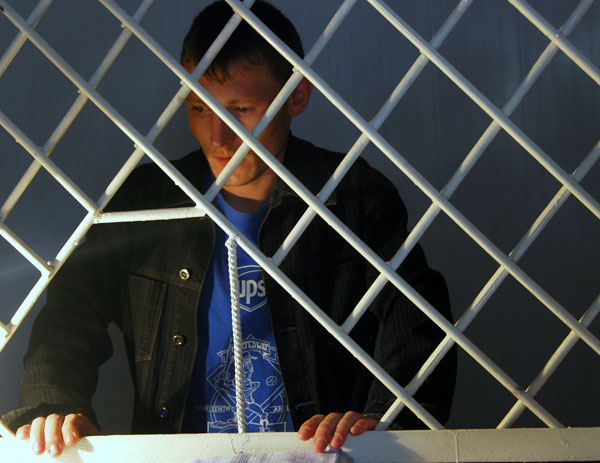
In the 47th colony, 9,698 people are serving a sentence, of which 413 people are drug addicts. In 2010, 134 new cases of HIV and 229 people living with HIV/AIDS were registered. In the walls of the colony, as in the city itself, the syringe exchange program also works.
"Our colleagues in Russia asked us:" How can you change the syringes? Do you admit that you have drugs in prison? " Well, yes, we admit what is it? You might think that they are not in Russian prisons, ”says the head of the 47th colony, Razhat Egemberiev.
So far, the program of replacement therapy works only in three male zones, including 47 colony. In the GSIN, Kyrgyzstan promises that soon the program will start for convicted women. Programs also work for foreigners, if they cannot continue therapy at home, the dose is forcibly reduced.

The peculiarity of replacement therapy is that it cannot be interrupted even for a day. Therefore, even on holidays, a resident of Bishkek Tatyana, comes to one of the city clinics. He drinks his dose of methadone, gets behind the wheel and goes to work.
“Replacing therapy is similar to the treatment of diabetes. Every day you come for medicine, and then you feel normally all day, ”says Tatyana. Despite the fact that she drank methadone half an hour ago (namely, during this time he begins to act), there are no signs of drug intoxication on her face. The dose’s drunk is enough until the next morning and, if Tatyana does not come to the hospital in time, then by 12 o’clock the next day she will begin to “get sick”.
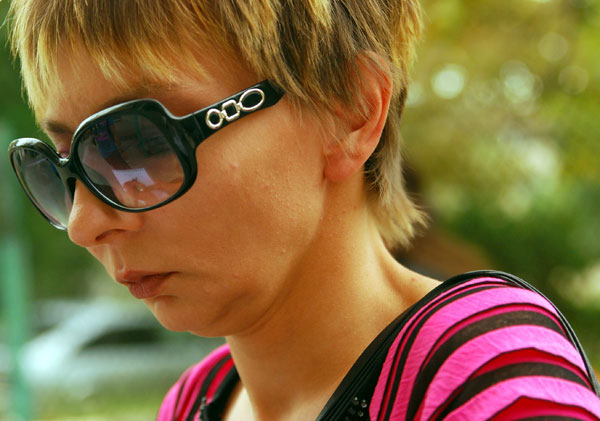
Tatyana was born in a prosperous family, received a medical education. The first time I tried opium at 17.
“I didn't like the opium. Well, I didn’t want such an effect then. Of the 10 people in my university group, opium, along with heroin, tried six people. Of these, four are now successful doctors, ”says Tatyana. She herself left her studies in the fourth year. He says, never really wanted to work in medicine.
“I recently tried to get an ambulance, an operator. Although I would not have access to patients and medicines, they still didn’t take it, they are afraid, ”Tatyana notes. Her friend Catherine has an eight -year experience of heroin addiction. According to her, she addicted her to the drugs, who had served her husband in prison. It has been replacing therapy for eight years, sometimes decreasing, sometimes increasing the dose.
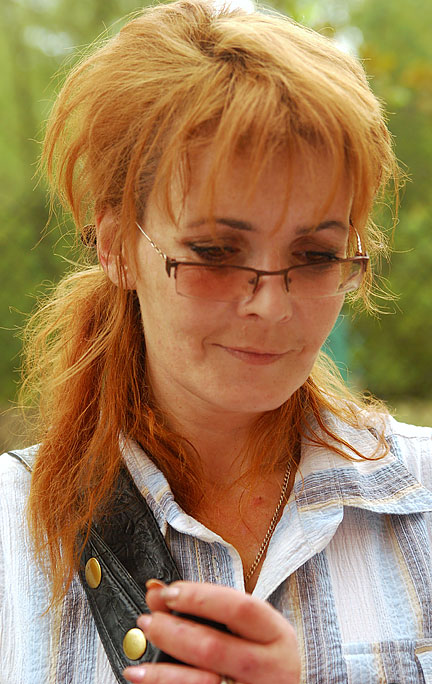
“I had a long time ago with my husband. Now he is one crawl of his son, he is now 16, he already understands everything perfectly well, ”says Catherine and notes that living after replacement therapy has become much easier.
“Do not think where to get money for a new dose, I began to enjoy just from life,” she says. Now Catherine works, goes to replacement and retroviral therapy (HIV was found in Catherine several years ago). Together with Tatyana, they opened their group for helping drug addicts and HIV-infected.
In 2005, methadone was included in the approximate list of the main drugs - section 24 “Psychotherapeutic drugs”. The final decision on replacement therapy in Kyrgyzstan was made in 2006. The country's Minister of Internal Affairs signed an order allowing methadone therapy, and the Ministry of Health and the drug control agency recognized methadone as one of the methods of treating drug addiction. However, this was preceded by the launch of two experimental points in Bishkek and Osh, which appeared in April 2002. Before that, the local drug addict only cleared the body.
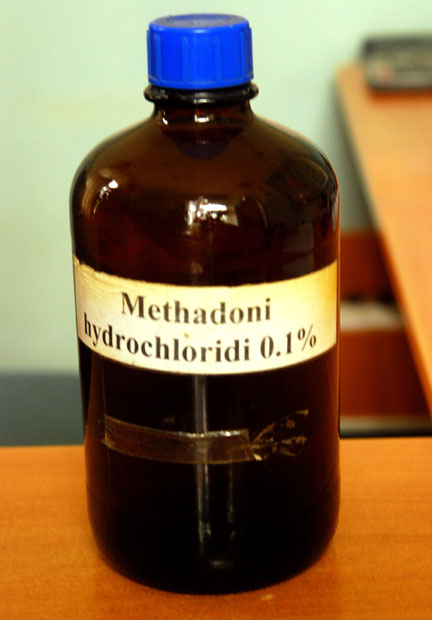
Officially, methadone is a drug, but its use in replacement supporting therapy is not prohibited. This position is held by the UN Drug and Crime management (UNODC), which officially declares that the use of methadone is not a violation of the conventions of 1961 and 1971 on narcotic and psychotropic substances. The global fund for combating AIDS, tuberculosis and malaria is financed by Kyrgyzstan's replacement therapy in Kyrgyzstan.
“You can cleanse the human body of heroin in a week, this is not a problem. It is much more difficult to wean psychologically from drugs, ”said Pavel Aksyonov, head of the non-profit partnership to support socio-preventive programs in the field of public health of Eswero. According to him, with psychological attachment to drug in Kyrgyzstan, they are fighting with varying success with the help of trainings and consultations.
A separate point is a general hobby for residents of Kyrgyzstan Marijuana. Konopra, to the surprise of foreigners, grows right along the roads and sidewalks, as, indeed, in a number of southern Russian regions. True, experts note that a wild hemp does not give the desired effect. In Russia, the problem with this kind of substances is acute: the country's chief narcologist Evgeny Brun in an interview with Polit.ru said that Konopra is the most common drug in Russia. Brun’s position on heavier drugs is unshakable - we will have no methadone. At least in the near future.
Often in Kyrgyzstan, the seized heroin is sold by law enforcement officers. In the GSKN (analogue of the Russian FSKN) they say that the share of such heroin (it is called “red”) is small - about 5 percent. The director of the Central Asian Center for Drug Policy, Alexander Zelichenko, calls another figure - according to him, it is the police who releases two -thirds of heroin on the market. In this opinion, he was supported by drug users themselves.
It is quite simple to deliver heroin to Kyrgyzstan - caravans from Afghanistan pass through the Tajik Khorog, then to Osh, and then to Bishkek. Over the year, more than 20 thousand kilograms of heroin passes through Kyrgyzstan. And at the exit it turns out twice as much - the drug goes to Russia and further, already in a diluted form.
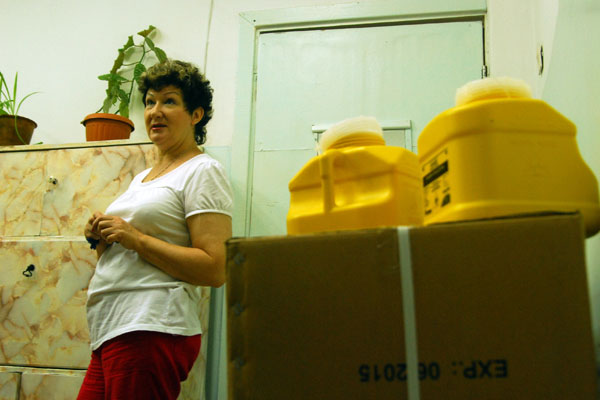
When the program for the exchange of used syringes in Kyrgyzstan only launched, police officers tried to catch drug addicts right near the inventory exchange points, they told Socium, which engaged in helping drug addicts. Indeed, it is difficult not to notice a person on a person with a bright yellow canister, full of used syringes. The police used this until some exchange points at all forbidden the police to approach their buildings.
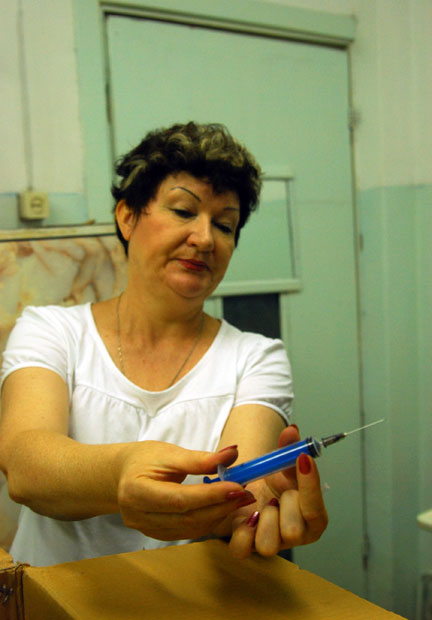
Of course, replacement therapy is not a panacea. In Kyrgyzstan, there are acutely lacking points of exchange of syringes, rehabilitation centers. And for obtaining a methadone, it is sometimes necessary to drive hundreds of kilometers.
Replacing therapy is successfully used in 75 countries, almost in the entire post -Soviet space. In Russia, it is not and, according to Eugene Brun and Evgeny Roizman, will not appear soon. However, as Polit.ru was reported in the Human Rights Association "Agora", at present the European court is considering the lawsuit of a Russian who did not receive the right to use replacement therapy. And, with the appropriate court decision, the authorities may oblige the drug user a fine.