
Translated material
Dvorkovich: the state can sell Rosneft by 2017
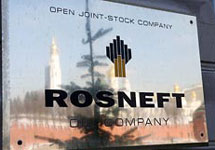
The government proposed to sell 100 percent of Rosneft shares until 2017, after the Kremlin set the task of expanding the scale of privatization and included in the list of privatized this company. According to RIA Novosti, the presidential aid Arkady Dvorkovich announced these terms. "The government offered the full exit of the state from Rosneft's capital until 2017," he said.
Earlier, it was about privatization of 25 percent of Rosneft shares in 2011-2013, while it was assumed that another 10 percent minus one share of the company could be used as part of asset exchange operations. By 2014, the government planned to reduce its share in the company to 50 percent plus one promotion. Back in early June, Dvorkovich advised Medvedev to include Rosneft in the privatization list.
He later explained to reporters that the presidential administration recommended that the government once again look at the privatization plan and privatize "and faster and more." However, about two weeks ago, President Dmitry Medvedev said that the state would not rush to privatize Rosneft. As Medvedev explained, the company will be sold at the moment when the authorities consider it the most profitable.
In June, Dvorkovich said that the Russian authorities did not intend to put any share of Gazprom in the coming years to privatize. “There is no conversation about Gazprom,” he said. Dvorkovich noted that the “large infrastructure component” in Gazprom’s activities allows us to attribute a gas monopoly to those companies that are inappropriate to privatize. “There is no such need here,” he added.
"From the point of view of efficiency and rationality in those sectors where there is competition and sufficient number of investors, the state of the state is not needed, it can be minimized, it can be minimized, it is ultimately reduced to zero. At least it is more aggressive than it is now planned. Where there is no competition or significantly less - I mean the infrastructure and everything that is associated with the military security of the state, - there, - there. State control is not a serious obstacle to work, for investment, it can remain for a long time, and in some companies and always, ”explained Dvorkovich's general principle of resolving the issue of privatization of companies.
Earlier on Monday, Deputy Prime Minister, Minister of Finance, Alexei Kudrin, said that Aeroflot will enter into an updated privatization plan, the state will sell the control package for three to five years. “Most likely, this will be Aeroflot,” Kudrin said in response to the question of which companies will be included in the expanded list of privatization. He added that in the next three to five years, the state should practically get out of the control packages of all key companies. "" We are talking about the financial sector and the oil. About telecommunications, about the transport complex, starting with the "Sovcomflot" and "Aeroflot". This step will improve corporate governance and add private investment to development, ”said Kudrin.
According to him, in the next ten years in Russia, a turn to a private initiative, to private investment, should be made in Russia. “The state will invest less in the company, the main emphasis on private investments,” he added. At the same time, Kudrin did not specify which Aeroflot package is planned to be included in the privatization list.