
Translated material
"Either you defeat corruption, or it is a country"
Georgian reform architect Kakha Bendukidze - The New Times
“The fight against corruption cannot be moderate. Either you win her, or she is a country, ”says Kakha Bendukidze, a Russian entrepreneur-in the 1990s, an architect of Georgian reforms-in the second half of the 2000s, and now the founder and main sponsor of a private free university in Tbilisi. Why in one of the most corrupt former Soviet republics it was possible to defeat the embezzlement and bribery, and in the most powerful country of the region, in Russia, this question on the eve of the third anniversary of the war between the two once close countries sounds especially acute. And - especially painful. 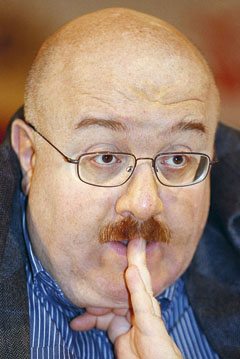
I will answer now, but I would not want your readers to get the impression that I did everything. I had a zero relation to the reform, for example, of the judicial system. I was just a member of the government when the police reform passed. I supported the reform of the reception system in universities, which was very corrupt, now zero corruption - this reform was made by Kahoy Plomay *** The Minister of Education of Georgia in 2004-2007, then the head of the National Security Council, since 2009 - a permanent representative of Georgia in the UN. But in a significant part of the economic reforms, I participated ... I generally think that all reforms are economic. Because the economy is about life, about how a person lives.
Without illusions
And answering your question ... Firstly, when we started (after the Rose Revolution in 2004.-The New Times), Georgia had no illusions that something was working, and this is very important.
But did Russia have in the 91st?
Were. And there were calls - let's even more conservative, look at the Chinese, and so on. And in Georgia there was a consensus: everything is very bad. Secondly, people who came to power then in Tbilisi, they came with an anti-corruption mandate. And it was a very strong mandate: society was ready for anything, if only it turned out *** a survey of children in schools conducted in Georgia before the Rose Revolution, in the very beginning of the 2000s showed: 75% of boys dreamed of becoming thieves in law, and about half of the girls dreamed of marrying them. “They looked at the thieves in the law in Georgia as Robin Gudov - people who resisted the system,” said ECA ZGULUDZE, deputy minister of the Ministry of Internal Affairs of the Ministry of Internal Affairs. And it required quick actions. How can you fight corruption? All Western studies show: in order for corruption, three factors must coincide. The first is trivial: a person should want money, he should not be satisfied with the money that he receives legally. The second is the lack of control behind him. And the third-the official must have a moral justification why he can afford to steal: well, for example, everyone around, he says to himself, earn themselves, but they don’t give me, well, something like that. These are the conditions of corruption.
Change of milestones
And the place of emergence of state corruption is the contact of the official with a person. The officials of the official with a person in a large state, that is, when the state approaches everything, by definition there are a lot. And very quickly, the Georgian authorities became clear that, eradicating corruption with fire and a sword, it cannot cope with it - corruption arises again and again. So the program of economic reforms, which aimed at reducing the presence of the state in the economy, coincided with the anti -corruption program, the task of which is to reduce the intersection points of citizens with officials. Relatively speaking, the two bureaucratic offices are easier to monitor than two thousand.
Further: the anti -corruption struggle by definition cannot be “left” or “right”. Therefore, despite the opposition on the left ideological flank, we managed to quickly carry out radical economic reforms. In Russia, as you recall, they went in conditions of constant conflict with the left parliament, and therefore they walked, then went back. Finally, the anti -corruption mandate has another important property: it is moderate to deal with corruption. Either you win her, or not. You don’t win - it means that it does not disappear, but you win - means that there is zero tolerance in power to it. There was nothing like that in Russia.
Finally, another important factor: people who came to power in Georgia after the revolution - they were strangers to the then bureaucratic class, and this class to the president, prime minister, and ministers.
But did Yegor Gaidar and his ministers - Chubais, Aven, Nechaev - were not strangers of the Soviet bureaucracy?
Someone was, someone is not. In Russia, the change of key officials, by and large, occurred in a pair of economic departments. And to the Ministry of Defense, in the Ministry of Internal Affairs, in the Ministry of Foreign Affairs, etc. Everything remains. The ministers changed, but they were not strangers: the same ministers, only a side view.
Why is it so important?
This is so important because it provides you with additionally, as it were, awl in Zh..u. That is, this means that your political associates with whom you came to power, they support the change in this apparatus, a decrease in its functions. No one could say: "Well, wait, Ivan Ivanovich, he is a well -deserved man, do not touch him, let him do what he is doing." And Ivan Ivanovich was simply fired.
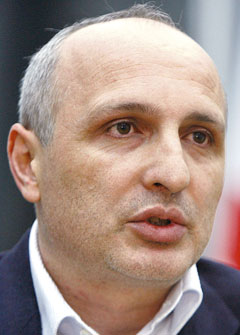
Look: the current Minister of Internal Affairs Vano Merabishvili. He was a member of the parliament, the leader is quite successful and large, by Georgian standards, a non -governmental organization - the Association for the Protection of Landowners' Rights. He himself is a geodesist by education. That is, he did not serve in the police, he did not wear a uniform with young nails, because he never wore a uniform, and now he does not wear, because he is a civilian minister. That is, people came mainly new, not involved in the previous system of power. Remember Viktor Tsoi's song “We are waiting for change”? Here the people demanded changes, and the government wanted to make these changes.
In Russia, there were no reforms of institutions, not institutions with a capital letter, there are families, power, courts, and institution reforms - ministries. They remained the same, people there remained the same physically, the same surnames, names.
Functions and fictions
The argument of our reformers, which I had to hear from them more than once: the old bureaucracy was needed because it ensured continuity - for example, knowledge of office work.
It was a very serious mistake. Because all these ministries were absolutely non -working structures, that is, they worked exclusively for self -sufficiency. These were such simulators: the simulator of public administration of the economy, the simulator of the public administration of the oil industry, the simulator of the State Directorate of Labor and Employment.
Have you closed a lot of ministries in Georgia?
The number of state institutions has been reduced by half.
Another argument of opponents of the closure of different ministries, including the KGB, then, in 1991-1992, was: "These people would go to the opposition, or even worse-in mafia structures."
They did it already, they went there without closing. "
To fight the shadows - we did not have such a task
" What happened to the Georgian KGB?
It is liquidated, there are no people, there is only a small department in the Ministry of Internal Affairs. But there are no Soviet Kagabsniki. And the Ministry of Internal Affairs does not work Soviet police ...
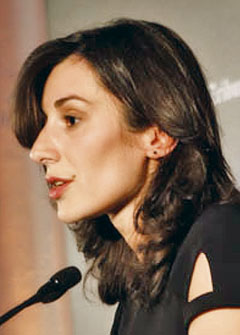
Ekguladze has a wonderful story how she went to a meeting of deputy ministers of the internal affairs of the CIS. This is at a time when we were still members of the CIS * * * Georgia left the CIS on August 18, 2008 and we had to go to these meetings. Well, you represent the rally of deputy ministers of the internal affairs of the CIS - such uncles, all in forms, with a belly, in caps. And then she comes - in jeans, in high heels, a thin girl. * * The Minister Zguladze is now 32 years old, firstly, when she arrived for the first time, she was not even noticed, because everyone was waiting for the deputy minister of internal affairs from the plane. And then she comes out, passes, no one stops her. There is some kind of honorary guard, back and forth. Then they recognized ... The most difficult, she says, began when, after the meetings, it was necessary to go collectively in the bathhouse to b ... m and for women. And then the embarrassment turned out. That's what to do with her? It is incomprehensible to take in the bathhouse, to offer her - it is pointless, you see. This is what the cleaning of the institute from the inside means. This is such a comic, but an example.
Why was it appointed deputy minister? PR
No. I could work with her, she is such a quality person.
But, for example, we had the Minister of Foreign Affairs Salome Zurabishvili - she came from France. She was not the most effective minister, in my opinion, because France is very such a bureaucratic country. But she did not speak Russian, and this turned out to be monstrously important.
Why?
Because the Georgian diplomatic school was such a continuation of Smolensk Square. So, Salome carried out just such a generational shift. And the ministry is no longer Soviet, and no one will say: “Oh, you graduated! ABOUT!"
It turns out that the main problem of the reforms of the 90s and their failure was that Boris Yeltsin was the former secretary of the regional party committee?
Well, yes, everything was too Soviet, I would say so. And even Yegor Timurovich, he was a successful Soviet scientist ... That is, besides Chubais, who created the new ministry, nothing new was created. And therefore, we remember that Chubais carried out reform, although Chubais carried out only part of the reforms. Skokov, Lobov, they were all absolutely Soviet people. And the point here is not in bloodthirstiness ... I, for example, are the opponent of changing people when the new minister comes. I did not appoint a single deputy of my own, when I came to the Minister of Economics, except one, because I needed a good lawyer. All the rest were - which I got, I worked with them.
You contradict yourself.
No. The question was like this: the employee is suitable for its qualities or not, knows how to adequately do his job or not. I had employees in the Ministry of Economics, after all the cheatings, certificates and so on, who worked in the previous ministry, but these were people who were able to rebuild. And there was a woman who was offended that she was fired, and said: “How so? I went to a state plan with five -year plans, but they dismiss me? " That is, she did not understand that the fact that she "went to the State Planning Commission" was no reason why you should work today. And there was another woman who had previously been the deputy minister of trade in the mid-90s, she had a very correct vision, she was for recovery, she generated ideas. But the most important, of course, is who you have in political positions.
 |  |
Was there a lustration in Georgia?
She happened de facto. That is, not one of the leaders of the Communist Party is in power. The last first secretary of the Central Committee was a member of the parliament of the previous convocation. But to fight the shadows - we did not have such a task.
Moral as a motive
Well: the ministries were reduced, the functions of the state were reduced to the necessary minimum, the control was established. But Georgia is a country, frankly, poor. There must be conditions to steal and take bribes it has become unprofitable. What did you do?
Catch and plant. Recently, the deputy minister was imprisoned. There are several people there, this is unpleasant for us, but the fact.
And how much did he steal?
But it doesn’t matter how much he stole. That's the point, in Russia now there is such a discussion that there should be a fine for corruption. I can’t even imagine it in Georgia, so that the government, for example, has to take such a discussion ... So I would come there tomorrow and say: “Let's decide what a fine should be for a bribe,” they’ll just look at me as a madman ... I read Medvedev’s performance by syllables for a long time to understand what is being discussed there *** in connection with the signing of their changes to the law, according to which fines from 25 thousand to 500 million rubles were introduced for bribes. I say seriously. And what should be a fine for rape of children? Well, let's also monetize this, and there will be a fine there is one hundred times, tenfold. “No, ten times a lot, let's five times.” - "No, a hundredfold little." But this is a meaningless discussion. I took a bribe - out.
Then what kind of motivation do you create so that a person does not steal?
Only the Lord God creates such an ideal motivation, and the working motivation is created as follows: the first, the official, of course, should have a good salary that adequately meets his volume of work, professional competence.
“Good” - how much?
Different for different levels. It should be comparable to the market sector.
In my opinion, in no country in the world, the salary of bureaucrats can not argue with salaries in a decent business.
Singapore. You can go to the website of the Singapore Ministry of Finance, and they have the salaries of each ministry there, they have a staffing table. Very interesting, by the way. In the Ministry of Finance of Singapore, there is two driver, and in the prime minister’s apparatus - four drivers. The salaries of ministers differ several times from each other. In New Zealand, the same thing - salaries differ several times. We have a problem with the ministers, of course, because ministers do not receive an adequate salary. The minister is still a political position, people go to ministers not with the aim of earnings.
What is the salary of them?
I think that the ministers are really now, I don’t know for sure, but they probably get somewhere around $ 5 thousand.
And the average salary in the country?
The average salary in the country is 500 - 550 Lari. That is 300 dollars. That is, the minister is 15 times more. Plus they have a car, driver.
Why didn't you drive them behind the wheel of your cars?
We counted: it turned out that it would get more expensive for us.
High salaries. What else?
Very thorough control.
Do you mean special services control?
Control within the ministry. Each ministry has its own General Inspectorate. Plus control from the prosecutor's office.
And the third, based on the concept of corruption that I spoke about, the official must be sure that they do not steal around him and especially from above. This is very important that he understands the transparency and determination of the apparatus above and under himself. Therefore, when they talk about elite corruption, I explain that it is very difficult to make so that there is elite corruption - it is almost impossible, because you can imagine, do your bosses steal, but they don’t let you steal? This can only be drawn on paper, but in life this cannot be: the official says to himself: “They steal - I do not steal, they earn hundreds of thousands - I earn two thousand, but they went in w ..., I will also steal now.” In other words, if suddenly all employees want to steal, then, of course, you cannot control them. Therefore, it is very important that they understand that the top works honestly. You know, I have already had a personal security by the nature of my activity for many years. And the people who were engaged in our protection, they were trained and so on, explained: you cannot lead a rampant way of life, insult security and pay them a large salary for this - they will not be loyal to you. And if you work a lot, they see how you work, you do not shout, do not water yourself with champagne, they work more loyally for a much smaller salary. The same thing is in the government, in the ministry. If your employee sees that you are devoted to business and honest, then there is less chance that he will have a desire to steal something. Just because stealing is immoral.
First - to cleanse
The salary of the Minister in Russia is also $ 5 thousand - and still wild corruption.
For Russia, five thousand is nothing. In Russia, the level of GDP per capita by parity of purchasing power is three times more than in Georgia. And in Moscow, GRP (gross regional product by purchasing power parity. - The New Times) is many times more: at the level of $ 30 thousand per year. Another question is that you are useless to increase your salary: in Russia, corruption has become systemic, you must first cleanse it, and then you can somehow treat it.
There is a well -known example of the reform of the customs service in Mexico. She was thoroughly corrupt, nothing helped - they increase the salary, lower, punish, plant, do not plant - everything is useless. They send a new person: after three days, he also began to take bribes. It was a systemic problem. What did they do? They hired 3,500 young guys. Well, about the same as we did in the police. They taught them at the military base secretly for six months to the customs business, then all customs officers were replaced within a day. This does not mean that these people became angels, some of them also took bribes, they were kicked out, but this ceased to be a systemic problem. It is from a systemic phenomenon, when everyone steals, it has become one -time. Кто-то иногда «заболевает», вы его идентифицируете, выгоняете, лечите, условно, систему… Вот именно это мы и делаем.
Перед Богом и людьми
Вы ушли из власти: это плата за реформы?
This is fine. Я решил, что надо сконцентрироваться на университете и на бизнесе, который у меня за пределами Грузии есть, что при статусе госчиновника было бы невозможно.
А у вас в Грузии совсем своего бизнеса нет? *
No no. Мне и так приписывают, что все тут в Грузии мое. Но я не позволяю себе даже сейчас чего-либо в Грузии иметь. И университет бизнесом не является: он принадлежит фонду, который я создал, но этот фонд не может в мою пользу ничего распределять. Я специально создал такую конструкцию. Люди все равно говорят всякое, но мне важно иметь возможность перед Богом и людьми честно отвечать. Я перед ними честен.
Kakha Bendukidze was born in 1956 in Tbilisi. Окончил факультет биологии Тбилисского госуниверситета и аспирантуру в МГУ. Возглавлял Лабораторию молекулярной генетики в Институте биотехнологии АН СССР. Еще в конце 1980-х, в перестройку, основал свой первый бизнес — «Биопроцессор». К середине 1990-х он уже был председателем Совета директоров и генеральным директором компании «Объединенные машиностроительные системы». Входил в двадцатку самых богатых людей России. В марте 2004 года продал свои акции в компании и вскоре, после 28 лет жизни в Москве, вернулся в Грузию, где в июне того же года был назначен министром экономики в правительстве Михаила Саакашвили. Спустя полгода — государственный министр, отвечающий за координацию реформ. Потом был руководителем Госканцелярии (аппарата правительства). В феврале 2009 года, покинул властные коридоры и занялся развитием основанного им Свободного тбилисского университета.
Эксперты компании ФБК задались вопросом: какое государство достигло наибольшего прогресса в деле улучшения делового климата за последние пять лет. Для этого они проанализировали динамику по семи признанным в мире страновым рейтингам: — индексу конкурентоспособности (World Economic Forum), — индексу условий ведения бизнеса (World Bank), — индексу развития человеческого потенциала (OOH), — рейтингу «Лучшие страны для жизни» (International Living Journal), — рейтингу экономически свободных стран (Cato Institute), — индексу экономической свободы (Heritage Foundation & Wall Street Journal), — индексу восприятия коррупции (Transparency International). В окончательном рейтинге ФБК учитывались только те страны, которые присутствовали во всех вышеназванных индексах с 2006 по 2010 год включительно: таковых оказалось 101. Принцип подсчета: подъем страны на одну строчку в конкретном рейтинге за год оценивался «+1», потеря одной позиции «–1». В результате наибольшего суммарного прогресса среди всех стран достигла Грузия (+207), значительно опередив Македонию (+160) и Доминиканскую Республику (+114). Россия — среди аутсайдеров, она занимает 97-е место (–97 позиций). Ниже — только Венесуэла, Никарагуа, Украина и Боливия. Ключевую роль в успехе Грузии сыграл индекс условий ведения бизнеса (1 — идеальное положение), в котором страна переместилась со 112-го места в 2006 году на 12-е место — в 2011 году, и индекс экономической свободы, в котором она поднялась с 81-го на 23-е место. Аналитики ФБК объясняют подъем Грузии тем, что за последние пять лет в стране успешно осуществлен десяток реформ, направленных на улучшение делового климата. Законодательство страны, по мнению Всемирного банка, является самым лояльным к бизнесу. Процедура регистрации предприятий была существенно оптимизирована. В стране создана самая эффективная среди стран Восточной Европы и Центральной Азии система выдачи разрешений на строительство (вместо 25 процедур ввели 10, время получения разрешений сократилось вдвое). В Грузии введена электронная система регистрации собственности, оптимизировано налогообложение (введена система самоисчисления налогов), упрощены процедуры таможенного оформления. **Подготовил Дмитрий Докучаев**
Reply to relate to all overwhelm