
Translated material
The front is getting closer to the "Motherland"
Why do Vladimir Putin are nationalists
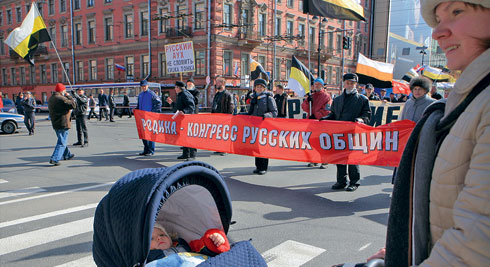
Organization "Homeland. The Congress of Russian Communities ”The second time since 2003 has been entering the real policy of the front closer to the“ homeland ”. The 21st of the September 21 in Moscow will be a congress of the Congress of Russian communities. Nationalists are expected to join the All -Russian Popular Front, and Dmitry Rogozin will return from Brussels to Russian politics. Why does Vladimir Putin need this - the New Times found out
The last card unconfigured in the campaign is nationalist, ”said The New Times, a high official in the government. “Zhirinovsky wanted to play her, but Vladimir Putin and his front will take the initiative.” This forecast was confirmed a few days later, when on August 19, the Ministry of Justice, who had just refused to register the opposition parties Parnas Boris Nemtsov and Mikhail Kasyanov and the “Rot-Front” by Sergey Udaltsov, unexpectedly returned to the life of the Rodina. Congress of Russian communities, which previously allowed itself to stigmatize power not only as non -democratic, ”but also as“ non -Russian ”. The enthusiastic associates of Dmitry Rogozin - the constant representative of Russia under NATO previously headed and is still considered an informal leader KRO - immediately announced preparations for a congress that they had not been collected before.
The right front -line soldiers of an excessive organization will decide personnel formalities: to approve the leadership, place in places of performers, etc. But the most important point of the agenda will be the question: whether to cooperate the nationalists with United Russia and the All -Russian Popular Front of Vladimir Putin? Judging by the fact that the Cro Cong Congle will pass three days before the Congress of United Russia, the answer to this question is a foregone conclusion and the mystery is only in what volume the nationalists will eventually be presented in the lists of the ruling party. In a conversation with The New Times, the leaders of KR do not hide that they consider the path to cooperation with the Putin Front correctly. Dmitry Rogozin, who maintains a connection with like -minded people with the help of social networks, recently addressed them with “Russians cannot be an opposition in their state. Either these are not Russians, or it is not a state. ” His closest supporters agree with the leader. Thus, the secretary of the Presidium of the National Council KRO, Aleksey Zhuravlev, not only for cooperation with United Russia, but even took part in party primaries: “In Voronezh, I entered the top ten of 73 candidates,” he told The New Times. Tenth place, however, is impenetrable. But Zhuravlev does not despair: "A place in the Duma is not the limit of dreams." For close contact with the front, the member of the Presidium of KRO Alexander Bosykh, who is responsible in Congress for working with youth, also advocates. Both interlocutors of The New Times believe that the theme of interethnic relations in Russia is more than ever in demand after the events on Manezhnaya Square in December 2010 and the party in power is necessary to cooperate with the Congress of Russian communities no less than Cro itself. “Our electoral potential in Moscow is 30%,” says Zhuravlev, “no less in the regions. The fact that we were registered is a very smart position of power. ” Now the “homeland” -ro in gratitude can transfer its electoral potential to the party in power. “We have 60 thousand members, and by October there will be 300 thousand,” Zhuravlev predicts. “The format of public association gives us the possibility of wide cooperation with all parliamentary parties.” True, he is immediately stipulated that neither with “fair Russia”, nor with the Communist Party, or with the LDPR, cooperation is impossible. So, only "USRO" remains.
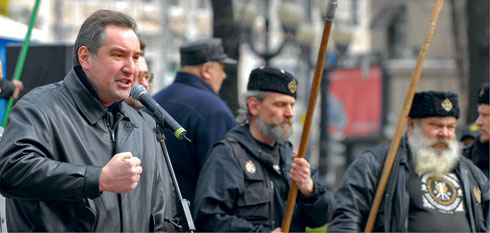
Dmitry Rogozin is the most promising Russian nationalist, his like-minded people believe -he does not see anything surprisingly in returning to the ranks of EP Rogozin and Kroh, political scientist Mikhail Tula: “All of him, Rogozin, his career since 1993 has been connected exclusively with the authorities, he has always been next to the presidential administration, did something by order of AP, interacting with AP. Back in 2003, Vladislav Surkov prepared Rogozin for the post of secretary of the Presidium of the General Council of United Russia, he wrote a statement about joining the party, but then did not work out. At the same time, I do not think that he can bring a lot of votes: in three years in Brussels he lost all his associates. In the "United Russia" itself, they look benevolently at cooperation with moderate nationalists. “Dmitry Rogozin is well -known to us, and we are well known to us,” said Yuri Shuvalov, Deputy Secretary of the Presidium of the Presidium of the General Council of United Russia, in an interview with The New Times. He does not see obstacles to cooperation between KRO with United Russia and the head of the party CEC Andrei Vorobyov. “One requirement: compliance with Russian legislation,” the party official explained. True, the party claims that they do not intend to flirt with the nationalist rhetoric “this will not lead to anything good,” Shuvalov is sure.
Other leaders of the nationalist movement are also supported by Cro’s accession to the Popular Front. “Dmitry Rogozin is the most promising Russian nationalist,” the ex-leader of the DPNI Alexander Belov is sure: he believes that the entry of the Congress of Russian communities into the All-Russian Public Front of Putin is quite justified. True, Belov prefers not to say about his participation in the updated Congress: “Will I don’t know any benefit to Rogozin. I did not receive invitations to KRO. ”
The presidential administration, in turn, in the return of Dmitry Rogozin and his Cro does not see danger to the policy and are sure that he will “not go away”, that is, he will not allow himself any excessive independence: “Rogozin received a good lesson in 2006-2007 and learned it,” said the senior interlocutor of The New Times. Recall: after the 2003 parliamentary campaign, when the Rodina formed an impressive faction in the State Duma, Rogozin went out of the Kremlin control for a while, arranged hunger strikes in the State Duma building and allowed himself to harshly criticize Vladimir Putin. The reprisal was not long in coming: for frankly the Xenophobsky video, “Clean Moscow from Garbage” in 2005, first was removed from the elections to the Moscow City Duma, and then blocked her access to federal television channels. At the beginning of 2006, Rogozin for one reason or another was removed from the elections in 7 of 8 constituent entities, after which he resigned. The party ultimately joined the “fair Russia”, and Rogozin has been waiting for “amnesty” for almost two years. Only by December 2008 he was forgiven, sending Russia to represent Russia in NATO. Now the three -year business trip has come to an end.