
Translated material
Languages and dialects of the popularization of science
In the postal mailing of a club of scientific journalists (KNG), a rather stormy discussion was held, dedicated to the question of what they can, and what science-popular articles should not be in mass publications.
It all started with the questions of the famous popularizer of mathematics Nikolai Andreev, surprised by one of the fresh scientific news, which appeared on a popular news site, but written in a completely popular language. We give some comments from this discussion.
The materials of the discussion based on correspondence in the club of scientific journalists were prepared by Sergey Popov.
Nikolai Andreev, head. Laboratory of popularization and propaganda of mathematics of the mathematical institute named after V.A. Steklov RAS
Recently, it seems to me that there have become more articles about science in large media. And if the observation is correct, then this cannot but rejoice. But the question will not be about quantity.
News and articles of very different levels appear. Including in very mass Internet media, articles sometimes appear, understandable, as it seems to me, only to specialists. Honestly, I will say that, in my opinion, a normal, ordinary person from such an article will not endure anything for himself. Yes, and a scientist, if he is not a specialist in the appropriate narrow area, is unlikely to be able to figure out the news not at a qualitative level, but really correctly and fully.
Questions to members of the KNG. Who thinks: why do we need such articles, what do they give? Do they popularize science, whether they give some knowledge/information to the wide circles of readers, are they a report to society, are they necessary in the form of a large stream from which something good grows, etc.?
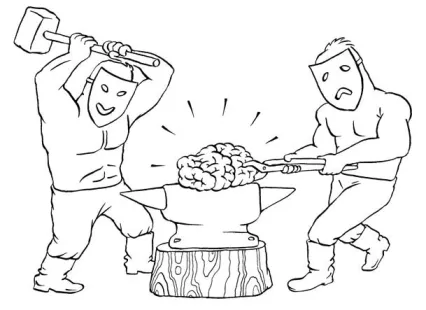
Let there be a stream of news about science that others do not have. But if this stream consists of such articles, is it needed? What should be the necessary conditions for an article about science in the wide press to be “useful”?
In my opinion, some key properties are as follows:
• There should only be true. It is not necessary to stick the whole truth into the article, but everything that is said should be true. Otherwise, this cannot be attributed to the popularization of science;
• Curious reader must be able to understand what it is about. That is, after reading the article, he can state her main idea in his own words;
• Curious reader learns something new (and then he will be able to operate with this knowledge), something useful in some broad sense (for example, for a general view of life).
The list, of course, is not tooon.
Sergey Popov, Astrophysicist Gaish Moscow State University
In my opinion, the most important thing when choosing a topic for the news is “how true and important it is.” In complex notes for perception, the role of this item only increases.
If the topic is important, and the work that is described does not contain errors, then a variety of news are needed. And here it all depends on the choice of the editors. If the editors are not right, then she herself will see this by attendance, responses, etc.
The news is not from my area of physics in the spirit of Physics Today I will understand (although I can’t evaluate how true everything is likely, I will most likely not know the reputation of the author of the work that is discussed, etc.). On the other hand, on a very mass site, such news would look surprising. But, I repeat, this is the choice of the editorial office. In principle, it seems to me that the news of this level is more appropriate in English and in specially designated places (of which in physics in the world 5-6 pieces). First of all, they should inform the very wide scientific community (in this case, physicists). Secondly, to serve as an indication of scientific journalists, what should be paid to.
However, if there are authors who are able to select and write such news, it would be quite interesting to make the “News NOT for everyone” notes even on the mass site. But then it should not be a one -time phenomenon.
And finally, we all understand that occasionally (especially at the time of vacations) there are situations when atypical materials appear due to the lack of typical ones.
Maxim Borisov, scientific editor of the magazine "Science in Focus"
I think that here is not a subject for a dispute, but an item for a compromise. Read more actively what is written interesting and on an exciting topic (which does not necessarily always coincide with the interests of this science).
The journalist must also imagine what is really, what is a real scientific value, not to reassure himself that "readers read about it well." Firstly, they may not read, but only open a link on the site or buy a magazine, and then spit. Secondly, the more thoughtful part of the audience is always more valuable for any edition. Thirdly, even incorrect readers eventually understand that the publication is remembered by dummy, and they are disappointed.
Well, in the end, chasing exclusively behind “exciting” topics, it is easy to cross the slightly visible border and seriously decide that a primitive pseudoscience is the most “effective” from the point of view of journalistic labor.
So the optimum is to represent in the head, which will seem fascinating to the people, to know (or consult with specialists), which scientists themselves consider it interesting, to dose, experiment, somewhere to “focus”, somewhere harmlessly, and entertaining, in the end, but as a result to leave the publication in a swimming science and trying to promote real science. Sometimes for this it is necessary to make additional efforts and swim very much against the current. Sometimes such constant over -of -hected is unjustified, and it is worth slightly relaxing, write about what is simpler, so that it is completely not lost to competitors.
In some cases, however, the interests of science and readers happily converge, therefore, some topics are especially loved by all the sane journalists, even if this is not absolutely fair “in the Hamburg account”. Astrophysics, for example, or dinosaurs are almost always “on a horse”, and with some physics of a condensed state or, do not bring Lord-some functional analysis-to fight and fight. Well, inside the specific sciences is about the same situation. There will be no complete justice ...
Alexey Tymoshenko, scientific observer of the newspaper "Moscow News"
It is reasonable to make the news about science understandable for the audience (the one that is already at the publication; at worst - at least for part of this audience, because I myself rarely read all the stripes in newspapers). Of course, it is implied that they should be just news, i.e. Contain something new for the reader.
The number of signs, the permissibility of formulas with integrals, the relevance of the interview with scientists, the very topic of the news - all this is already determined based on the requirements of interest and novelty. It is appropriate for readers of Science that Science publishes, for readers of Komsomolskaya Pravda - a popular story about how unsbtrous manufacturers of yogurts and dietary supplements make money on the pseudo -diagnosis.
I note that the novelty for the reader is not equal to the novelty for scientists, and therefore I myself with a pure conscience can do half of the text of my news to what experts already know, because I write for the general public.
Alexander Sergeev, scientific editor of the magazine "Around the World", moderator of the club of scientific journalists
Let's try to look at scientific popularization as a research sphere.
The subjects of the study of scientific and the array of knowledge accumulated by science (we will call this conditionally scientific consciousness), and an array of everyday ideas about the structure of the world and its study (we will call it public consciousness).
The purpose of popular science research is to build a display of scientific consciousness in a public with minimal distortions of meaning.
The applied use of scientific and populum is a change in the state of public consciousness in such a way that a larger amount of scientific consciousness with less distortions can be displayed into it. This is important, since a large gap between the volumes of scientific and public consciousness is fraught with coagulation of scientific research (since the financial dispenser, ultimately, in the hands of society).
Scientific and popular discovery-any method of reasoning, metaphor, graphic element that help display part of scientific consciousness to the public in the area where it had not been able to (no one tried, there was a low efficiency or high level of distortion).
The dominant method of financing popular science research is “micrograckers” for a period of one hour, one day, one week, one month (usually called fees and are paid upon delivery of the finished study within time). Sometimes “microgrants” are combined into packages, and then in fact it turns out the rate of a scientific journalist, observer or editor.
In a large number of scientific fields, the main popular science discoveries have already been made (often the very scientists who have been scientific research). Scientific journalists use these discoveries for applied purposes to influence public consciousness. But many of them also conduct their own small popular science research, optimizing the display of scientific consciousness to the public. Thanks to this background work, a popular science language is gradually improving, certain canonical explanatory techniques are developed and the coverage of new audiences, primarily children, is achieved.
But periodically scientific journalists have to deal with topics where the main popular science discoveries have not yet been made. And then a full-fledged popular science study begins, i.e. The search for ways is clear to tell about something completely new for public consciousness (or at a very new level of accuracy). Such studies, as in science, can be successful, or can - quite weak. But the latter also have value, as they make the dead end of one or another course of thought obvious.
It is important to note that the specifics of financing popular science research is such that a very short time is always allocated to work and it is necessarily ended with publication. For example, a typical period for preparing news on many news sites is one hour. During this time, you need to delve into the topic, find an effective explanatory technique and state it in the form of a text in the size of about 2,000 signs.
If the publication is not ready within the specified period, this is considered as a disciplinary violation. Therefore, scientific journalists are sometimes forced to publish not very successful research. But if they do not make such attempts, then the popularization of new scientific areas will slow down significantly.
Hence the conclusion. Of course, the quality of popular science publications is a sore question. But here everything is like in the fight against spam: if you “tighten the nuts” of the spam filter so that not a single spam falls into “incoming”, then many important letters will disappear with it. If weaken the filtering, a certain amount of spam will break through, distracting attention. The editorial policy in the field of scientific popularization is precisely in choosing the level of filtration (quality).
With the same qualification of scientific journalists, you can improve quality:
• reducing the number of materials (but it is usually rigidly set by the format of the publication);
• increasing the time for their preparation (always rigidly set by the format of the publication);
• Reduce the thematic range (but specialization threatens to reduce the audience).
It remains to improve the qualifications of scientific journalists. There are such opportunities for this:
• hire supercrofession universals (there are few of them, they will be bored, and the budget will not be enough);
• hire a lot of narrow -profile journalists (rests on the budget and coverage of new and rare topics);
• improve the qualifications of their own journalists (but then they should have the right to make a mistake).
I believe that the only right path is the last one, but this means that unsuccessful publications will be inevitable. And here the role of the popularizers of science working outside the editorial and publishing conveyor becomes obvious.
Firstly, these are scientists who know their area best, often offer very successful explanatory techniques (but this is far from always the case-scientists sometimes do not represent the state of public consciousness into which their ideas will be displayed).
Secondly, the authors of popular science books that can afford to work slowly, consulting with colleagues, with specialists and potential readers.
Thirdly, teachers who are constantly looking for new ways to explain scientific facts to schoolchildren and students.
Fourth, scientific press services that serve as intermediaries between scientists and scientific journalists.
And finally, this is our club, where we are now discussing such a topic.