
Translated material
Difficulties in choosing
The Japanese check the rice by the Geiger counter
Difficulties in choosing. Six months after the destructive earthquake and the tsunami, which claimed almost 16 thousand lives, power changed in Japan. Over the past five years, the prime minister, 54-year-old Josichic Noda, who is called “Technocrat with the Samurai Soul”, has already called the priority task: “normalization of life” after the accident at the Fukushima nuclear power plant
 |
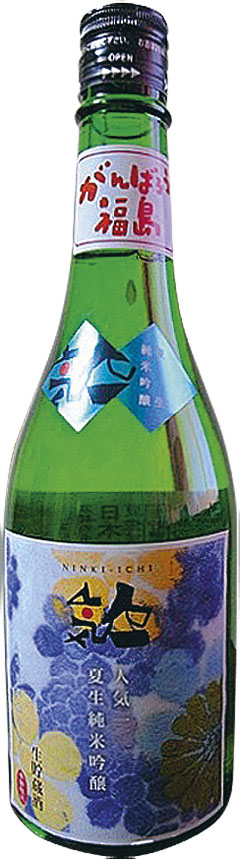
“And my beloved Gökuro is not again? What to do? After all, almost six months have passed ... ”-the 35-year-old manager of Naomi Mitani is bewildered in bewilderment at the counter at the Tokyo Echika department store. Naomi is used to drinking green tea on an empty stomach - a favorite non -alcoholic drink of the Japanese. The best green tea plantations in the country are located just in the northeastern prefectures of Miyaga, Ivat, Fukushima and Ibaraki, which were most affected by the earthquake and tsunami on March 11, 2011, and of course, from the Fukushima accident. Due to the danger of radiation infection, the entire harvest of tea in these areas was destroyed.
Rice on the counter
Radiation elements were found even in the leaves of tea from Sizuooki, which is quite far from Fukushima - and the crop was also destroyed. Tea from the south of the Japanese (the largest island of the Japanese archipelago. - The New Times) and from the southern islands of Kyusu and Sikoku are considered more or less safe. This product is in abundance, “but it is not so tasty,” Naomi delicately notes. 
With one tea, problems are not limited. “Prefectures of Miyagi, Fukushima, Ibaraks have always been considered an all-Japanese granary: they have no equal vegetables in the quantity and quality of meat, rice,” explains the New Times Yukio Kansan. “In August, in the north-east, rice ripened, but it turned out that it was infected.” After that, the authorities ordered to check all the rice sold in the country for radiation. “First of all, they check for the high activity of Cesia-134 and Cesia-137,” Yukio Kansan explains. - For example, in Tiba (Japanese prefecture. - The New Times) checked 17 points of taking rice among the peasants - fortunately, the whole "clean". But the Japanese prefer to make it themselves once again. In the same Echika supermarket, such a scene is not uncommon: before buying rice, people check it with a Geiger counter. “It was more than once that the counters went off scale,” says the housewife Naomi.
"Sure" meat
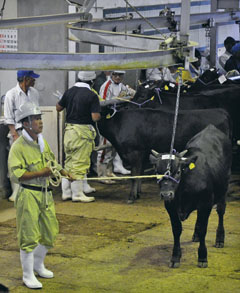
The Japanese also love beef, maybe a little less than rice. But things are much worse with her. According to the personal order of the ex-Prime Minister Natoto Cannon, the number of cattle in the prefectures of Fukushim, Miyagi and Ibaraki were almost completely destroyed. The losses of the Japanese agricultural sector, according to preliminary estimates, can amount to $ 12-15 billion. “Cows in Japan are mainly fed with rice straw,” explains Yukio Kansan. -Immediately after March 11, no one paid much attention to Fukushima, and Tepco * * Tokyo Electric Power Company (Tepco), the operator of the Fukushima NPP. For a long time I did not advertise the real scale of the disaster. The peasants calmly continued to feed the cattle with straw, which was in the open air. But in March-April, ongoing rains went, and with them all radioactive dust from Fukushima settled on the ground. Only after the then Prime Minister Natot Kan at the very end of March arranged a variety of TEPCO to the leadership and announced the closure of the Fukushima-1 nuclear power plant, did the peasants learned the truth. But it was too late. No one knows exactly what outputs the products were sent to, and most importantly - how much they have already eaten. “At least 3 thousand heads then managed to divide and send to the retail network,” Yukio Kansan said.
 |
According to him, the meat tests for radioactivity are carried out almost daily throughout the country. “There are no reasons for panic yet. For example, in the prefecture, Miyags checked 2704 outlets, “dangerous” meat found only in 93, ”says the interlocutor of The New Times. “In some places, however, the level of activity of Cesia was 1381 Beckerel per 1 kg (BC/kg) ** the maximum permissible norm-500 BK/kg .. This is no longer a joke.”
Other Japanese products are regularly checked on Cesius - spinach, mushrooms, not to mention fish. At the end of summer, the Greenpeace expert group measured the state of the sea fauna off the coast of Fukushima. Even 55 km from the nuclear power plant, in the area of the city of Ivaki, the samples of the sea perch taken showed 1053 BK/kg. In other species of fish, the indicators are lower, but also significantly exceed the norm. “Fukushima Syndrome” forced the Japanese to bet on imports. “We do not have local meat in stores,” said the Russian woman Ekaterina Imai (her husband - Japanese), living in Ibaraki Prefecture, told The New Times. - Mostly Australia and America. In the fish department of Sasimi (raw fish. - The New Times) from Croatia, Indonesia. I will not say that the people are lined up for "uninfected" products. But they are already looking at the labels. ”
Fear of the future *
All data on the state of the grocery market are immediately published, and the Japanese feel discomfort. “Months are coming, they cannot return to their former life and inevitably ask the question:“ What will happen next? ” - remarks Kenji Kurod, a sociologist from the Tokyo University of Vasdead. - The former government could not answer them. Can a new one? "
The new prime minister of Josichic Noda, an ex-minister of finance, a native of the hereditary military family, which is distinguished by hard work and laconicia, will be forced primarily to find funds for compensation for a giant Usherba inflicted on March 11-according to the latest data, it is about $ 400 billion, or almost 7% of GDP. Stabilize public finances and leveling the damage of Japan will have enough skill and strength. But not everything is measured by money. “The fear of the future settled in the souls of people,” Kuroda-san notes. - What awaits us - creeping Chernobyl? We don't know this for sure. We only know that, unlike Chernobyl, the whole world has already forgotten about Fukushima ... ”
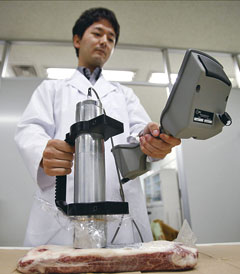 |
Korean restaurants in Tokyo and other large cities of Japan are today in addition to national and independent testing of meat for radioactivity. Above each table, the “Certificate of Quality” written by large hieroglyphs hangs: they say, where does the meat come from, when, where and how it was checked for radiation. The fact is that most Korean restaurants, unlike Japanese, specialize only in fried and raw meat dishes. In addition, in such restaurants, the visitor often fries meat on special fries.