
Translated material
Syria: approaching the moment of truth
Around Russia
 Syria: approaching the moment of truth
September 14, 2011 Alexey Makarkin
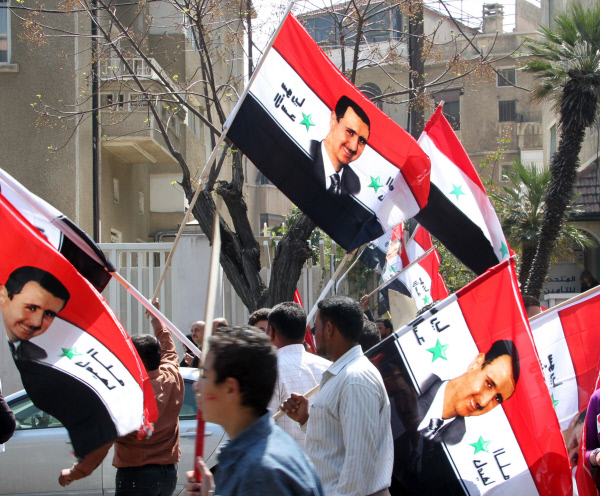
The situation in Syria is more and more aggravated. And the Russian government is increasingly difficult to maneuver between the West and the Syrian authorities. After a meeting with David Cameron, Dmitry Medvedev said that Moscow could approve the UN Security Council in relation to Damascus, if the document is addressed to all participants in the conflict and will not entail the automatic application of sanctions. At the same time, the United States insists on a strict resolution providing for sanctions.
In the USA, as in other Western countries, it is believed that Bashar Assad is not capable of reforms. In Russia, it is believed that the Syrian leader did quite a lot to resolve the situation, having adopted several important laws, declaring an amnesty to political prisoners and announcing their readiness to hold universal elections until the end of the year. At the same time, the special representative of Medvedev in Africa Senator Mikhail Margelov stated on August 5 that President Assad “with his bloody reprisals had extremely complicated the transition to a political settlement of the situation and caused justified hardening against the regime and personally inside and outside the country. Thus, the current regime puts the brand of bloody on itself, and such regimes are doomed in our time, if not tomorrow, then in a foreseeable historical perspective. ”
Such a contradictory position is not surprising. Assad really conducts reforms, but cosmetic. For example, he resolved multiparty, but while maintaining the constitutional norm on the dominance of the ruling party. The creation of real opposition parties in such conditions is impossible. An amnesty is combined with the physical destruction of opponents of the regime, brutal suppression of any resistance. Any reforms that go beyond the framework of cosmetic are threatened by the stay of the Assad regime, based on the Alawit minority-no more than 13% of the Syrian population (and, possibly, significantly less-after all, statistics in the country are under the control of state power). In any case, if in Syria to hold really free elections, then there is a great probability of coming to power by representatives of the Sunni majority.
In their creed, the Alawites are closer to Shiites (according to some sources, they broke away from them in the 9th century), but there are Christian elements in their teaching. However, the doctrine of the Alawites is quite closed in nature - many Sunnis continue to consider it heretical. Throughout the reign of the father and son of the Assads, the relationship between the Sunni and Alawit communities continued to be difficult, especially since the Alavites occupied key posts in power structures and have a significant impact on the country's economy. In 1982, the Armed Forces, by order of Hafuz Assad, after a monthly siege and shelling, took the third largest city of Hama in Syria, in which the main center of the Islamist-Sunnis, who raised an uprising against the Alawit regime. However, the world community did not pay much attention to these events then - there was a “cold war”, and in the neighboring Lebanon - “hot” (civilian, complicated by the confrontation of the Israelis and Palestinians, which led to military operations in the Lebanese territory).
Now the situation is completely different. Not only the West, but also the Sunni regimes increase the pressure on the Syrian alavites. Several Arab countries recalled their ambassadors from Damascus, the League of the Arab states demands real reforms from Assad, threatening otherwise the exception of their ranks. Another, perhaps the main, participant in the pressure on Syria, is Sunni Türkiye. In August, the head of the Turkish Foreign Ministry Akhmet Davutoglu handed Assad a message from President Abdullah Gul, sustained in ultimative tones. “Over the past eight months, we tried to convince Western partners that Assad needs time to implement the planned socio and economic reforms. However, the Syrian regime refuses to accept the recommendations of neighbors and allies and continues to shoot their own citizens, and therefore can no longer count on Turkey’s friendship, ”one of the leading newspapers of the country of Hurriyet Daily News settled the position of the Turkish authorities.
The inconsistency of the position of Russia is connected, however, not only and not so much with the imitation character of the Assad reforms. A significant part of the Russian establishment is anti -Writing. Some have a powerful material interest to ideology - in weapons contracts with authoritarian Arab regimes. The Libyan precedent was perceived both in the elite and in society as a whole negatively - the Russians are not so much sympathetic to Gaddafi as they do not like America. Under these conditions, Moscow is trying to assume an intermediary role - both the opposition and Assada visited it. However, the conflict has gone too far - and Russian attempts at peacekeeping are unlikely to be more effective than similar actions in Libya. The representative of the Syrian opposition in Moscow, Mahmud Hamza, said in an interview with Kommersant that the Kremlin could be late with their support and then the interests of Russia in Syria will be at risk, as happened in the case of Libya.
And here a serious problem arises. Supporters of Gaddafi and Assad in Russia focus on lost benefit as a result of the overthrow of these regimes. However, the blocking of the “Antikaddafin” resolution of the UN would hardly have saved its regime - most likely, “humanitarian intervention” would follow in a different format, even less legitimate, but no less tough. Now, the collapse of the Gaddafi regime made military contracts irrelevant and called the “peaceful” (although it is not necessary to dramatize the situation - Russia has the possibility of their implementation). If the Assad regime does not hold back, and he has less and less chances for longevity - then the forecast of the Syrian oppositionist may well come true.
An example of Libya and the cruelty of Assad in relation to the opposition force Russia to be more and more critical about the Syrian regime - although she does not really want to “press” too much on Assad. However, Moscow becomes less and less opportunities for the maneuver - no matter how I want to delay the moment of truth, but it is approaching.
Author-First Vice President of the Center for Political Technology
Photos of RIA Novosti