
Translated material
New reality
The other day, the Minister of Finance Alexei Kudrin announced the probability of the second wave of the global crisis, and today we are observing the fall in the stock markets. At the same time, as I already had to say, the whole current crisis, apparently, will have a protracted character. The second wave is possible, but, on the one hand, it is unlikely to be very strong, and on the other - after it passes, most likely another wave awaits us, after it is another, and so on.
Anyone who expects that after the second wave everything will go like in good old days is mistaken. The crisis will continue, according to my forecasts, for five years. This is due to the fact that the global economy today does not have a real motor. The engine continues to serve money, thrown into the economy, which is not able to support sector justifying investments - sectors that produce innovations. There has come a period of innovative pause, large inventions that would give rise to additional streams of innovations.
This is a break after a long boom during which personal computers, the Internet and mobile communications were introduced. Now we do not see anything similar. There is a problem: to increase production volumes by increasing the consumption of fuel, raw materials, and other things, it becomes too expensive, since the raw materials are getting more expensive. The whole world economy is the stage of adaptation to this new situation. In developing countries, primarily in China, the situation is somewhat different than in developed ones, since there are still not used resources of cheap labor. These countries can afford to increase the production of goods, which, due to lower prices, will bother in developed markets. But China is close to saturation: earlier the country used cheap labor and sold goods at the underestimated course of the yuan. Now the costs are growing, workers have to pay more and higher salaries. Thus, the gap between developed and developing countries is reduced.
This is the reality in which we live, the world has not encountered this before. Therefore, Mr. Kudrin, God give him health, can repeat his negative forecasts for several more years. To get out of this situation, new large innovations are needed - for example, in the field of biochemistry or nanotechnologies, anything, which could ignite the hearts of consumers and manufacturers. Until we see this. The changes are brewing, but before five years later, they will not get out of the light.
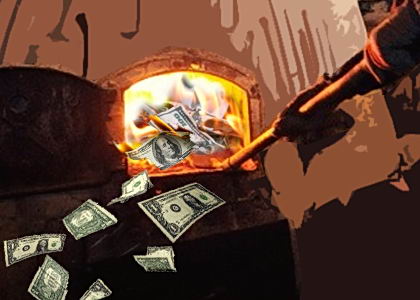
The new reality must adapt. World financial centers that regulate the entire process must understand that simply throwing money in the furnace and live for decades at a rate of 0% or 0.25% - unacceptable luxury, since only stretching the crisis occurs. Of course, it is difficult to decide on serious changes, especially since at first it will entail various troubles - an increase in unemployment without reducing production, as is now happening in the United States, where production is restored, but the number of jobs does not grow.
Such signs indicate a complex transition to an innovative economy, but there is no close end. At least, at least new products should appear, which give rise to fountains of other innovations, and in order for these fountains to earn money, it also needs time. Russia in this situation is far from in the best position, since it has neither the advantages of innovative countries, nor the advantages of developing countries. Only raw materials and fuel, the prices of which will rise.
I'm afraid to seem arrogant, but, unfortunately, so far I do not see in the world not only the will to change, but even an understanding of the situation. Everything that I read in our and foreign press indicates that people still think mainly in the categories of the financial crisis. Like, Lehman Brothers burned, so the mood of investors went bad, then Standard & Poor's lowered the rating of American papers, which also caused a fall in the markets, and all volatility is generated by such circumstances. Perhaps someone thinks about what is behind everything that is happening, but so far these people are not heard. Of course, I would like to wish that the leaders of the world economy as soon as possible understand what is happening and begin to think in more long -term categories than they think today.