
Translated material
The memoirs of the Internet discloser of Assange, which he tried to hide from the world, from afar against his will (excerpts)
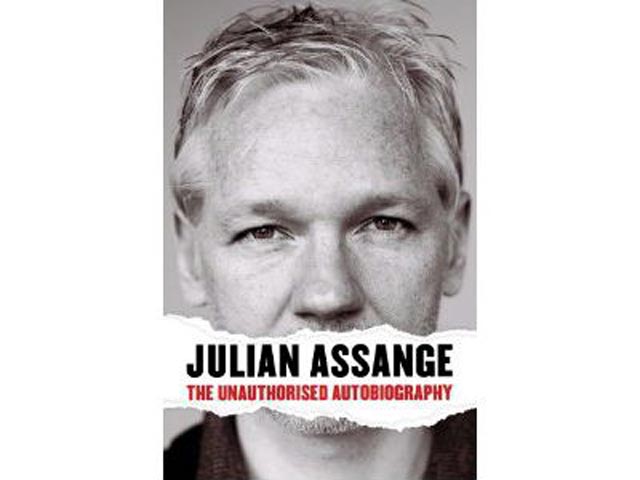
On September 22, the autobiography of the founder of the Political revelations of Wikileaks Julian Assange was published in the UK. The book is presented to readers, despite the fact that the author left the work on its writing halfway and tried to block the entire project. On the pages of memoirs, Assange appears as "an obsessed but inconsistent idealist who is firmly intentionally redrawing the world in accordance with his faith in absolute transparency," reports The Independent , which has already published excerpts from an autobiography.
The book tells about the childhood of Assange, about the dawn of his hacker career, about creating a sensational site. There is also criticism of the media who worked in partnership with a 40 -year -old computer scientist - especially The New York Times and The Guardian .
Julian Assange himself stated that he was outraged by the publication of his autobiography, since he did not give permission to do so. “What is associated with an unauthorized publication is not related to freedom of information. Here we are talking about old -fashioned opportunism and duplicity - the use of people for profit,” the British television and radio corporation quoted the words of the WikiLeaks.
- "I did not rape these women"
- "I, like all hackers, a little autistic"
- "I realized that my life has changed irrevocably"
According to representatives of the Kanongate Books publishing house, Assange signed a contract with them on December 20, 2010. It was decided that the book would represent "partially memoirs, partially - a manifesto." It was assumed that an autobiography, as is often done, will write on the basis of thorough interviews with Julian Assange the so -called "literary ghost", that is, a professional writer or journalist working for famous people.
When more than 50 hours of such interviews were already recorded, the founder of WikiLeaks decided that nothing good would come of it, and tried to terminate the contract. According to the publishers, after reading the first draft of the book, he announced: "All memoirs are prostitution."
But representatives of the publishing house say that Assangeu was paid a large advance, according to the Air Force, we are talking about a six -digit figure, and that he had already spent all this amount to pay for lawyers. This means that the contract remains in force. After the conflict with Assange, publishers decided to print an autobiography without his consent. Moreover, they decided not to even notify him of when she was published, afraid that he would try to get ahead of them. As a result, readers are offered "the first, not agreed with the author" of an autobiography.
Recall that at the end of January the book Vikiliks was published: the war of Julian Assange with secrecy "(Wikileaks: Inside Julian Assange's War on Secrecy), the authors of which were the journalists of The Guardian Luke Harding and David Lee. She will form the basis of the film about Assange, who is about the film about Assange . The American film company DreamWorks intends to shoot, one of the founders of which is the famous producer and director Stephen Spielberg.
"I did not rape these women"
The Independent has published several passages from the book on Wednesday in the form of individual articles. In memoirs, Assange first talks about the events that entailed the accusations of sexual crimes and the request of Sweden about his extradition.
The highest line in the "hit parade" of publications of the newspaper occupies an excerpt from Assange's memoirs entitled "I have not raped these women."
Recall that the Swedish prosecutor’s office accuses a computer scientist for three episodes of sexual harassment and rape, which supposedly took place in Stockholm in August last year. These accusations are based on statements filed by the police with two assistants to the Assange on the WikiLeaks website. In his memoirs, Assange recalls that on August 11 he came to Sweden and on the same day he learned “from one of our informant in Western intelligence”, that “the US government on the sidelines recognized that it would be difficult to bring me to judicial responsibility, but is already discussing“ illegal ways to deal with you, ”as my source expressed,” quotes the article inopressa.ru .
"The source clarifies that this will mean: collect data that we have in terms of information; excavate any connections between the corporal manning and wikileaks by any means; and if all other methods are in place, apply other illegal means: for example, throw me drugs," find "children's pornography on my hard disk or try to commite me with statements about my amoral behavior, ”writes Assange.
In Sweden, he was arranged in the apartment of a certain political activist, which he calls A. She was away, but returned before Assange suggested. "Madame A. was a political press secretary of the party and organized my arrival. I had no reason not to trust her," the computer, said. A. invited him to lie down together, referring to the fact that there is only one bed in the apartment. According to Assange, the situation did not seem unusual to him, he was glad to female attention at that difficult period of his life.
“Honestly, I have to say that A. seemed a little neurotic to me. But in the night we spent together, nothing remarkable happened. We entered into intimate relationships several times a night, and the next day we got the impression that we were in an excellent relationship,” the author writes.
According to Assange, a few days later he agreed to meet A. at the party that she arranged. “It was the day after the day when, as she later claimed, I raped her,” writes the founder of the sensational site. At the party, A. had a happy look, she laughed and drank with him and friends. “Obviously, she told people that I slept with her, and later it became known: she photographed me sleeping on her bed and hung a photo on her Facebook page,” writes Assange. “She said that I could live with her, and I went to her home. So the next five nights went on,” the passage from the book says.
Then Assange reports that at a press conference he met a certain woman called V., and eventually went to her home. He admits that he behaved inks: "I have such a lack, but this is not a crime. I lived with A. and understood that it was not worth it to stay longer." According to him, he was afraid to live long in one place, and the fact of his connection with A. became known.
According to him, he spent the night with V., but considered that he was unlikely to sleep with her again. The next morning she did not complain about anything. She took him on a bicycle to the station, bought him a ticket for her money (“My bank card has not yet been valid, although I never cheated with money,” the author explains), kissed goodbye and asked to call her from the train. "I did not call, and, as it turned out, it was the most expensive of the phone calls I had not made," the passage says.
Assange notes that in the conditions of threats and his condemnation in the United States, he paid no attention to A. and V., did not call them back and so on. “One of my mistakes was that I hoped that they would understand my situation ... I was neither a reliable boyfriend, nor even a particularly courteous sexual partner, and this began to affect the events. If only, of course, everything was not adjusted from the very beginning,” writes Assange.
Then, "For several days I had strange contacts with these women - one of them wanted me to check out venereal diseases," Assange reports. Somehow he worked on the article. “As soon as I wrote the lines:“ The first thing in the war was dying, ”I looked at Twitter and saw that the warrant of my arrest for double rape was issued. My whole system of convictions temporarily collapsed,” the passage said.
“I did not rape these women and I can’t imagine what exactly from us could inspire such an impression between us,” says Assange. He assumes that later they wanted to harm him - either together linked him into a trap from the very beginning, or a terrible misunderstanding happened.
"I, like all hackers, are a little autistic"
The second excerpt published by The Independent is dedicated to the memoirs of Julian Assange about how he became a hacker. “Some of us were interested in projecting our thoughts on computers, forcing computers to do something new. We began to write programs, as well as hacking them. It was an unearthly rapture - all the same, like the first time to beat an adult,” writes Assange. According to him, the joy of the hacker can only be compared with the joy of the Creator.
Julian chose the pseudonym Mendax - “This is from Horace, Splendide Mendax means“ noble liar, ”or, perhaps,“ charming deceiver, ”he explains.“ I was impressed by the idea that, hiding behind the false name, answering the questions of who I am and where I am, I, a teenager from Melbourne, can be able to somehow mysterious way It is more truthful to describe his true personality, ”says Assange. Carried away by computers, he became ill with a“ hacker disease ”, as he himself expresses:“ Insomnia, limitless curiosity, fixation on one idea and pathological care ”.
Later, when he became famous, people began to claim that he had Asperger's syndrome or something like autism. “I don’t want to spoil anyone, so I agree: I am an autistic, like all hackers. I would say that all men are a little autists,” writes Assange.
“Of course, you are sitting down on it,” the author notes. Assange claims that he hacked the computers of the US Ministry of Defense and it seemed to him that he was teleported into the Pentagon building, pacing him, commands him. “At that time, there was perhaps 50 people who worked at the highest level, all of them, enemies and brothers, belonged to equal rights to the elite group of detectors -computer workers,” the passage says. The heads of the hackers were around: you meet friends who consider you a loafer in the afternoon, but you know that last night it rummaged in the bowels of NASA.
But once a certain System Administrator from Nortel caught Assange with red -handed and tracked it. “On the night, when they came for me, I was alone and sad. My wife and child had just left me, I was completely exhausted,” Assange narrates. He himself opened the door to the police and only after that realized that the discs with files from the Pentagon were lying on the table, right in sight. “I am Ken Day. I suppose you were waiting for me,” the policeman said.
"I realized that my life has changed irrevocably."
The third passage - a story about how Assange, in his own words, decided to join battle with the institutions of society and the governments. “I know technology and understand how government structures are arranged; I was ready everywhere I was ready to throw acids with acid and boil until only the bones remain,” says Assange. On October 4, 2006, he registered Wikileaks.org.
"Our philosophy from the very beginning was that we, in principle, are against the scum, and no matter how rudely our credo sounds, it has a certain honesty," the passage said. Then Assange realized that his life and life were irrevocably changed. In the course of work on the site, he dangled from Kenya to Tanzania, from Tanzania to Cairo, all his belongings fit into a small backpack.
“In Paris in the spring of 2007, I felt completely crushed, knowing that WikiLeaks had brilliant potential, but exhausting under the burden of work. I had a girlfriend, she visited me. I brought me food, and I sat in Russian and sometimes helped me in this regard, but in principle it was a period of loneliness,” writes Assange. He reports that he was constantly looking for voluntary assistants, held meetings on the Internet and turned out to be their only participant a couple of times: "It was on the verge of schizophrenia."
Sometimes, in order to create an incentive, Assange decided that the work requires a solemn form of clothing: "Imagine: I am sitting in a stuffy wretched apartment in Paris unshaven, frantically knocking on the keys, but I have a proper jacket." But he had a feeling: so that everything worked out as it should, you need to behave as if the goal is achievable.