
Translated material
In illness and imprisonment
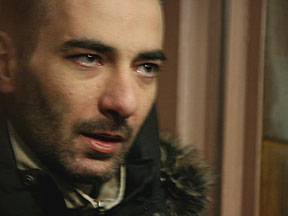
The death of the former lawyer of Yukos Vasily Aleksanyan, like his whole case, is evidence of the extreme cruelty of the Russian judicial and penitentiary system. It turns out that the goal -setting of this system is not at all in the protection of citizens, but in protecting the interests of individual elitist groups and the authorities in general.
The death of the former Executive President of Yukos Vasily Aleksanyan is more to the symbolic space than can change something in the fate of former employees of the oil company, its top managers or representatives of the authorities with whom the company had a conflict. The conflict, which ultimately cost Alexanian life.
If anyone suddenly does not remember, Aleksanyan was a lawyer of the oil company, the head of the legal department. In 2003, he began to represent the interests of co-owners and top managers of Yukos-Platon Lebedev, Mikhail Khodorkovsky and Vasily Shakhnovsky. In April 2006, he was appointed Executive Director of Yukos with the powers of the president. And just a few days later he was arrested. He was charged with a rather large list of charges - from non -payment of taxes from income to theft.
Despite the fact that during the imprisonment he found cancer, AIDS and tuberculosis, the court constantly refused to change his preventive measure. Only in 2008 did the court agree to release a deadly sick Aleksanyan on bail. In early 2009, he was released, and in mid -2010, the court terminated the case against him due to the expiration of the statute of limitations.
Supporters of the version with a political order in the Yukos case (from the part of Vladimir Putin, Igor Sechin or even just a “bloody regime”) saw the undoubted bloodthirstiness of power, its consistent revenge for such a reprisal. In fact, the death of Aleksanyan gives them the moral right to again and again indicate that how disgusting is “basmanial justice” and how cruel the judicial and penitentiary system in Russia is when it comes to some process important for the executive branch. Already compiled "Lists of Aleksanyan" - by analogy with lists that appeared after the death of lawyer Sergei Magnitsky.
Whether the prosecutors or Aleksanyan were the victim of the struggle between the Khodorkovsky and the conditional Kremlin - the second seems much more likely - but the story revealed several self -evident moments that are not at all dependent on whose side the observer is sympathy. For some reason, keep a deadly ill person in prison for some reason. And even, probably, illegally, taking into account the fact that in prison he would hardly have been able to provide medical assistance in the required volume. It is somehow not believed in strong oncologists or immunologists working in the system of the Federal Penitentiary Service (FSIN).
There are no illusions of the relatively quick correction of the penitentiary system in Russia, it seems, almost no one. However, every situation with a negative attitude towards the prisoners of the authorities would still be very careful. Even on condition of endless postscribes in the FSIN system, the situation looks unsightly. When Magnitsky’s lawyer is simply brought to death in prison and done, as far as you can understand, quite consciously, such a penitentiary system simply cannot be called correctional. Here, the motives of the Gulag with all the ensuing for the image of the country are already appearing.
Here it seems that the entire law enforcement and penitentiary system is configured, as before, only for suppression and intimidation. And in establishing real guilt and correcting the real guilty, she is simply not interested in - such tasks are not worth it. Citizens adhere to approximately the same idea of reality: according to the FOM of 2008, only 28 percent of the respondents replied that the prison, in principle, can correct the prisoner. The opposite opinion was held by approximately half of the respondents.
The problem is that the degrading system of state institutions can set almost no barriers to the arbitrariness of such a system. In some cases, it already seems that the judicial and penitentiary machine protects just individual representatives of the authorities and the system itself. In this case, she is not terrible either the western wrath or the “lists of the perpetrators” in one or another “custom -made business”. In order for the system to acquire other goal -setting, it is necessary to change it and change dramatically. However, there is a feeling that the power as a whole is arranged by pocket courts and cruel conditions of prison content, allowing people torto torture people.