
Translated material
Atlantis, America and Egypt
An unbroken myth, all the time eager for science, is the myth of Atlantis. In the XVII century, the famous scientist, Professor Rudbeck from Uppsala, fiercely defended the idea of the origin of the Swedes from Atlantis, although this seemed ridiculous to many then. But there were always enthusiasts of the idea of finding ancestors of different civilizations on mysterious Atlantis. Especially interesting is the involvement in this concept of Egypt and Mayan civilization. This is due to the two figures of the 60-70s of the XIX century, two Frenchmen: Abbot Brassier de Bourbur and Dr. Auguste Le Plonzhon.
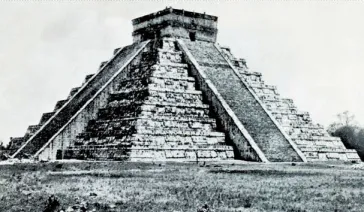
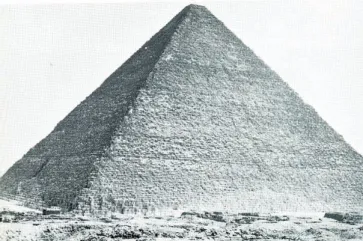
Charles Stefan Brasser de Burbur (1814-1874) was carried away by a reading of messages about excavations of the Mayan monuments. In 1845 he accepted the dedication to the priesthood and went to the missionary to America. Here he was read out by the “conquest of Mexico” by William Prevent (classical work on Cortes Conquistadors), a year taught church history at the Catholic seminar in Quebec, then went to Rome to represent the Catholic Church of North America at the court of Pope Pius IX. In 1848, he rushed back to America and began to tirelessly seek out the old documents on the history of Mexico, decipher the confusing karakuli, think about their meaning, study the languages of Maya Nahuatl and Yukatek and Gvatemal Kvich. It suddenly occurred to him that all these are not real stories with real historical figures, but allegories. That deities and heroes of Mexican traditions are just a different embodiment of the gods and heroes of Egypt. Mexican pyramids are so reminiscent of Egyptian (Fig. 1)! They should have a common source. Then Atlantis immediately occurred to him.
He took up the pen and began to write his main book, entitled “Four Letters” (according to the tradition of antiques, he gave the book the form of letters, and it was easier to avoid a strict organization of arguments - what demand with letters?). The book sets out his conviction that the American pre -Columbians of civilization came from the civilization of Atlantis, as well as the population of the Canary Islands, Guancho, saved from the disaster. This Atlantic race spread from the New World to the Old and created the Egyptian civilization. The Egyptian god of the mountains is the same Ketzalcoatl, the Mexican god in the form of a snake with feathers.
The release of this book in 1864 destroyed the reputation of Brassor as a scientist and deprived him of scientists of friends. He lived another ten years, defending himself from criticism and ridicule, but his arguments became more and more wild, and he died in complete isolation.
Auguste Le Plonzhon (1826-1908) was a typical figure for his era of a militant amateur and adventurer. He was born on the island of Jersey (between England and France) and was the nephew of Lord Jersey. He attended a military school and the Paris Polytechnic Institute, but, without finishing up, along with another student went on a yacht sailing to the shores of South America. A strong storm hit them off the coast of Chile, in which the whole team died, only both students were saved. Le Plonzhon did not return to Paris to study, but remained in America. In Walparaiso, he found a job - to teach mathematics, drawing and language in college. At the first opportunity, he again with the skipper ended up on a ship that came out of California. The second journey ended in the same way as the first (however, we know about both of the memories of Le Plonjon himself and his wife, so perhaps these are the same tales about terrible sea adventures, like the stories of Shliman).
Returning after a shipwreck to California, he became a city surveyor in San Francisco, he made his acquaintance with the supreme judge Stephen Field, but not a donkey, but set off on new travels, in which he crossed Mexico. And having returned to San Francisco, he took up lawyer practice and medicine, selflessly adding to his surname the titles "Dr. Med." And-\ "Dr. Jur." Sent to Peru to study archeology, he simultaneously arranged his own there. hospital. After many travels, he returned to Yukatan (Mexico) in 1875 and explored the ruins of Maya cities there for thirty years. Subsequently, in his book, he described the episode when his indoors-indoors refused to remove the statue of the ancient Mayans from the Earth. Le Plonzhon, overgrown in the wild solitude of a long -pointed beard, stood in front of a stone relief, which depicted a Mexican warrior with a long pointed beard, and convinced the Indians that he was an excess of the ancient god, a satellite of the Great Chaia. Those began to follow implicit instructions. The Indians arrived from the environs to see the great man, and, Pav to his knees, kissed his hand.
Robert Wacop, an American archaeologist and anthropologist, does not believe in this story: the Indians of this time had neither the idea of reincarnation, nor the old faith-they have long been Catholics. All this is the fabrication of the Gallic Don Quixote, which existed only in its broken brain (Wauchope 1962: 8-11).
Very self -confident and arrogant, Le Plonzhon made a decision that came to mind once for the final one and defended him with rage.
“He was completely unable to critically experience either facts or logic for any theory that he wanted to believe in,” Wacop writes. - When he found a line across the window binding on the sculpture among the ancient ruins of Yukatan and noticed a zigzag motif near it, he immediately decided that the prehistoric Mayans were communicated through a telegraph! ” (Wauchope 1962: 16).
Of course, he easily believed that Maya came from Atlantis and subsequently, crossing the ocean at least 11 and a half thousand years ago, created Egyptian civilization. On May 1, 1877, he sent a letter to the Minister of Education of Mexico from Yukatan. There stood so typical of the Plonjon’s reasoning about the Mayan connection with the ancient Greeks: “These internal structures belong to a very ancient period, and among the garbage I found the bear’s head expressively scorched from the marble block. He is in an unfinished state. When were the bears settled the peninsula? It is strange to say that the Maya language has no name for the bear. But a third of this language is purely Greek. Who brought Homer's dialect to America? Or who transferred the Maya language to Greece? Greek - the Sanskrit industry. Is that Maya's language? Or are they of the same age? The key to ethnologists to trace the migration of the human race to this old continent. Do bearded people belong to whose portraits are carved on massive pylons of Chichen-Titz fortresses to the Mayan nation? Maya's language is not devoid of borrowings from the Assyrian ...
The customs, religion, architecture of this country have nothing to do with such Greece. Who brought Maya to the country of Hellenes? Were there either punishment or Karians who left traces of their existence in many countries of America? They are the most ancient sailors from the famous. They plowed the seas long before the Phoenicians. They landed on the north-eastern coast of Africa, from there entered the Mediterranean, where they terrified as pirates, and then established themselves on the coast of Asia Minor. They spoke a language unknown to the Greeks who laughed at their pronunciation. Were they emigrants from this Western continent? " (quoted by Wauchope 1962: 18).
In 1900, Le Plonzhon published the book "Queen Mu and the Egyptian Sphinx." In it, he restores the history of Mayan in sculptures, frescoes and hieroglyphic texts, claiming that he read them long before the modern decryption (also not complete and, possibly, not final). According to this reconstruction, the king of Chichens-Vittsy and Uksmal in Yukatan had three sons and two daughters. According to the laws of Maya, the eldest son had to marry the eldest daughter to ensure the divine origin of the royal dynasty, which corresponds to the laws of Egypt and Peru. The prince married Mu, but another son, AAK, in love with her, killed him. Le Plonzhon found the tip of the arrow in excavations, of course the one that was committed by the murder, and the urn with the dust of the heart of Ko. The civil war followed, in which the AAK became the king of Uksmal and got up to Mu, the Queen of Chichens, but she rejected him.
According to Le Plonzhon, this story was later attributed to Adam and Eve in paradise, but somewhat distorted by Moses. He does not consider his conclusions a hypothesis. In conclusion to the book, he writes: “In this work, I do not offer theories. In matters of history, the theory does not prove anything. They are therefore inappropriate. I leave my readers to draw conclusions from the facts submitted for their consideration ”(quoted by Wauchope 1962: 13).
But neither scientists nor officials who refused to allow Le Plonjon to take the excavated statue from the country believed in the facts of the paranoic Frenchman. Only his young wife Alice (thirty years younger than him) sacredly believed her heroic husband. In 1881, speaking to the American society of antiques, Le Pomvon said: “... because I feel that they will leave everyone, despite the fact that everyone wants to get from me for nothing that I was worth so much time, labor and money, I decided to keep my knowledge with me, so expensive, destroy my collections once and provide those who want to know more about the ancient cities I ... ”(Wauchope 1962: 19).
He fulfilled his promise. He classified everything and, dying, left the keys to the secrets only to his wife. And she, in turn, many years after the death of her husband called a friend to her mortal bed and, passing him some notes of her husband, set forth in an intentionally confusing tongue, she wanted to reveal the addresses and secrets of the places in which ancient things were stored, but fell into agony. An empty envelope remained in his friend's hands ...
Fanatics of fantastic ideas devote their lives to them and die in offense at humanity and science.
Lev Klein
Wauchope R. 1962. Lost Tribes and Sunken Continents. Myth and Method in the Study of American Indians. Chicago & London, The University of Chicago Press. Illustrations from the same book.