
Translated material
Bulgarian rebellion
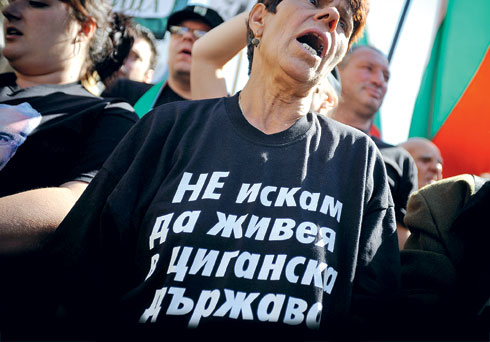
Bulgarian rebellion. Crowds of fans tied with scarves of their favorite team follow the streets of Plovdiv and Sofia, changing the football chants to the nationalist: “Burn gypsies!”, “There are no gypsy kings!” Just like ours on the arena-many Russians probably decided after television portions about anti-shangic unrest that swept Bulgaria in late September-early October. What happened there really - the New Times found out
On October 3, in Bulgaria, an unexpected thing happened: 24-year-old Kirill Rashkov, a full namesake and grandson of the Gypsy Baron Kirill Rashkov, nicknamed King Kiro, a seven-fold alcohol oligarch and part-time, the head of the Gypsy community in the Katunitsa, 13 km from Plovdiv, came to the police. It was because of him on September 23 in Bulgaria that serious passions flared up, which have not completely subsided to this day.
Rashkova-Vanuka’s conflict Bulgarian police previously put on a national wanted list on charges of a threat to the murder of 19-year-old Bulgarian Angela Petrov. He died on September 23 in the Katunitsa under the wheels of a minibus, in which the guests of King Kiro (and according to some reports, he himself). The collision, according to eyewitnesses, was committed intentionally. At the wheel was 55-year-old Simeon Josephs, one of the close Tsar Kiro. The angry residents of the Katunitsy went to the mansion of King Kiro, protesting against the "gypsy lawlessness." During the action, the sick heart of the 16-year-old Paul, a friend of the deceased Angel Petrov, could not stand. After this passion reached the boiling point. The arson of property of Katunitsky gypsies began. Luxurious cars and houses burned. Football fans and bikers arrived to “support” the pogromers from Plovdiv. The number of protesters reached several thousand. Their main requirement was to “restore order” and evict clan Rashkov from the reel. And what about the police? The armed gendarmes arrived quickly, but no one really hindered arson, according to eyewitnesses. Yes, and fire brigades were allegedly caused only when the risk of fires to other, “Nysygan” houses and administrative buildings became obvious.
Speech under nationalist slogans spread to Plovdyv and even Sofia. However, only a few hundred people took part in them. A much larger number of people - according to various sources, from 4 to 10 thousand people - gathered after this protest against corruption and the inefficiency of the Bulgarian law enforcement system, covering criminals, regardless of their nationality.
As it turned out later, the gypsies who did not belong to the clan of King Kiro suffered in Katunitsa - now they accuse the police of inaction and demand a fair trial of the pogroms. The police in response states that thanks to its actions, "even more bloodshed is prevented."
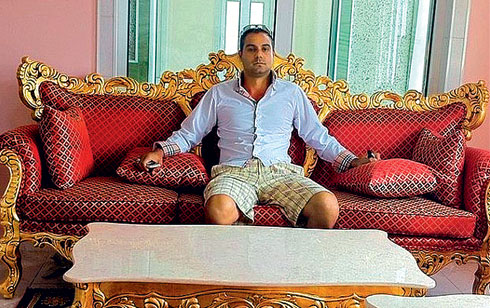
Until September 23, Kirill Rashkov-Vyuka, no one forbidden to live beautifully-neo-names? Strictly speaking, what happened in Katunitsa, Bulgaria already saw: in 2002, in the city of Vidin, after a murder committed by local gypsies from the ginkle clan, who was also engaged in robberies, the whole city stood on his ears. Residents demanded to evict gypsies. And they really left, settled in the surrounding villages. But the gypsy problem did not disappear. In May 2011, dozens of gypsy families from the Rynkov clan were drawn into interethnic clashes in the city of Ichitiman, not far from Sofia. The police wrote off everything to the household-they say that the quarrel occurred because of the escaped bride.
But local residents think differently. The dog is buried much deeper, they say. They see one of the reasons for the constantly smoldering interethnic conflict in the closedness and disorder of the gypsy community. The gypsies themselves agree with this, and not only Bulgarian. “All the problems of gypsies, including high crime in the gypsy environment, lie in the lack of education and, accordingly, unemployment,” said David Mark, an official representative of the democratic alliance of the David Mark, in a conversation with The New Times. And the famous singer of gypsy descent in Bulgaria, Azis openly noticed in one interview that "the gypsies in principle cannot be integrated into Bulgarian society." According to him, they "know how to do only two things - to sing and constantly think about how easy it was to get rich."
Azis sings well, but thinks about fellow tribesmen too badly. After all, life proves the opposite. Representatives of the Bulgarian NGOs talk about successful examples of social integration of the gypsies every now and then. Yes, and the gypsies themselves reject and condemn crime in their environment. For example, on September 25, a Gypsy People’s Court gathered in Sofia at an emergency meeting and sentenced King Kiro to a higher extent. True, with the reservation: "The court respects the rule of laws of Bulgaria, and therefore the execution of the sentence is impossible."
Unimportant for the first time in the reports of law enforcement agencies, young Kirill Rashkov lit up in 1962. Then, however, he hunted with small thefts in neighboring Macedonia - in Skopier and smaller cities. In the 80s of the last century, he switched to the trade in precious metals, for which he served in prison for several years. And then, at the dawn of democracy, he was unexpectedly pardoned by the president with Zhelov as ... a political prisoner.
In the 1990s, Rashkov took up the production of alcohol. The illegal factory controlled to him in Katunitsa daily produced vodka, crayfish and whiskey from 4 thousand liters of alcohol. As the Stoyan Tyutyunjiyev, nicknamed Gagarin, now recalls (at that time he talked closely with the racers), caramel for whiskey
* * Sugar kner is added to whiskey to give it a rich color. Then they kneaded directly in the pots right in the yard. The locals had a joke: "Is this whiskey from Scotland or from King Kiro?" In 1992, the police discovered a factory, arrested Rashkov, but he was soon released on bail, and the case against him did not mysteriously reach the trial.
The last skirmish of gypsies with the police due to the factory occurred in 2009-and, as always, the king came out of the water dry. Feeling himself a full -fledged master of the reel, Rashkov captured dozens of hectares of the surrounding municipal lands and turned them into deer Park, where he had fun with his guests.
The rumor attributes the endless luck of the gypsy baron to some “patrons at the political top”, without calling the names. However, law enforcement agencies assure that there is no political “umbrella” over Rashkov. “All these are inventions,” snapped one of the high officials in the police in a conversation with the author. Then why Rashkov not only every time avoided punishment, but also - all Bulgaria knows this! - Doesn't it pay a single left of taxes with property worth millions? After the events in the Katunitsa, the Bulgarian media undertook to answer these questions themselves. Some publications argue that Rashkov, even under socialism, began to cooperate with the State Security Committee, because the special services always introduced their people into ethnic minorities. That is why numerous checks of his business activity by someone's invisible hand skillfully came to naught. In addition, over the years, Rashkov influential in the gypsy environment on the Bulgarian political Olympus began to be considered as an important election instrument, with which it is possible to manipulate a quantitatively small but true electorate. For the “clientele-oligarchic” political system, as some of our political scientists, such people as Rashkov, came by the way by the post-socialist Bulgaria.
Under the elections, the tragedy in Katunitsa day a day coincided with the beginning of the election campaign in the country - on October 23, the country will choose president and mayors of cities in the country. Literally on the eve of these events, polls by the sociological service of Mediana showed that the Candidate of the ruling party of the coat of arms (“Citizens for the European Development of Bulgaria) Rosen Plevneliev was leading in the presidential race. But after the events in the Katunitsa, everything can change. The main rival of the coat of arms is the opposition Bulgarian Socialist Party (her presidential candidate-Euro-deputy Ivilo Calfin) accused the ruling party of inaction, and Vice Prime Minister and Minister of the Interior Tsvetan Tsvetan "in the absence of a difficult situation at the workplace." He really went on vacation to head the party’s election headquarters. The opposition also caught on the media reports that on the day of the murder of Angela Petrov, the suspect Rashkov Jr. supposedly crossed the border with neighboring Turkey, which Bulgaria, as a member of the European Union, should vigilantly guarded, and then calmly returned and surrendered to the authorities.
They clung to the Katunitsky events and nationalists from the Party "Attack". Without a “radical solution to the gypsy problem,” they broadcast in election campaigns, Brussels will never let Bulgaria into the Schengen zone.
* On September 22, at a meeting of the Heads of the Ministry of Internal Affairs of the European Union, the Netherlands and Finland imposed a veto on the accession of Bulgaria and Romania, who joined the EU in January 2007, in the Schengen space. At the same time, the “attackers” refer to the example of France, which last year decided to deport the Romanian and Bulgarian gypsies from France and thereby allegedly ended with “gypsy crime”.
But the electorate judged in his own way. After September 23, public actions were organized throughout the country. Yes, there were also frankly chauvinistic in spirit among them. But the tip of the anger of the Bulgarians was not aimed at the gypsies, but to the corrupt state and elective justice. The youth, having sexed through social networks, took to the streets of Sofia, Plovdiv, Burgas, Blagoevgrad, protesting not against the dominance of the gypsies, but against social injustice, lawlessness and tolerance to the mafiosi of all nationalities, finally, against that part of the political elite, which cares only about personal interests and recalls the people only when it becomes an electorate.
Passing the couples after the events in Katunitsa, Prime Minister Boyko Borisov, announced the decision of the authorities to check all the assets of Rashkov and “20 more people from different ethnic groups”. On September 28, the gypsy baron was detained. Of course, the ongoing pressure of Brussels played a role here, which has long been requiring our authorities more zeal in the fight against corruption and crime. Releasing the pairs of dissatisfaction, President Georgy Pyrvanov held on October 1 a meeting of the advisory council of national security, at which it was decided to check all the owners of dubious capital for the legality of income, and in general all those who have three or more criminal records. In addition, the authorities pledged to “strengthen the police presence” in villages and villages. Many journalist colleagues compared the decision of the Council with the "Warm up yesterday's dish" and "The film, which is already 15 years old at the box office." However, the Bulgarian political scientist Georgy Karasimeons considers differently. “The fact that both the president and the prime minister were forced to somehow respond to unprecedented unrest is an important victory of civil society,” he remarked in a conversation with the author. - Actually, crime among gypsies is only a fraction of still strong Bulgarian organized crime. It was actually struck under her swing. ”
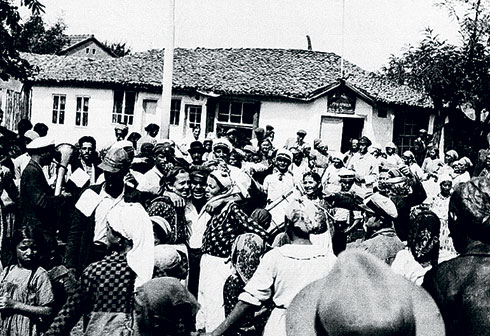
The gypsies (Roma) arrived at the Balkan Peninsula from India under the Byzantine emperor Nikifor I Genika (760–811) - he patronized them. And although other Byzantine lords prevented their resettlement, the gypsies managed to let strong roots in the Balkans. In the XIV century, the Serbian King Stefan Duchansky gave them the status of court grooms and masters of blacksmithing. In Bulgaria, they appeared in the late XIV - early XV century, with the establishment of Turkish rule. One stream arrived in the Ottoman conquerors' wagon and was mainly Muslim in religion. Another Christian, from Serbia and Wallachia: the descendants of those gypsies still profess Christianity. Today, Gypsies in Bulgaria, according to the census conducted this year, call themselves 4.9% of the 5.7 million population of the country. Perhaps the real percentage is much larger, as some gypsies call themselves Bulgarians, others - Turks.
The Gypsy People’s Court, or Meshore, is the Council of Gypsy Elders, which is going to solve disputes between rich genera. The gypsies consider it the main legislative body, despite the fact that from the point of view of the state it does not have legal force. The Meshere decides who to punish, who to pardon or what a penalty the family of the escaped bride should return to the deceived groom.