
Translated material
The United States continues to disarm: the most powerful B-53 thermonuclear bombs are disposed of
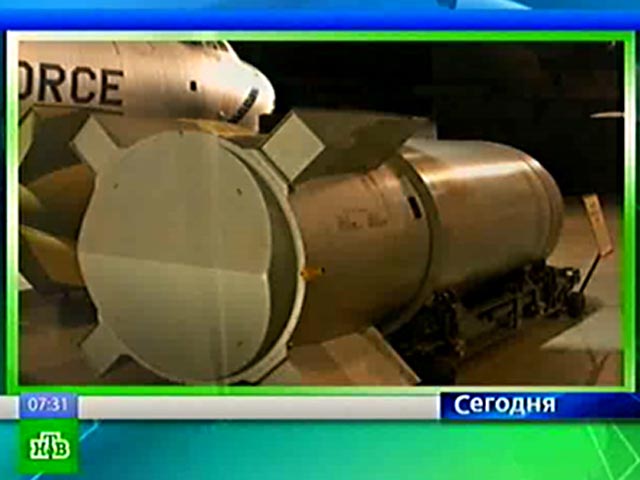
The United States with the annual schedule is completed by the disposal of its most powerful B-53 thermonuclear bombs, ITAR-TASS reports with reference to the National Nuclear Security Directorate (Nuyab) under the United States Ministry of Energy. The dismantling of this type of weapons will be completed on Tuesday at the Pantex factory, located near Amarillo (Texas).
According to American scientists, B-53 is 600 times more powerful than a bomb dropped into the Japanese city of Hiroshima during the Second World War.
The head of Nuyab Thomas d'Agustino described the current development of events as an “important milestone” in the US Obama President Barack Obama to reduce atomic weapons and movements to a nuclear world.
The decision to dispose of the B-53 ammunition corresponded to the goal of "reducing the number of nuclear weapons and their roles in the US National Security Strategy." Pantex issued by the Pantex to dispose of B-53 bombs meant that for the first time in ten years, Nuyab had a sanction for work "with all types of nuclear weapons" in the US arsenal, the American government pointed out.
How many B-53 bombs are subject to elimination, Washington did not specify. According to independent American experts, there are 50 such bombs at the disposal of the US Department of Defense.
The power of the B-53 is 9 megatons. Its length is 3.8 m, the diameter is almost 1.3 m with a weight of 4 tons. B-53 were produced in the period from 1962 to June 1965.
They were installed on strategic B-52 bombers. In total, the Pentagon received 340 such charges, the main purpose of which was to destroy the well -fortified underground bunkers of the Soviet leadership in the event of war. In the B-53 explosion, the shock wave destroys absolutely all buildings within a radius of 6 km, leads to extensive destruction within a radius of 15 km.
The US Ministry of Defense decided to withdraw the B-53 from the combat staff in the 1980s, to eliminate part, leaving some number of them as reserve nuclear charges-those that are stored in warehouses and can be quickly installed on delivery funds, if necessary. From the armament, the B-53 was removed, according to Nuyab, in 1997.