
Translated material
Unknown Wells
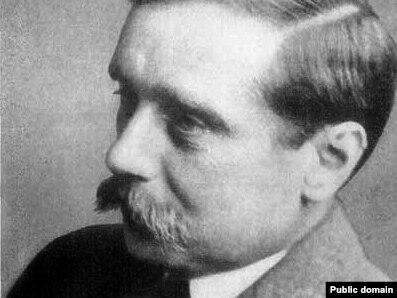
First, two words about David Lodge himself. He is rather a comic genre, his book is a light satire on a modern cultural world, familiar to him firsthand: Lodge for many years is a professor at the University of Birmingham, where he read a course of literary theory. His most recognized novel is '' Close World '', interpreting the cosmopolitan circle of human intellectuals in burly tones of a sexual escapad. But recently, he changed the genre - he began to write the novelized biographies of writers: a material professionally known to him. The first such book was the novel “The author, the author! '' - about Henry James and his unsuccessful theatrical experiments. The book seemed boring to me: its material did not let the logo turn around, because there were no sexual plots in the life of Henry James, except to consider it a repressed homosexual. But repression - it is repression, that is, it is not externally revealed. And then David Lodge turned to Wells, whose life was an endless sexual festival. We did not know this about the famous science fiction writer, so reading the new book of Lodge turned out to be extremely cognitive. However, a reservation is needed. The current novel sharply breaks into two parts - the part is intellectual and part of the sexual, and they are more compared mechanically. The pages dedicated to Wells-the writer and thinker are purely descriptive, dry and even somehow protocol. But then Lodge recouped on the stories of Weles' sexual biography. There was something to talk about.
I must say that Herber Wells not only persistently and successfully practiced sex, but also theorized about him. If you like, it can be considered one of the predecessors of the sexual revolution, along, say, with David Lawrence. He was a propagandist of free love, it is better to say free sex. Sex is not an obligation, but entertainment useful for health, like sports. In Lodge’s novel, he says this:

Announcer: '' I had a lot of novels. And there was no love in most of them. As I understand it, my women are the same. It was just to get and give pleasure. The idea that you must pretend to be in love with a woman in order to enter into a sexual connection with her - the thought that we owe to Christianity and romantic fantasies - this thought is absurd. This does not cause anything but physical and moral torment. The desire for sex is a constant characteristic of healthy men and women, and this desire should be constantly satisfied. ''
Boris Paramonov: As we have already said, Wells was not limited to personal achievements, but he wanted to make free love with a software cultural thesis, and very persistently put forward this program. Interestingly, he associated this with socialism. At one time, he was a prominent member of the Fabian society, which promoted a peaceful growing into socialism - and now he wanted to introduce a clause on the rights of women to free love into the program of society, which could not but question the institution of marriage itself. And this did not stop Wells, he even offered a project of public assistance to women who engage in an illegitimate sex life. Of course, this could not but scandalize the venerable Fabians, even the most famous of them Bernard show, despite his love for all kinds of paradoxes. In the end, Wells left Fabian society.
Wells also carried out the propaganda of free love in some of his novels, the most scandalous was' Anna Veronica ''. We have not heard about these Wales's things in Russia. Unless in the novel '' Days of the comet '' there is a similar plot. The genre of science fiction, which brought him glory, is essentially perceived as not very serious, something childish, teenage in it, although, as you know, Wells predicted a lot in terms of scientific development of mankind, even an atomic bomb, not to mention such trifles as a war in the air. Evgeny Zamyatin, who wrote that he created a new mythology - the mythology of the city, these are city fairy tales, said about Wells. But fairy tales - they are for children. You can’t say this about sex.
In an attempt to link free love with socialism, Wells reproduced the original (so as not to say the original) line of socialist ideology. In Russia, we find the same connection among the young Herzen, who saw in socialism, first of all, the preaching of the emancipation of the flesh. Wells himself on this occasion loved to recall one of the plots of “Utopia” Thomas Mora, which said that young people before marriage should examine each other naked. Lodge Wells tells about this to his mistress, who is not averse to marrying her old adherent.
Wells had a tremendous attractive force for women. I once read in some memoir fragment of the Somerset Maugham, who asked one of the Wells passions than women like him so much. She replied: his body smells of honey. In Lodge, this says Wells Elizabeth von Arnim, to which he responds with a proposal to lick him.
Loja Wells in a conversation with his own conscience-the reception of the reader to familiarize himself with the circumstances of his life and thoughts-says that only Isabell, Jane and Moore loved. Isabell and Jane are his first and second wife. Mura is the famous Maria Ignatievna Zakrevskaya, she is Benkendorf, she was Budberg, whom Wells met and, naturally, entered into a connection in 1920, when he came to Russia and lived in Gorky’s apartment, whose Moore was something like a secretary. Having left to Italy later, Gorky took her with him, and no one had doubts about the nature of their connection, with the exception, oddly enough, Wells, which Lodge claims. Wells repeatedly called Moore to marry him when his wife Jane died - she resolutely refused, but maintained friendly relations with him until the end of his days. Lodge composed the dialogue of a dying Wells with Mura: impressed by the conversations of his loved ones that Mura is an agent of Moscow, he asked her: Mura, are you a spy? To which she said: '' strange question. If I am not a spy, I will not answer, and if the spy is, much more there is no ''.
Nevertheless, the most significant of Wells's mistresses seems to me Rebecca West. It was a brilliant journalist who wrote novels; One of them - '' return of a soldier '' - was filmed already in the eighties, that is, he remained alive in the perception of the English -language world. I even found Rebecca West alive, having arrived west, - and read in the journal Plaiboy her article about Christine Killer, the main person of the scandalous business of Profummo.
Rebecca West is one of those girls whom Wells deflored, carrying out his program of free love. Here you need to immediately and decisively say that these girls were by no means innocent victims, but rather provoked Wells. These were Rosamund Bland, Ambber Reevs and the same Rebecca West. The matter was very complicated by the fact that two of them became pregnant: Amber at his own free will, and Rebecca accidentally. The corresponding pages of the logge are written in inspiration, which makes his book, as they say now, readable.
But it cannot be said that the pages dedicated to the worldview search for Wells are so boring. True, it seems to me that Lodge did not quite comprehend this plot, did not clearly single out a certain philosophy of Wells.
It consisted in the fact that on its such expressive and actual example, the limited thinking of rational thinking was demonstrated. A person, carried away by the mind, is inclined to build diagrams, to display formulas. And it turns out from this something like fascism-which is the lesson of the twentieth century.
In the next dialogue with his conscience, Wells, summing up, says, recalling his programmatic manifesto called '' Aviation '' - a life project in the twentieth century:
Announcer: '' I called this project '' Open Conspiracy ''. One thought was carried out everywhere: a vision of a fair and rationally organized world society, in which war, poverty, illness and other human troubles will be liquidated. ''
Boris Paramonov: The voice of conscience objects to Wells:
Announcer: '`` But not for everyone, these benefits. Not for chronically ill, unemployed, mentally retarded, criminals, alcoholics, players, drug addicts - not for those whom you called the "people of the abyss ''. You wrote: '' To give such people equal to other rights means to go down to their level, to protect and preserve them means to be evacked by their reproduction. '' And you also wrote: '' The society should choose the best in the most decisive way - it sterilizes, sends, or poisons the people of the abyss - and such a society will take possession of the world before 2000 ''.
Boris Paramonov: Wells timidly objects: by poisoning, he had in mind painless euthanasia. Nevertheless, in the light of the events that took place, these projects discovered their cruelty that is not conceivable for any mind - thereby demonstrating the cruelty of the mind itself. And Wells, summing up, recognizes his collapse. Lodge so reproduces Wells's last thoughts:
Announcer: '' I was a child of the Enlightenment of Enlightenment, a modern encyclopedist, the heir to Didro, but the horrors of the First World War undermined faith in the mind. The intellectuals rushed to seek salvation in fascism, in the communism of the Soviet style or in Christianity - and I resisted all this. Between the two world wars, as a thinker, I was in increasing loneliness, was a voice in the desert. ''
Boris Paramonov: But either Wells, or Lodge himself is not aware that all these horrors were not the result of people's unreasonableness, but rather a consequence of the total claims of the mind. However, Lodge has one phrase that allows you to understand the futility of the claims of the mind, daytime consciousness: '' reality, empirically perceived and rationally understood, now seemed to him as ghostly as the shadows on the walls of the Platonian cave ''. The mind did not leave the equations of human being, but it is time to evaluate it differently, with less enthusiasm. In one of Wells’s last treatises, called “Reason at the end of the leash”, he says that the rational picture of the world resembles a movie: it has a plot and visibility of communication and meaning, but we should not forget that all this is the game of shadows on the canvas. Life is unpredictable by any efforts of the mind, no matter how certainly he saw certain potentials of development.
What is Welles's Case say - besides what David Lodge wrote about him? The most valuable thing in his experience was not a thought or even a fantasy, but a life practice - the sex. This is the adjustment that allows you to extract a joy that is not regulated by reason from the cruel world.