
Translated material
Restart the Fobos-Gront engine already on Wednesday evening. In case of failure, the Martian project will collapse to Earth
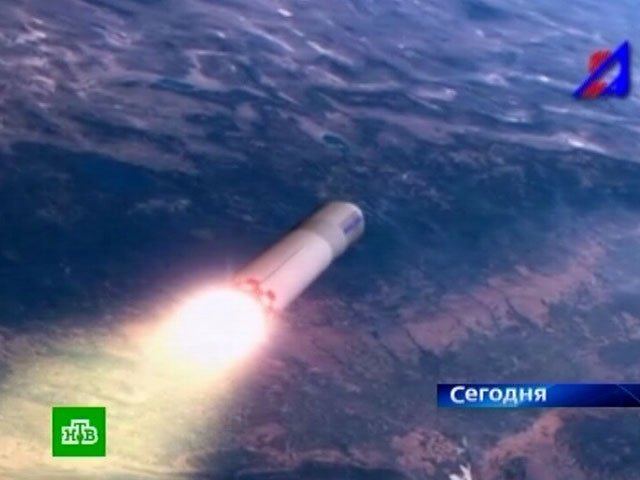
In the evening, on Wednesday, experts will try to make the first attempt to launch the motor installation of the Fobos-Gront interplanetary station, which was reported, she could not navigate the stars and did not go to the trajectory of the flight to Mars.
According to ITAR-TASS with reference to an informed source in the missile and space industry, this attempt is scheduled for 21:16 Moscow time. Experts calculated that it was at this time that the device will be at the right point of the orbit, where you can give out the necessary impulse.
In turn, the interlocutor of Interfax clarified that Fobos Grunct will enter the zone of visibility of Russian surveillance funds at about 21:30, but only the Baikonursky ground point is able to remove all telemetric information and, most importantly, to give the command to hold a maneuver.
"Due to the existing restrictions on the height of the orbit and the power supply of equipment, the maneuvers will try to conduct as soon as possible, but it is not necessary to rush in this matter - one error can lead to the loss of the device," the source said.
Also, after receiving telemetry information, it may turn out that the cause of an abnormal situation was a breakdown or failure of some equipment. In this case, it will not be possible to save the device in any way.
- What happened to Fobos
- The situation with Fobos will not affect launches. Summary of the last failures of the Roscosmos
In the meantime, experts think that it can happen to the station if the system does not work out (this is given very little time) - most likely, it will fall to the ground. The only question is in the terms for which this can happen.
The scientific secretary of the Space Research Institute, Alexander Zakharov, commented on the next cosmic failure of Russia to Reuters: "It is very sad for me that this is exactly how it happened." The reason for the failure, he called the lack of qualified personnel and experience: many young people worked on this almost from scratch.
When, where and how can Fobos fall
If the flight is not possible to reprogram and send Fobos Grunct to Mars, an automatic station can leave orbit and fall to the ground. This is not excluded by experts. Interfax gives the opinion of an anonymous source in the space industry: a fall may happen in the coming days.
"The estimated orbit of the station is quite low - 208 by 356 km. In such an orbit, it will last five to ten days, then as a result of speed loss will enter the dense layers of the atmosphere and, most likely, fall to the ground," the source said.
He noted that Fobos Grunct is unlikely to burn completely. “Given the mass of the station is about 12.5 tons, which is almost twice as much as the mass of “ progress ” , the fragments of which in August, as a result of unsuccessful launch, fell in Altai, the“ phobos group ”at the entrance to the dense layers of the atmosphere will most likely destroy, partially burn, but some large fragments can fall to the ground,” the expert said.
According to the source, it is extremely difficult to calculate the area of a possible fall in the fragments of the Fobos-Gront station today. Most likely, this can occur from 52 degrees of northern latitude to 52 degrees of south latitude.
At the same time, another Russian ballistic specialist, on the terms of anonymity, told RIA Novosti that the station can remain in low transition orbit without a threat of land falling for up to a month.
"The scatter on the possible controlled device from the orbit that we have today is from a week to a week. But a week is under the most incredible circumstances. A more realistic forecast - a month or more station can be in a low transition orbit," the agency’s interlocutor said.
"We observe the device and track the parameters of its orbit. All structures are observed after it - from the Russian Ministry of Defense and the American Norad to amateur astronomers. If we manage to lay a new program, the spacecraft will be able to continue the flight to Mars," the agency’s interlocutor concluded.
In Roscosmos, it is believed that rebooting the systems of the interplanetary station can be carried out within two weeks. Earlier, the head of the department, Vladimir Popovkin, said that specialists have only three days to reboot the station programs.
Getting telemetry from the station is possible no earlier than 23 hours Moscow time, when it enters the radio visibility zone. Based on the results of processing and analysis, Roscosmos promises to prepare and lay on board the necessary programs and installations for re -turning on marching engines. "An updated analysis of the parameters of the orbit and the supply of energy on board showed that such commands should be issued within two weeks," the new message posted on the Roscosmos website said.
What happened to Fobos
The Fobos-Gront device, designed to study the satellite of Mars Phobos and delivery to the ground of soil samples from it, started from the Baikonur cosmodrome at 00:16 Moscow time on Wednesday. Both steps of the Zenit-2 reservoir carrier worked regularly, at 00.27 in Moscow the probe was successfully brought into a support orbit with the apogee (the highest point) of 347 kilometers and Perigeum of 207 kilometers.
At the next stage, the probe of the probe - a marching motor installation (MDU), created on the basis of the Frigate acceleration unit, was supposed to issue two impulses and transfer the device to the trajectory of the interplanetary flight. The first 9.5 -minute impulse was planned at 02:55 in Moscow, it was supposed to bring the device to an intermediate elliptical orbit with the apogee of 4.17 thousand kilometers and perihem 250 kilometers, and the second impulse at 05:02 - to remove the probe to the trajectory to Mars.
However, both of these impulses of the MDU was supposed to give out Russian stations outside the sight - at that moment the probe was supposed to be over South America. In the morning, at about 06:10, the head of Roscosmos told reporters that when the “phobos group” was withdrawn, the marching motor installation (MDU) did not give out either the first planned impulse.
Popovkin said that although what happened is a freelance situation, but it is working, it was provided for in the development of the project, and the procedure for actions in such a situation was provided. If the Fobos failure is related to software, then on board you can try to "fill" the new program.
As the head of the NPO n) Viktor Khartov stated on the eve, in the preparation of the Phobos Grunct mission, a lot is done for the first time both on board the station and on Earth. So, "for the first time, ground stations will work with the station in the X-band." Explaining why a rather risky project is being implemented, he noticed that "in this case, the strategy was chosen - to set maximum tasks with limited resources." Having recalling that in world practice, not a single interplanetary mission was complete without any failures, he predicted that "we can also have a lot of adventures."
A source in the space industry earlier said that the chances of saving the Martian mission are extremely small, and straightening the path of flight of the apparatus can be considered a miracle. With the worst development of events, the damage can amount to 5 billion rubles - exactly so much, according to unconfirmed reports, was spent on the Martian project.
The situation with Fobos will not affect launches. Summary of the last failures of the Roscosmos
An emergency situation with the Russian Interplanetary Station Fobos Grunt will not affect the launch plan formed before the end of the year, a source in the missile and space industry told RIA Novosti .
"To transfer to a later date the launches remaining until the end of 2011, including two piloted to the International Space Station (ISS), the Roscosmos does not have a reason: the emergency situation is local in nature and only refers to the work of a number of Fobos -Grunct space systems," the agency’s interlocutor noted.
Recall that the current situation has become another in a number of loud failures of the Russian space industry over the past year. In December 2010, three GLONASS-M satellites immediately fell into the Pacific Ocean. The damage, according to Vice Prime Minister Sergei Ivanov, reached 2.5 billion rubles. As the Special Commission found out, the satellites were lost due to the fact that 1.5 tons of excess fuel were poured into the new accelerated block DM-03 due to error in the design documentation. The then head of Roscosmos, Anatoly Perminov, was reprimanded, while his deputy Viktor Remyshevsky was fired.
A new accident occurred in February, when the Geo-IK-2 military geodesic apparatus missed the orbit. In June, a complete loss of the apparatus was announced. The deputy Perminov Anatoly Shilov again suffered for failure with the "Geo-IK-2"-he was reprimanded.
The head of Roscosmos himself lost his post after almost two months, at the end of April. The official reason for the dismissal was named the achievement of the 65th anniversary of the age of 65th age in the state civil service. But, as it turned out later, the terrifying results of the financial audit were actually forced to take this step. On the facts of detected violations, law enforcement agencies began an investigation.
However, with the new head of Roscosmos, the situation has not changed for the better - the first serious project - the launch of the new Express -Am4 communication satellite - failed in August. The apparatus entered an emergency orbit and eventually became "cosmic garbage" worth 20 billion rubles.
The last failure of Roscosmos was the first in the history of launches of the collapse of the progress space truck on August 24. He was supposed to deliver to six members of the crew of the International Space Station more than 2.6 tons of cargo, including products, water, fuel, equipment, gifts and premises from families. But in the end, all this was "delivered" to the deaf taiga of the Altai Territory. The causes of an unprecedented emergency preliminarily called a malfunction of the Soyuz carrier gas generator and marriage during welding.