
Translated material
Who, who lives in the tower?
As you know, each person is a super -organization, a community consisting of this person himself and the many bacteria living in him and on him. The number of bacterial cells is several orders of magnitude exceeds the number of cells of the person himself, and their total weight is two or three kilograms.
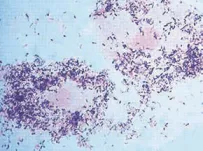
Most bacteria live in the intestines, but not only. An analysis of bacterial communities living on human skin showed the existence of three significantly different types of microflora: on wet skin (for example, armpits or in the navel), on dry skin (for example, on the shoulder or on the elbow) and on oily skin (forehead between eyebrows, nasal wings, ear channel, etc.) [1]. Fields with oily skin are characterized by the smallest variety of species, mainly Propionibacteria and Staphylococci. However, in another study it was shown that the use of cosmetics, in particular powder, significantly increases the variety of bacteria on the forehead [2]. It should be noted that these studies have not only cosmetic significance: so, an aggressive strain of drug-resistant Staphylococcus aureus acquired genes that give it the opportunity to live on the skin, horizontal transfer from the usual component of the normal microflora S. Epidermidis [3].

The microflora of the mucous membranes, in particular, the genital tract, is even more medical interest. In the vagina of healthy women, various types of lactococci live, and the proportion of women with a predominance of certain types of lactococci depends on the ethnic group (white, Asian, African American and Latin American); In addition, in the last two groups, communities are often found that are mainly not consisting of lactococci, but of strict anarobes (extensor, gardnerell, etc.), however, also producing lactic acid [4]. Depending on the predominant type of vaginal communities, the acidity was also distinguished: in Latin American (pH 5.0 ± 0.59) and African Americanists (PH 4.7 ± 1.04), it was significantly higher than in Asian (pH 4.4 ± 0.59) and white (pH 4.2 ± 0.3). The observed differences can be associated both with the genetic characteristics of the hosts (immune status, the composition of the ligands on the surface of the epithelium, etc.), and with the features of the lifestyle: diet, hygienic habits, methods of contraception, sexual behavior, etc. One of the practical conclusions from this work is that the clinical (microbiological) criteria for the normality of vaginal microflora should be revised: they should take into account the ethnicity of patients, since in the existing criteria, the absurdly large proportion of African Americanists and Latin Americans should be diagnosed with dysbiosis in the absence of clinical symptoms.
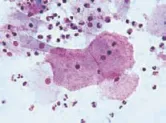
Bacterial vaginosis is a risk factor for the danger of HIV infection. Analysis of vaginal microflora 132 HIV-positive women from Tanzania showed that Gardnerells and lactobacilli are present in all communities, and lactobacilli are a sign of normal microflora, and vaginosis is associated with extensions and Lachnospiraeae [5]. At the same time, apparently, the factor of risk is not because they themselves are potential pathogens, but since they produce metabolites (ammonium, amino acids) consumed by Gardnerella vaginalis pathogens and PeptostReptococcus anaerobius [6-7]. In a similar study conducted in China, 50 healthy women and 50 women patients with vaginosis were compared [8]. At that time, as a single marker for healthy communities, three types (Bacteroidetes, Actinobacteria, Fusobacteria) and eight births were found, including already mentioned (Gardneerella, Atopobium, Megasphaera, EgGerthella, Aerococcus, Aerococcus, Aerococcus, Aerococcus, Aerococcus, Aerococcus Leptotrichia/Sneathia, Prevotella, Papillibacter) were significantly more often observed in patients with vaginosis compared to healthy controls.
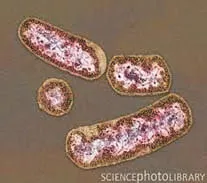
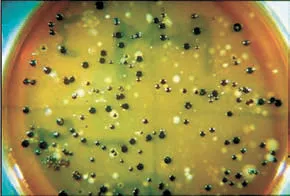
However, researchers study not only a vaginal microflora of human females. It was shown that, despite the anatomical and physiological similarity of the reproductive organs of a person and a bugin, their microflora is significantly different: although gram-positive bacteria prevail in females, like a person), but these are not lactobacilli; Some groups of gram-negative bacteria are found in gramans, but not in humans [9]. On the other hand, the analysis of the microflora of the urethra of men showed that uncultivated bacteria associated with vaginal pathologies are often found in asymptomatic carriers that do not have signs of urethic inflammation [10]. At the same time, the asymptomatic carriage of pathogens of sexually transmitted (chlamydia and gonococci) was correlated with the presence of vaginosis markers already familiar: Sneathia, Gemella, Aerococcus, Anaerococcus, Prevotella, Veillonella.
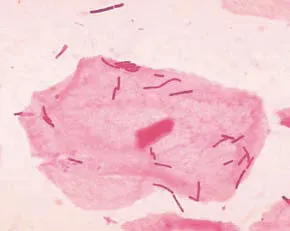

It is clear that all this is only the first, very superficial look at the bacterial communities living on and in a person. It is also clear that technological progress will make this kind of research routine, and ultimately a complete list of bacteria - with estimates of the number - will become an ordinary part of standard clinical analysis. In addition to the “in general” patients and “in general” healthy will compare various options for the course of diseases, the stage of diseases, and the response to antibiotic treatment. The conditions under which common bacteria become pathogens will be determined. Diseases will be divided not only according to external clinical manifestations, but also according to a detailed microbiological portrait, and treatment will be individualized depending on this portrait - something similar begins to occur with cancer.
M.G.
1. Grice ea et al. Topographical and Temporal Diversity of the Human Skin Microbiome. Science 324: 1190 (2009).
2. Staudinger t et al. Molecular Analysis of the Prevalent Microbiota of Human Male and Female Forehead Skin Compared to Forearm Skin and the Influence of Make-Up. J. Appl. Microbiol. 110: 1381 (2011).
3. Diep Ba et al. Complete Genome Sequence of USA300, An Epidemic Clone of Community-Cquired Meticillin-ReSistant Staphylococcus aureus. Lancet 367: 731 (2006).
4. Ravel j et al. Vaginal Microbiome of Reproductive-Age Women. ProC. Natl. ACAD. SCI. USA 108: 4680 (2011).
5. Hummelen R. Deep Sequencing of the Vaginal Microbiota of Women with Hiv. PLOS ONE 5: E12078 (2010).
6. Pybus v, Onderdonk AB. Evidence for a commensal, Symbiotic Relationship Between Gardnerella Vaginalis and Prevotella Bivia Involving: Potential Significife for Bactial Vaginosis. J. Infect. Dis. 175: 406 (1997).
7. Pybus v, Onderdonk AB. A commensal Symbiosis Between Prevotella Bivia and PeptReptococcus Anaerobius Involves Amino Acids: Potential Significance to the Pathogenesis of Bactial Vaginosis. Fems Immunol. Med. Microbiol. 22: 317 (1998).
8. Ling Z et al. Molecular Analysis of the Diversity of Vaginal Microbiota Associated with Bacterial Vaginosis. BMC Genomics 11: 488 (2010).
9. Rivera aj et al. Differences Between The Normal Vaginal Bacterial Community of Baboons and That of Humans. Am. J. Primatol. 73: 119 (2011).
10. Nelson de et al. CHARACTERISTIC MALE URINE Microbiomes Associate with asymptomatic Sexually Transmitted Infection. PLOS ONE 5: E14116 (2010).