
Translated material
Andrei Lugovoi tried to kill with Litvinenko, Russian investigators decided and opened the case
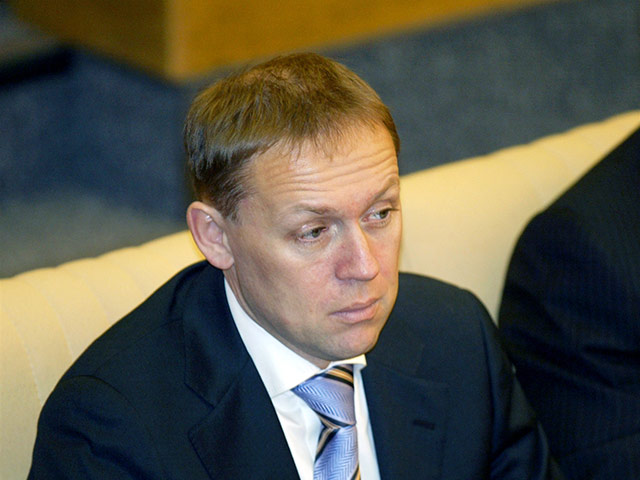
The investigating authorities of Russia opened a criminal case on the fact of an attempt on a deputy from the LDPR party Andrei Lugovoi, Interfax reports. The Investigative Committee of the Russian Federation confirmed that it is associated with the death of the former FSB officer Alexander Litvinenko. In London, it is Lugovoi that is suspected of poisoning the defector and over the past few years achieves his extradition from Russia.
"This is a new criminal case. It has been instituted against unidentified persons on the fact of an attempt to kill a meadow, which in this case takes place as a victim," the law enforcement agencies said.
Lugovoi himself said that he was pleased with the decision of the Investigative Committee. “I confirm that a criminal case has been instituted. I am satisfied with this decision, since for five years I said that I have been the victims from both the physical and moral point of view,” RIA Novosti quotes him.
The deputy once again hinted at the involvement of the fugitive oligarch Boris Berezovsky, who received refuge in the UK, to the death of the ex-office of the FSB. “In fact, he controlled the whole process, including Litvinenko himself. Berezovsky is an enemy of the Russian state,” he emphasized.
In turn, the official representative of the Investigative Committee, Vladimir Markin, explained that Lugovoi was recognized as the victims in the case of the murder of Litvinenko and the attempt by entrepreneur Dmitry Kovtun. According to him, the investigation had confirmation that Lugovoi was poisoned by Polonia during a meeting with Litvinenko in London, ITAR-TASS said.
Exactly a week ago it turned five years since the mysterious death of the former FSB officer Alexander Litvinenko. His widow Marina Litvinenko called on Andrei Lugovoi and another person involved in the story of Dmitry Kovtun’s poisoning “Take courage” and fly to the UK, where local investigators are looking forward to them, Inopressa writes with reference to The Times .
In the UK, it is Andrei Lugovoi who is suspected of killing Litvinenko, so London over the past few years achieves its issuance. Russia refuses to do this, referring to the norms of the Constitution.
In early November, it became known that the British royal prosecutor’s office wants to call Dmitry Kovtun for interrogation, intending to achieve his extradition if necessary. Previously, he took place in this case only as a witness, and the German prosecutor's office already initiated a business against him (he has a residence permit in Germany, as he was married to a German), but in 2009 it was closed.
Kovtun himself confirmed that Scotland-Yard really collected materials for charges to the second person in the case of the death of Litvinenko, but so far the UK authorities have not sent him any official notifications. According to Kovtun, if the British investigators had real reasons, then he would have been charged five years ago.
Ex-employee of the FSB, Alexander Litvinenko, who left Russia in the UK in 2000 and received British citizenship, died on November 23, 2006 in a hospital in London. The British authorities announced that Litvinenko, who was also an ally of the fugitive Russian entrepreneur Boris Berezovsky, was poisoned with the help of Polonium -210 - a rare highly toxic radioactive substance. The British prosecutor’s office accused the Russian Citizen of the Russian Federation of Litvinenko, a former employee of the Russian special services, now a State Duma deputy from the LDPR Andrei Lugovoi. Lugovoi, as well as businessmen Dmitry Kovtun and Vyacheslav Sokolenko, who were in London in October - November 2006, met with Litvinenko three weeks before his death.
Litvinenko’s poisoning led to a serious cooling of relations between Moscow and London. The British authorities demanded that Russia have a meadow extraction for investigative measures to the UK. However, Russia categorically refuses to do this, referring to the provisions of the Constitution, excluding the possibility of issuing a Russian citizen to a foreign state. Lugovoi insists on his innocence.