
Translated material
Book '' Anatoly Kuznetsov at Free ''
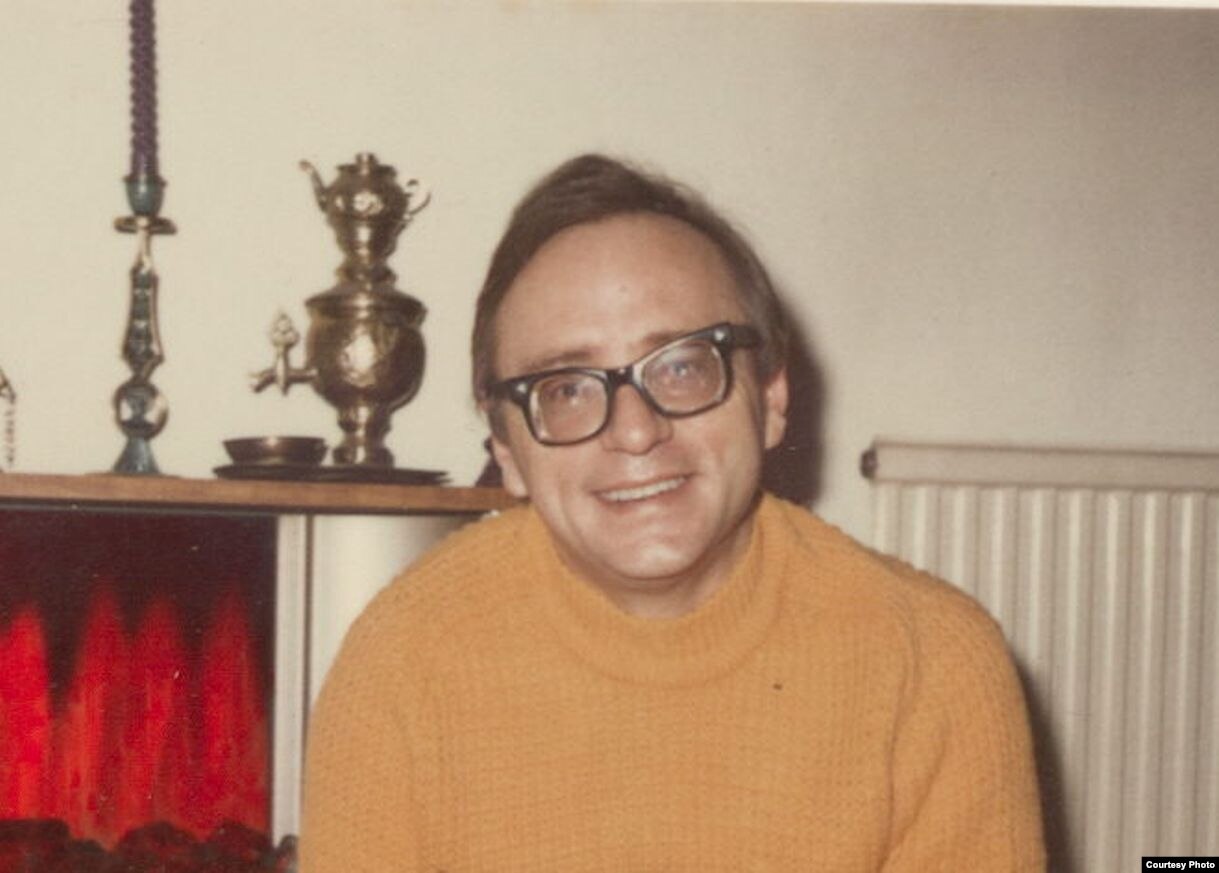
Marina Timasheva: The Publishing House "Corps" published the book "Anatoly Kuznetsov at large." This is a collection of chosen performances by the writer from 1970 to 1979, when, after emigration from the Soviet Union, he worked in the London Studio "Freedom". Says my colleague, son of Anatoly Kuznetsova Alexei Kuznetsov.
Alexey Kuznetsov: All emigrant writers, who gradually returned to the literary life of Russia after the collapse of the USSR, in exile, as they say, continued their job. That is - wrote books. You can discuss their advantages and compare the level of literature - but in the presence of a "object of discussion". That is - actually literary creativity. The case with Anatoly Kuznetsov is special. Almost unique. For the incomplete 10 years in exile, he did not write a single new book.
In 1979, after the death of Anatoly Kuznetsov, who did not live two months before his 50th anniversary, the then director of the Russian Radio Liberty Service Vladimir Matusevich spoke about this feature of the writer's creative fate.
Vladimir Matusevich: In 1975, the Swedish newspaper “Expressen '' published the text of his long conversation with the correspondent. The Swede was surprised: why not a single new book published Kuznetsov? He remained in London because censorship and self -censorship became unbearable for him, that he wanted to write and live freely. He began a new life in favorable conditions - the doors of the Western European and American publishers, which previously published his' continuation of the legend 'and' Babi Yar '', were widely revealed for him. Moreover, they expected from him, they demanded new manuscripts. What is the matter? Anatoly answered calmly, in detail and ruthlessly. He cannot and does not want to write at the level that he was inherent in his literary career in the Soviet Union. He tried his hand at experimental modernist prose. Unsuccessfully. I note from myself: in 1972, a fragment from his novel '' Teich Faiv '' was published in the Almanac '' New Bell ''. And indeed - bad. In a scientifically helpless repetition, the so-called, '' prose of the stream of consciousness ''. In a word, he ended with fiction. The journalist did not calm down. Yeah! Therefore, a creative crisis? Is it because a Russian person cannot live and build outside Russia? And maybe the blame for two incompatible halves is not an obsolete shock of a sharp breakdown? Or maybe restlessness in personal life? Or maybe then, maybe this? The Swede was sincere in his sympathy. He sincerely regretted the artist’s creative crisis, he sincerely did not understand, he was not able to understand that the writer Anatoly Kuznetsov, abandoning the scripture and publications of novels, could be happy. And he was happy. And there was no creative crisis, because in London the Bellery Kuznetsov ended, ended due to a rare merciless demand for himself, but Kuznetsov-publicist was born. And I am not afraid to call him a master of this difficult genre. He came to a microphone with a naked soul, defenseless in his confidence in the listener, in his all -pervasive desire to tell about the bright joy of being, about the piercing happiness that he experienced, collecting mushrooms in the English forest or wandering barefoot on the edge of the sea surf, or acquiring a new toy - a intricate writing machine. And his pain, the anger, with which he spoke of the cursed poverty of Soviet being - spiritual, material, social - they were the desperation of a good, conscientious person who could not reconcile with the thought that he was powerless to share the simplest joy of freedom with his compatriots. When at least a volume of isobaric radio experts is published, it will become obvious: complaints about a creative crisis are stupidity. The master died. In Zenith, in the prime of his own literary and human gift.
Alexey Kuznetsov: And only in 2011 what Vladimir Matusevich spoke about more than 30 years ago - the same collection of performances by Anatoly Kuznetsov came out. Says the editor -in -chief of the Radio Radio Liberty Lyudmila Telen.
Lyudmila Tellen: a book belonging to Peru Anatoly Kuznetsova with the speaking name '' at large '' came out, thanks to three circumstances. The first circumstance is, of course, the talent of the author himself. Anatoly Kuznetsov is known as a novelist. In this case, his essay is presented in the book. I would say that this is the prototype of today's '' copyright columns ''. In fact, these are conversations with which Anatoly Kuznetsov spoke at the microphone Radio Liberty. But, of course, these are conversations that were first written. This is an amazing ability to write a text that will be read as a text and sound like a conversation. This is a rare skill, not every writer and not every journalist has this property. There are two features in these texts. They have a very accurate, verified, suspended word and honed thought. This is exactly what turns these essays not into a simple journalistic publicist on the anger of the day - they have neither anger, nor just anger - but in a writer's publicist who is not perishable goods. Usually, it is very difficult to reprint journalistic works - there are too many realities of time, too much of what is related to current events, too many what needs to be explained to the subsequent generations of readers. In the case of Anatoly Kuznetsov, this is not. Nobility is not needed here, everything is transparent, clearly and clear here. Maybe because thought is more than a thought tied exactly by time, it is turned to values that do not die. The second circumstance, thanks to which this book appeared on the shelves, is, of course, the courage of the publisher. Not every publisher will undertake to publish journalism today, which are based on conversations on Radio Liberty, once banned in the Soviet Union of Radio 'Freedom' ', published in the 70s. Nevertheless, the publisher decided to do this, I think, not really counting on commercial success, although I am sure that this book would be sold and read. I know that the son of Anatoly Kuznetsov, Alexei, tried to publish these letters for more than 10 years, and not a single publishing house took up this. The publishing house '' Corps '' took and, I think, it will not regret it.
Anatoly Kuznetsov: So thinks the editor -in -chief of the site of the Radio '' Freedom '' 'Lyudmila Tellen. The writer, President of the Holocaust Foundation Alla Gerber, at one time, was familiar with Anatoly Kuznetsov, and therefore for her the release of his book is a special phenomenon.
Alla Gerber: I had the feeling that he was just my interlocutor, that we are now sitting with him now, we have a bottle of wine, we are sitting and talking. And all that he says is unusually close to me, of course. This is absolutely today's text. This is a continuation of the actually Tolin novel '' Babi Yar '', because there is a person there? Who are we people? Why do we live? What is life and what is not life? And these are thoughts about us living today. And what will happen to us, and where are we going, if we go at all? This is not even the word '' relevant ''. '' Actual '' is when some facts that sound today. This is what can always be. Because when a smart, talented, very individually designated person reflects on us, then this is always what we need. Because '' Babi Yar '' is like any serious work associated with the most tragic events - the Holocaust, Babiy Yar and everything that happened to him there is such a shock that they correctly said that after Auschwitz you can’t write poetry. He had so much laid out there that it was difficult to even imagine what to write further. So this book is voluminous - it is not only about Babi Yar. And he, a 14-year-old boy, knew life, learned himself through these events and knew his place in this life, his participation in this life. And with this a lot of writers, having written about the Holocaust, about Auschwitz, and Babi Yar (but it was about Babi Yar, as tola wrote, no one wrote from this), they could no longer get rid of this and write something else. For example, Primo Levy, never free from the Holocaust, from this painful topic for him, could not stand it and committed suicide. And the fact that Tolya did not write fiction anymore, but continued his topics, not that it was impossible to reproach, but, on the contrary, we must persuade his head that he, having survived, living and writing such as “Babi Yar”, continued to think about the same, but just in a different genre. The tragedy that he has been in himself all his life, she, perhaps, rejected him from writing, from inventing some plot. He saw such stories that after that it was very scary to start inventing something. This is my assumption, but I think I'm right.
Alexey Kuznetsov: said the President of the Holocaust Foundation Alla Herber.
With the publication of this book in the work of Anatoly Kuznetsov, a giant gap is filled. In 2002, letters of Anatoly Kuznetsov, who he wrote from London to Kyiv in the mid-70s, saw the light of the letters. This book "Between Greenwich and Kurenevka" is actually the first book of Anatoly Kuznetsov created by him in London and published in Russia. And finally, the conversations of Anatoly Kuznetsov are published at large. These books are unique in its own way. This, if I may say, is not written by Anatoly Kuznetsov! They seem to complement each other. Correspondence with the mother is a deeply personal matter, it does not affect politics, it does not have a direct criticism of Brezhnev times. And in conversation at large, he already spoke openly, actively discussing political events and criticizing the Soviet system. Together, these two books give an almost complete picture of his life and work in exile. It is creativity, no matter how he call it - literature, journalism or chronicle.
Says historian Irina Shcherbakova, head of educational programs of the Memorial Society
Irina Shcherbakova: He will enter the literature, of course, as the author of “Babyeu Yar ''. In general, very often writers who wrote very many books in their lives remained in the literature the authors of one book. And this book, published in the 60s, played a huge role. I recall myself as a schoolgirl, and the book made an extremely strong impression on me, because there was nothing similar to this image of the occupation, which, by the way, still remains in our literature, and in history, a white spot, actually. And, frankly, one might even say that there was no really anything equal from the point of view of such a witness. Having left, Anatoly Kuznetsov continues to be an important witness, a chronicle, and you can say as you like, call it journalism ... So he did not live to perestroika, but some time will pass, and many writers will stop writing artistic texts at all, and for some time they will plunge into journalism at all. And what this book is remarkable - by the fact that it is not outdated, but the author’s voice in it is absolutely heard. This is a very rare case when the pronounced programs can be read today.
Alexey Kuznetsov: And here is what Irina Shcherbakova thinks about the relevance of the current publication of the new book by Anatoly Kuznetsova.
Irina Shcherbakova: The literality and relevance - it would be a little naive to speak. The present time is completely not identical to the Brezhnev era, nevertheless, the Brezhnev state is strongly, although it was a post-a-tavern one and, in general, the times were “not cannibalic '' ', as Nadezhda Yakovlevna Mandelstam said, but still it was a completely communist, albeit post-thorough regime. Of course, the modern era, with all its rubbish, is not like that. But, firstly, the message that comes from various ideologists close to power, which, in general, was “it was a good era '', '' guys that you, we all lived well, '', the most important thing is not to interfere with anything, and - —“ We had stability. '' And, in addition, the generation of current people, which, in fact, is to some extent the older worship of the power elite, these are children of this time, Brezhnevsky, and this is also painted in some nostalgic tones. So this book is completely, I would even say, for schoolchildren directly, who are immersed in our childhood atmosphere of nostalgia for their grandparents, and sometimes parents, this is just such a manual for anti-nostalgia. Although he left and continued to write these things a few years after he left, in this sense they give such a talented, honest and merciless completely image of this time. After all, he devotes each conversation to one topic - either censorship, then the Tula Union of Writers, then the KGB, then simply queues. A variety of pieces of this life. They are written very brightly, very convex and, which is very important, he was, as we would say now, who absolutely made himself, behind whom the cultural environment did not stand, but, on the contrary, he was completely out of very difficult experience and occupation, which, by the way, was terribly broken, generated in them fear, distrust of other people, lies, falsity, and so on, work at a construction site, for which he was working at a construction site, for which he Left. This is also the voice of a person from the people who are difficult to say: '' Yes, please quit, this is all your dissident and intellectual view of the era, and we all lived beautifully. '' In this sense, it is very difficult for him to object to something. And after each of his conversations, there is some conclusion about the time, about the era, about the essence of this time. It sounds extremely modern.
Alexey Kuznetsov: So the historian Irina Shcherbakova believes. Well, in conclusion, we suggest you listen to the voice of Anatoly Kuznetsov - a fragment of one of those very conversations. Archival record of Radio Liberty, December 9, 1977.
Anatoly Kuznetsov: About what was, they say - '' There was no ''. I used to be very nervous when I came across this. But after reading George Orwell '' 1984 '', he began to treat more calmly. Philosophically calm - it is unlikely that this is wisdom, more self -defense, otherwise no nerves will be enough. Banal truth - a person gets used to everything. To everything! Think only. Strange. But now I want to touch the topic that is inexhaustible in itself (and therefore only touch), which in Soviet reality is expressed in the wording '' This was not. '' It was faced with her, I was nervous or stunned. Well, when they tell you: '' under the Stalinist terror, they destroyed and planted in the camps of those who deserved it ''. Here you can argue, prove, find out. But when they tell you: '' There were no terror under Stalin and there were no camps. Where did you get it from? What are you! ''. And they look at the same time confident, innocent eyes. What to do here? Of course, you will try to bring the facts, and you are: '' So this is slander! The venality of imperialist agents! ''. And tell, and prove, even if you beat the wall with your head on the wall, one, unperturbed: '' There was no this ''. Today it is amazing to think, but this example is not an exaggeration, not a fantasy. When in the West during the life of Stalin there were people who were saved from Soviet camps, the Western Communists and, in general, everyone who looked at Stalin with sympathy, and the happiest, first in the world '' The country of the victorious socialism '', they did not only listen to such fugitives, but indignantly declared them villains, slander, and their testimony - fiction from beginning to end, at the best case, at the best case, at the best case, at the best case, at the best case, at the best case, at the best. Sick fantasy. Because between the song `` I do not know another country, where a person breathes so freely '', which all the peoples in the whole country are singing (this is a fact!) And 15 million in the death camps is too implausible gap. Scissors, one end of which is a lie. But now the situation is different. Under Stalin, '' abuse '' (as they call it) were. Yes, they were. But 7 million scored by artificial hunger in Ukraine in 1932-33 - “There were no '' '. The state genocide, when entire peoples disappeared from the lands, and the names of the republics from the geographical maps of the USSR were “not”. The monstrous mass graves like Vinnitsa, comparable to Babim Yar, but the business of the hands of not the Nazis, but the NKVD, as well as the mass destruction of Polish prisoners of war in Katyn - this was not the '' ''. This is what we were just doing when I was still studying in the second or third grade, before the war. We were ordered to take out textbooks on desks and pull out pages with portraits of Postystyshev, Kosiora and other 'enemies''. This was done throughout the country, up to the book chamber. Further there were no more. '' The Stalinsky History of the All -Union Communist Party of Bolsheviks (b). A short course '', after the death of Stalin suddenly disappeared, without a trace - there was no such! We are no longer saying that there have never been a percent of the ninety literature of the first years of the revolution, reflecting the role of Trotsky, Bukharin and other “enemies ''. All this is well known, I only mention it to ask: what will happen as a result? One day, when I still lived in the USSR, in my house in Tula we talked with one young man, a student. We were talking about Zoshchenko and Akhmatova, as in 1946 they were anathematized by the party 'decree on the magazines'' '' '' '' Leningrad ''. The young man said in surprise that I was confusing something, '' This was not. '' '' Yes, how! - I exclaimed, - in every textbook about this' 'Decree' 'written' ''. He said that, no, they did not go through anything like that. He himself reads a lot, but did not meet anywhere. Fortunately, I accidentally had textbooks on Soviet literature for school and universities. I rushed to leaf through them, and - dumbfounded. Indeed, not a word about the famous decree of 1946. The young man looked at me with a shade of regret. '' It was! I shouted. - Ведь без этого в литературе шагу нельзя было ступить''. Я кинулся листать тома по литературоведению, торжествующе обнаружил недавно вышедший сборник Зощенко. В предисловии о знаменитом ''Постановлении'' - ни слова! Уже почти трясущимися руками я принялся листать ''Литературную энциклопедию''. Статья ''Ахматова'' - ни слова, статья ''Зощенко'' - ни слова. Но в гораздо большей степени я был убит, когда некоторые умные, серьезные люди, прочтя в моей рукописи романа ''Бабий Яр'' главу воспоминаний ''Людоеды'', о голоде 1933 года, недоуменно сказали, что я ''что-то путаю''. Вот в войну было голодно, да, но о голоде времен коллективизации они что-то не слышали, ''этого не было''. Да, поначалу в таких случаях очень нервничаешь. Но вот под категорию ''этого не было'' попал и я сам. Когда в 1969 году я остался в Лондоне, в Москве был задержан готовый двухмиллионный тираж журнала ''Юность''. С него срывалась обложка, где в списке редколлегии была моя фамилия, и обложка заменялась новой. С тех пор, кстати, список редколлегии журнала ''Юность'' на обложке больше ее печатает. В 3-4 номерах ''Юности'' за тот же 1969 год печатался мой роман ''Огонь'', и я в Лондоне с любопытством развернул потом номер 12, где обычно дается содержание всего журнала за год. Под рубрикой ''Проза'' ни моей фамилии, ни романа ''Огонь'' не было. В библиотечных экземплярах страницы с ''Огнем'' в 3-4 номерах, как я узнал, были вырезаны. There was no. Да, из-за меня у служащих ''министерства правды'' было много работы. Одних книжек ''Родная речь'' для первого класса, где лет 15 печатался мой рассказик ''Деревцо''. Сколько же это было миллионов! Миллионы же моих книг, журналы и сборники с рассказами и статьями, какие-то чтецы-декламаторы, календари, энциклопедии, учебные программы, кинофильмы, каталоги... Убрали, вычистили отовсюду меня. Был такой? Нет, не было! Когда такое видишь со стороны - это одно дело, но когда происходит с тобой с самим - это особе ощущение. И перестаешь нервничать, переходишь к философскому спокойствию. Словно, внимательно наморщив лоб, смотришь на какой-то сюрреалистический феномен - да, общество с постоянно изменяющейся историей, с фиктивной, иллюзорной историей, от древнейших времен до вчерашнего дня. Да, это действительно небывалый исторический эксперимент. Будущим поколениям, по-видимому, нелегко будет поверить, что это не фантастика, что ЭТО БЫЛО, зачем-то.
Марина Тимашева: Вы слушали голос самого Анатолия Кузнецова, одно из его радиоэссе, которое вошло в книгу "Анатолий Кузнецов на Свободе".