
Translated material
The head of the ECB warned: the countries that leave the eurozone will suffer stronger
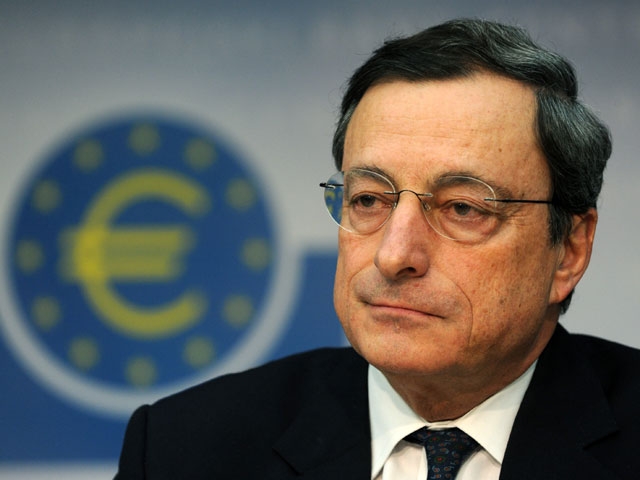
The economic situation for the countries that leave the Eurozone will become more complicated even more, while the laws of the European Union will be destroyed for the remaining members, and it cannot be assumed how this may end, the head of the European Central Bank of Mario Drag, commenting on the eurozone prospects in an interview with the Financial Times .
The predecessor of the Dragon as the head of the ECB Jean-Claude Trisha, in turn, called the probability of the collapse of the eurozone "absurd" assumption.
"The countries that leave the eurozone and carry out the devaluation of the currency will create high inflation. At the same time, they will not be able to avoid structural reforms that should be carried out, but they will be weaker," Dragon said.
Among the measures to combat the crisis, the head of the ECB, who took this post on December 1, emphasized the importance of the unprecedented Finregulator’s support for supporting the banking system and, in particular, not limited in terms of three -year loans, which will be first proposed this week.
In addition, Dragons noted the need to restore investors' trust in the public finance of the Eurozone by ensuring budget discipline and full performance of the European Fund of Financial Stability (EFFS).
The head of the ECB added that the financial regulator will be able to act as an agent for the EFS in financial markets since January, and also expressed the hope that in the future the volume of the fund will be increased. "I believe that if the fund confirms its practical value with the current volume, then this will strengthen the arguments to increase its volume," Draga said.
Dragons with caution bypassed comments regarding the details of the financial regulator program for the redemption of government bonds of the Eurozone countries, which has exceeded 200 billion euros since May 2010. At the same time, the head of the ECB repeated that the regulator excludes the possibility of using "quantitatively mitigation" of the US or Great Britain, even in the case of a recession of the region’s economy. “It is important to restore the trust of citizens and investors of our region. However, we will not achieve this through the destruction of the authority of the ECB,” Draga added.
The European leaders at the Summit on December 8-9 to combat the crisis agreed to create a budget union based on intergovernmental agreements, RIA Novosti notes.
New norms are planned to be prescribed in the constitutions of the participating countries. During the summit, the desire to join the budget union was expressed by 26 out of 27 EU countries, the UK became the exception.
At the Summit, the European authorities also agreed to launch a constant mechanism of financial stability in approximately in July 2012 - a year earlier than previously expected, and also decided that the EFS will take part in financing programs that began until mid -2013. Thus, the EFS will work in the previously established time and, according to the draft decision of the summit, simultaneously with the constant mechanism of financiality.
Russia, however, will not help Europe through the EFS.