
Translated material
Where God lives the truth
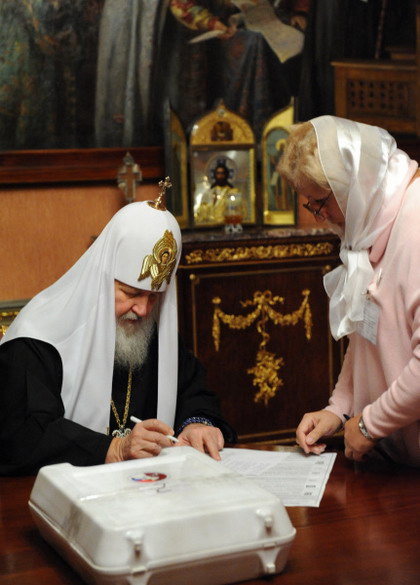
Since December 10, Moscow is seething, a variety of forces are involved in the discussion of post -breed events: protests against the dishonest counting of votes, the detention of political activists, and tactics of further actions in relation to the authorities. For the time being, only television was silent - but it was also forced to surrender and go to the coverage of what was happening - and Patriarch Kirill (New Smakers of the Moscow Patriarchate, however, pronounced several phrases in the spirit of reconciliation and even agreed with the need to “evidence of truth”). Now Patriarch Kirill expressed his thoughts on social activity - December 17 in the Cathedral of Christ the Savior after the liturgy on the day of memory of St. The Great Martyr Barbara and December 18 after the Liturgy in the Epiphany Cathedral of the city of Noginsk. "Daily Journal" asked experts to comment on the speeches of the patriarch.
Exposure from preaching in the Cathedral of Christ the Savior:
... The whole human story is fulfilled by the struggle for "truth" ... Everyone has its own truth. This is a fragmentation of the truth, this atomization of society today is also fixed in the political system, which encourages the division of people into various parties, encourages various points of view. Each has its own truth, human truth, with a small letter truth. But we know what kind of edge was the being of our and our ancestors in the twentieth century, when in the struggle for these “truths” the father rebelled at the children, and the children on the father ... people who were distraught by blood sought to affirm their small, human, just the insignificant truth, and maybe there was no truth, but only a pride, and if a great country broke up, and if a great country broke up, and if a great country and a great country. To list all our sorrows of the twentieth century in the name of those very human truth, then there is no time. Example St. Martyrs Barbara teaches us that life can and should be given only for the truth of God. And this truth of God is refracted in categories close and understandable to us. This is the life of our relatives and friends. When the mother gives her life for her children - this is the truth of God. When adult children are the last to share to support the lives of parents, this is true. When a person is naked and even weak rises in the subway car to protect the girl from the attacks of nasty and nasty people, and then finds himself in intensive care - this is the truth of God. You do not need to have any political programs to feel this God's truth with your heart. Where the conscience reproaches you, if you do not, then you are going against God's truth.
Today, mass moods of people are determined not by God's truth, but by information technologies. They are used by everyone who defends their human truth. /.../ It is important that we, the heirs of the Great Russia, who have passed through terrible trials of the twentieth century, today are able to perceive the lessons of the past, not to repeat the mistakes of fathers on the eve of 1917, not to repeat the mistakes of those who in the 90s have changed the life of our people ... What should also be done and how loudly to stop our actions that can destroy the lives of people, and along with them and the truth. How can we behave in conditions when so much effort acts to persuade us in one side or another? We are offered various kinds of evidence of the correctness of one or the other Storn ... Well, didn’t they tell us the same thing on the eve of the bloody revolution of 1917, didn’t they say that throughout the twentieth century? .. And after all, they succumbed, and millions of people went somewhere in spite of their will, only because someone connected their happiness with this choice besides their will.
Evil thoughts come from the human heart, as well as good thoughts ... And until we educate a person who can resist temptations, we will never gain neither political stability, nor peace, nor solidarity of people. That is why today an example is so important for us, including the great martyr Barbara, who boldly gave her life for the truth of God. Because such examples teach us that you need to give themselves only for those goals and values in which God's truth is displayed. And love for the neighbors, and solidarity, and the care of the Fatherland, and preserving the world, and the creation of life based on justice - all this is not a direct God's commandment, but all this is covered with God's law, which urges us to love each other. We will never get out of crises until we change a person.
The Church has been talking about this over the past 25 years ... And you do not need to go and gasp when suddenly our society is set up by the next conflicts, not only peaceful, but we know, and bloody, you do not need to complain about the incorrectness of business of the state, when it is from the heart of the human that the evil thoughts come true in corruption, in crime, in the highest degree of conflict and competitiveness in relations in relations in relations in relations in relations between people. And in this circle of untruth, everyone is involved, and great, and weak, and strong, and weak. There can be no fair triple of life without the arrangement of the human soul - let's remember this as the greatest axiom.
And when today, in moments complex for the life of the Fatherland, we hear attacks on the church, which the only one talks about it today, then we are dealing with enemies who want to destroy the life of the people and finally destroy us all. I turn to the shepherds today: boldly testify to the truth of God, go to where you are not even listening, find the right words, contact people, beat in a nabat bell! Otherwise, we will destroy our country again, and not only our country. Any indifference, especially young people, to the truth of God is a terrible sign of suicide. Where there is no truth, there is jungle, there is unconsciousness, there is manipulation, there is a loss of life orientation and, in the end, death - and after all, through all this passed in the bloody twentieth century.
Excerpts from a sermon in Noginsk:
Let the Lord admit everyone who has different points of view, including the political situation in the country and in the past elections, and will help to join the real civil dialogue so that our national life does not destroy, collected by such work by grains.
But in order to overcome bewilderment, restore trust, to make society even more united and able to go to the future, the authorities must treat people with great trust and promote this dialogue and communication, overcoming perplexity and disagreements so that no human temptations, no mistakes, no incorrect service to the country's good shall share. We are no longer given the right to divide. Blood spilled in the 20th century does not give us such a right.
Alexander Verkhovsky , Director of the Information and Analytical Center "Owl":
After the rally on December 10 (and partly already before it), revolutionary expectations or fears-for whom-the active part of society covered in more or less. Patriarch Kirill could not keep silent. It would be strange if he definitely stood on some side in the existing conflict: after all, the church should maintain and expand influence in all layers of society and contrast itself solved only small ideological groups, and obviously not small groups were represented in the Bolotnaya.
Therefore, politically, the Patriarch’s speech is quite ambivalent. The “information technologies” are remembered in a purely negative sense - this applies to the “zombie” and to social networks. And the calls for the “people” are calls not only for the protesters, the “people” for the church leadership is not opposed to “power”, rather this word denotes all citizens who are not part of the episcopate, i.e. including political leaders. Like his predecessor in 1993, Patriarch Kirill seeks to act as an intermediary, but does it more carefully so as not to lose authority with an unsuccessful course of events.
If you do not delve into the actual Christian content of the Patriarch’s speech, then it contains exactly one call - to avoid aggravation, negotiate, and prevent a civil war. In essence, such an appeal makes more sense for the authorities. Although in form the performance is read more likely as converted to the participants in protests.
Along the way, Patriarch Kirill does not forget to draw his own point of view. Firstly, political and worldview pluralism is part of the process of degradation associated with the loss of faith. Secondly, the collapse of the USSR and the reforms of the 90s are a political and human catastrophe, comparable to 1917, and similar shocks, also compared with the “Arab spring”, we should not allow. What follows from this? It would seem, it would seem, support for the existing political regime. But Patriarch Kirill is not ready to once again spend the symbolic capital of the church to support the authorities, especially in a situation of incomplete political clarity.
Therefore, he calls to focus on the eradication of “evil thoughts” and on the protection of the church. Who is calling? It is unlikely that the participants in the political events of the last weeks: they are clearly not up to that. He calls on the “church asset” in the broadest sense - not to get involved in politics, but to focus on the main thing - on the strengthening of the influence of the Russian Orthodox Church.
Roman Linkin, President of the Guild of Experts in Religion and Law:
The Patriarch made an assessment of the situation in the country just when, after the conversation of Vladimir Putin with the “people” it turned out that the authorities were holding the situation under control. The political system will not change radically, all changes will still occur on top and most likely under the guidance of the same leader.
From December 5, until today the Russian Orthodox Church, as the clergy will be repeated later, did not let herself get into political games, and did not go to any side. The “counter -revolutionary” position of the father of Vsevolod Chaplin was balanced by young priests who saw the obvious and testifying - there are no honest elections. The long silence of the head of the Church showed that the Patriarchate had no topical answer to the political crisis. If for the authorities the silence at such moments is equivalent to weakness and confusion, then the patriarchate, on the contrary, is profitable.
The text of the sermon itself is somewhat philosophical-cholastic. Considering that the main theme of post -breed discussions was “honesty”, “truth of the elections”, the Patriarch’s arguments about the many “truth” look like a kind of sophistry. Each has its own truth, and the system provokes the crushing of truth, and this split society and the country, which in the past led to revolutions. However, from the context, it is clear that one “truth” leads to “solidarity” and “unity”, but there are truths that are associated only with the pride of individuals. God's truth is above all, but does it coincide with the truth that requires honesty? Evidence, Patriarch emphasizes, mean nothing. This is similar to the reasoning that everything subjective is objective, and everything is objective subjectively.
In general, the patriarch is faithful to his usual politically colored rhetoric, which coincides with many passages from Putin’s speeches - “stability”, “solidarity”, “democracy is relative”, and the protests in Facebook are not even from Lukavago, but from Hilary Clinton.
However, we now have something new, some new moods and accents everywhere. There is new in the speech of the Patriarch.
The Patriarch speaks of the need to educate "a person who can resist temptations."
Turning to his “Cyril” guard, which he raised and whose consciousness excited over the past years - to the young democratic clergy, the Patriarch says: boldly testify to the truth of God, beat in an alarm bell.
The Patriarch did not forget about the youth, who will meet in stadiums more than once: indifference to the truth of God is a terrible sign of suicide.
Finally, the Patriarch may be addressed to the chief of the “human truth” in our country - to Vladimir Putin, and perhaps to the future crisis prime minister Medvedev, or Prokhorov, the President of the “bar”: “We will never go out of crises until we change a person.”
What can I say - I bow to the wisdom of our patriarch.
Alexey Muravyov , historian of Christianity:
The fact that Patriarch Kirill speaks in a peaceful spirit - of course, Christian Primate and should do this, but in his speech several problems are visible, which are very difficult to interpret, precisely from the point of view of the Russian Orthodox Church. First of all, this is the problem of truth, then this is the attitude to the great country and the participation of representatives of the Russian Orthodox Church in political processes and, thirdly, this is the ratio of the Russian Orthodox Church to modern political regimes. Let's start with the truth. Patriarch Cyril says St. The martyr Barbara rebelled for God's truth. It is indirectly assumed that since people do not know what God's truth is and what is true in general, they probably cannot rebel, as a martyr Barbara, but should humbly accept all the conditions of the game that the authorities offers. In any case, this message is clearly read between the lines in the sermon of the Patriarch. A certain complexity is hidden here.
The fact is that the concept of God's truth and martyrdom for it is the concepts sacred to Christianity, the martyrs died for the truth, primarily religious. But in the twentieth century, the social structure has changed so much that the religious truth, for which the martyrs died, turned out to be quite marginal in society. Now Christianity is not experiencing in most countries of the European circle and the New World of the Uteses that it experienced in antiquity. Therefore, we can say that the concept of truth has moved from a purely religious field, as was the case in early Christianity, to the field of social truth, cultural truth and political truth. And therefore, standing for the truth, which Alexander Solzhenitsyn spoke remarkably, urging him not to live by lies, became religiously neutral: people can stand for the truth, adhering to various religious positions - being Orthodox Christians, atheists, Catholics, Protestants, Muslims - all this does not prevent them from standing for the truth. Therefore, when we say, we must stand for God's truth, and do not stand for the political truth, it turns out very inaccurately. Not only Solzhenitsyn, but also Metropolitan Anthony, and the Dalai Lama, and many others-it is impossible to separate these things now.
There is another trick: decay and disintegration are not the specifics of the last 15-20 years. From my point of view, the disintegration of Russia begins in the 17th century and has several pain points: it is the desecalization of social space, the accelerated Europeanization of life and, finally, mass atheization and social revolutions of the early twentieth century. As a result of all this decay, we can say that the desire for truth is an integrating factor, and not a disintegrating factor. What we see at rallies and protests is the desire of people to discover the truth that is in all the disintegration processes of our history for the past 300 years of the trampled. This is precisely the unconditional positive side. Grigory Pomerantz recently spoke in an interview with Rossiy Gazeta that there is a great demand for this truth, which can be called the space of honesty.
Therefore, the idea to stop the people from actions, it seems to me-the idea is crafty and, in a sense, working to drive the process of striving for great truth on a regiment of a local, small disintegrating factor. The Patriarch said that the church is the only one who is acting for the truth. Unfortunately, from my point of view, the Russian Orthodox Church is such a satellite of a modern regime, which is simply not actually capable of any truth, except for the truth of a separate particular person. When the priest stands for the violated dignity of some unfortunate woman, or a family against lawlessness of juvenile justice, say, this causes positive emotions. As soon as we see attempts to act on behalf of the Russian Orthodox Church as a corporation, it looks false, deceitful, and everyone knows that in fact over the past 300 years of the Russian Orthodox Church was the structure of the state, with the exception of the period of the Soviet era, when the Russian Orthodox Church was in an ambivalent situation: on the one hand, it took a state patronage and began to fall apart, then Stalin returned this patronage, and she returned this patronage, and she She returned to the path on which she had been standing over the past 300 years. Therefore, it seems to me that the Russian Orthodox Church is now not the power that can unite something or someone. Forces arise in society, which unite, including spiritually unit, people on top of confessional barriers.
Boris Knorre , Associate Professor of the Higher School of Economics, participant in the project "Encyclopedia of the modern religious life of Russia":
You can relate to the speech of Patriarch Kirill-Alexy II also performed in a similar vein, trying to support the world, however, the situation was different then-but the moment is clearly visible that our church is behind the understanding of what the progress of political culture is. Поведение человека выстраивается в парадигме недоверия к человеческой воле или волеизъявлению, на представлении о его слабой способности выбирать добро или даже отсутствии таковой. Как сказал протоиерей Всеволод Чаплин осенью в передаче на ТВ «Дети в грехе», «к нравственности нужно принуждать, сам человек к ней не придет», обосновывая такую позицию тем, что «человек сам по себе не хороший», потому что «его природа искажена грехом». Понятно, на каких богословских основаниях это базируется, но когда так упрощенно утверждают, на самом деле представители церкви спекулируют на плохости человека: если человек по своей природе плох и не может определить, где добро и где зло, то, значит, есть основание для тоталитарного навязывания ему определенной точки зрения на добро и зло. И патриарх, когда осуждает атомизацию человеческого сознания и общества, не поощряет разделений, остается в той же парадигме — он не верит в возможность добиться правды путем отстаивания людьми своей точки зрения. Но ведь таким образом транслируется равнодушие.
Патриарх говорит, что правда Божия за матерью, которая отдает жизнь за своих детей, за человеком в метро, который защищает девушку, но человек, который вступается за законность, за то, чтобы обеспечить правильную процедуру выборов, человек, который пытается поймать за руку фальсификатора, тоже рискует своим благополучием. Получается, что за этим человеком, по мнению патриарха Кирилла, правды нет. В этом проявляется двойной стандарт: в одной ситуации мы не можем закрывать глаза на зло и должны все-таки ему противостоять, в том числе насилием, а в другом случае наша активная позиция неоправданна.
На самом деле как на уровне традиции в церковном этосе, так и в реальной практике патриархии закреплена система авторитарной субординации, в рамках которой священники почти лишены возможности права голоса в решении серьезных вопросов церковной жизни и не могут оспаривать случаи злоупотребления властью со стороны начальства — церковь вообще не рассматривает культуру протеста, считая протест однозначным злом. Тем самым, на мой взгляд, она поощряет отставание от того прогресса политической культуры, который есть во всем мире.
Другой важный момент: патриарх упрекает в несолидарности протестующих людей, говорит, что нужно заниматься совершенствованием души. Но можно ли, живя в современном мире, совершенствовать душу без конкретных дел, в том числе освобождая себя от ответственности за жизнь общества в стране, в которой живешь? Закрывая глаза на неправду и обман, который происходит в нашей политической, административной системе? Что же это за совершенствование?
И, в конце концов, наверное стоит иметь в виду, что если все время декларировать неспособность человека разобраться в политической ситуации, заострять внимание на его недостатках, несмышлености, опасностях «ошибиться», неумении разобраться в жизни, то вряд ли стоит ждать от такого человека совершенствования. Мое глубокое убеждение состоит в том, что чем больше демонстрируешь недоверие к человеку — тем меньше ответственности за свои поступки он будет осознавать.
Борис Фаликов , религиовед:
В том, что сказал патриарх Кирилл, нет ничего нового. РПЦ всегда заявляла, что не может поддерживать одни партии против других, потому что партии по определению народ разделяют, а церковь — поверх этих разделений и окормляет всех независимо от партийной принадлежности. Отсюда патриаршья риторика, противопоставляющая Божью правду правдам человеческим. Но важно другое. Патриарх призвал народ против братоубийственных разделений, когда значительная часть этого народа озабочена совсем другой проблемой. А именно тем, что власть ее обманула. То есть фальсифицировала результаты выборов. И сделала это довольно нагло. Поэтому публика испытывает моральное негодование, которое пока не вылилось в политические формы.
Ложь — грех, в этом сходятся все мировые религии. И как всякий грех нуждается в осуждении. Вместо этого патриарх пугает народ ужасами гражданской войны и призывает не забывать исторические уроки. Так никто и не забывает. Насколько я понимаю, сейчас довольно запоздало происходит процесс формирования гражданского общества. Он носит конвульсивный характер, но пока в нем нет ничего воинственного. Напротив, митингующие призывают к ненасильственным действиям. Противостояние с властью имеет нравственный характер — это возмущение обманом и желание отстоять свое человеческое достоинство.
И до тех пор, пока церковь будет пугать общество фантомами грядущей революции вместо того, чтобы осудить ложь, моральное негодование будет канализироваться через социальные сети. То есть они все в большей степени станут выполнять ту роль, которую не смогла взять на себя религия. То, что в РПЦ не понимают таких очевидных вещей и рассматривают социальные сети как инструмент внешнего заговора (о чем почти впрямую говорит патриарх), свидетельствует о глубоком непонимании сути происходящего. И в этом заблуждении церковь, увы, не одинока. Потому что ровно так считает и власть.
Анатолий Черняев, эксперт фонда "Здравомыслие":
Из выступления патриарха сделали событие, его с нетерпением ждали, его теперь бурно обсуждают. На мой взгляд, все это само по себе более интересно и больше нуждается в анализе, чем слова Кирилла как таковые. Почему столь многие люди, в том числе умные и образованные, всерьез ожидают, что патриарх скажет или сделает что-то значительное, способное повлиять на ситуацию в стране, на общественные настроения? Ведь понятно, что церковь — это элемент политической системы, исторически всегда было именно так. Соответственно, действия церковного руководства в подобных ситуациях стереотипны и предсказуемы. Церковь может маневрировать и вести свою игру в периферийных вопросах, но когда возникает дилемма: кого поддержать, власть или ее критиков, — она всегда руководствуется сакраментальным принципом, что "всякая власть от Бога". Малейшая нестабильность во власти — в высшей степени двусмысленная и дискомфортная ситуация для титульной церкви.
Очевидно, именно поэтому патриарх, как и его предшественник в 1991 и 1993 годах, выжидал, хотел увидеть тенденцию дальнейшего развития событий и уже, исходя из этого, расставить акценты в своем выступлении. Отсюда столь странная более чем недельная задержка в реакции всегда расторопного Кирилла. Наивно было рассчитывать, что он скажет нечто сенсационное. Смысл его речей в целом однозначен, хотя и облечен в достаточно обтекаемые выражения. "Месседж" патриарха очень прост: не надо раскачивать лодку! Именно к этому сводятся туманные сентенции о приоритете "правды Божией" перед маленькими человеческими "правдами". Само акцентирование конфликтности этих двух "правд" выказывает негуманность и недемократичность церковных представлений о правде. Симптоматично, что патриарх Кирилл построил свою речь на критике естественных человеческих требований правды и справедливости, на их противопоставлении абстрактной "правде Божией", которая фактически призвана служить легитимации того порядка, где фальсифицируются результаты выборов. С другой стороны, оглядываясь на Путина, уже пообещавшего некоторую либерализацию, в частности возвращение губернаторских выборов, Кирилл включил в свою речь ни к чему не обязывающее общее утверждение о необходимости развития "диалога" власти и общества.
Вдаваться в более детальный анализ патриарших витийств нет ни большого желания, ни особого смысла, суть вполне ясна. Повторяю, вопрос в другом: почему немалая часть думающего общества, несмотря ни на что, продолжает ждать от церкви актуального слова? То, что в обществе существует запрос на инстанцию, которая служила бы голосом нравственности и социальной справедливости — добрый знак. Но то, что для многих с такой инстанцией ассоциируется церковь — признак слепоты и инфантильности. И эту инфантильность с успехом эксплуатируют не самые добросовестные политические игроки. Быть может, откровенная в своей политической ангажированности субботняя речь патриарха Кирилла кого-то наконец заставит задуматься и повзрослеть...
Павел Проценко , историк, писатель:
С большими оговорками можно сказать, что патриарх Кирилл в нескольких своих последних проповедях высказался на тему текущего момента. Осторожно высказался по поводу массового отклика людей на неудовлетворительную политическую практику в стране, на то, что люди вышли на площадь, выражая недоверие власти. При этом патриарх поставил вопрос о том, насколько трезвой является реакция протеста. Не является ли этот протест разновидностью разлива страстей февраля 1917-го? Когда люди, возмущенные властью, подрубили основы и своей жизни, и государства. Когда их протест пролился на мельницу злой партийной воли большевиков.
Патриарх так же осторожно призвал власть отнестись с вниманием к воле протестующих, вникнуть в их тревогу, понять их накопившуюся горечь за положение в стране. Он призвал обе стороны к диалогу, чтобы последовательно, согласными усилиями преодолеть разрушение общественного и государственного организма, вызванное русским катастрофическим XX веком. С этой точки зрения, выступление его можно только приветствовать.
Вместе с тем патриарх — человек своего времени и мыслит в его категориях, ссылаясь на мифы и утопии нашей эпохи. В частности, он делает акцент на том, что воля людей может быть обусловлена «информационными технологиями». Он опасается того, что миллионы людей могут оказаться в ослеплении и действовать «помимо своей воли», ведомые из-за кулис. Подобные точки зрения постоянно развиваются многими нынешними отечественными политологами.
Конечно, только Истина делает людей свободными (Ин. 8, 32), а их выбор трезвым и взвешенным. Но каждому дано право искать. Поиск информации, ее анализ есть важнейшие из духовных стремлений человека. Об антихристианском и антидемократическом содержании большевистского Декрета об отделении Церкви от государства и школы от Церкви в январе 1918 г. большинство населения России узнало из газет. Из независимой же печати оно узнавало о мерах к мирному противодействию этому антинародному акту, предлагаемых церковными и общественными деятелями. Забастовки, демонстрации учителей и родителей, многотысячные крестные ходы — были общенародным протестным ответом. С помощью печатного слова российские граждане разобрались тогда, в чем дело.
18 декабря патриарх Кирилл произнес проповедь в Богоявленском соборе подмосковного города, до сих пор носящего имя коммуниста Ногина. Глава РПЦ вспомнил о патриархе Тихоне, посетившем в мае 1918-го собор в тогдашнем Богородске и проведшем здесь крестный ход. Это было время самого начала гонений большевиков не только на Церковь как организацию, но и на тысячелетний христианизированный уклад русской жизни. Посещение Богородска св. Тихоном проходило в рамках церковных мероприятий, вызванных гонениями на Церковь и намеченных деяниями Поместного собора 1917-1918 гг. (определение от 18.04.1918 об установлении особого ежегодного поминовения всех пострадавших за веру). В дни его посещения неподалеку, в Павловском Посаде, вспыхнуло восстание горожан и крестьян против советов (одно из первых в стране), доведших уезд до разрухи. Крестный ход, посещение патриарха Тихона были расценены тогдашней властью как контрреволюция, за что в сентябре того же года был казнен настоятель Богородского собора.
То есть русские христиане давали сознательный и ответственный ответ на вызовы времени и обманы новой власти, за что обвинялись последней во всех возможных преступлениях. Русские христиане, русская Церковь выражали тогда мысли всего народа, действовали солидарно с ним, требуя уважать волю общества. С того-то времени выработался в нашей новейшей истории печальный, уже почти столетний, навык: пропагандисты правящей партии обвиняли церковных и общественных деятелей за инакомыслие — в заговоре против государства, в работе на иностранные правительства и капитал.
Чем же защищались от этой клеветы верующие люди? В частности, словом честным, словом правды, словом печатным (пусть уже и самиздатским), взывающим к сознанию и совести граждан.
Этот опыт Церкви, как только рухнула Советская империя, стал изучаться и в работах немногочисленных христианских исследователей нашего ХХ века. Но, к сожалению, они до сих пор находятся в тени различных модных трендов политического момента. Отсюда берут популярность мифы, проникшие и в современное церковное сознание, о чуть ли не мистическом вреде СМИ.
Именно об этих таинственных угрозах любят разглагольствовать нынешние госчиновники. Ссылаясь на эти невнятные угрозы, они часто оправдывают практику своих конкретных безобразий. Вот эту традицию нашей бюрократии угрожать обществу за его инакомыслие различными репрессиями важно обличать и с церковного амвона, как большую опасность для общественного согласия и мира.
И все же основной двойной посыл речей патриарха Кирилла — о необходимости ответственного отношения к своим поступкам в общественной жизни и о необходимости власти слышать критику людей и идти на диалог с ними — преодолевает барьеры современной политической мифологии и может стать нужным равновесным балансом для развития нашей общественно-политической жизни.
Фотографии РИА Новости и patriarchia.ru
Материал подготовлен Светланой Солодовник