
Translated material
How the rally threatens the economy
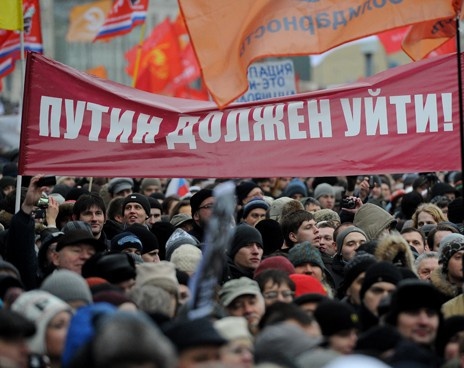
The first rallies against falsifications in the elections on December 4 caused fears among analysts: is the political situation of investors not scared? Russian financiers were sure that rallies did not mean instability yet. However, the decline was still. Today, on the eve of the rally on Sakharov Avenue, we publish two opinions - one Russian analyst, and another - an English strategist.
The main strategist "Troika Dialog" Chris Weefer:
“There are many common cliches in the industry, but one of the few, having real reasons, is the following:“ Investors hate uncertainty. ” Especially if uncertainty means political instability and economic unpredictability. If both of these conditions are met, then, as a rule, the market is strong and the quotes are high. If any of these conditions is in question, investors take precautions, increase the risk premium and force quotes to decline.
At the beginning of 2010, the second of these conditions - economic predictability - was called into question in Russia. The Russian market is very dependent on prices for the main export product - oil. Due to the threat of recession in Europe and a decrease in growth in the USA and China, the stability of demand for raw materials was under a big question, and with it the degree of economic predictability of investment in Russia. This is the main reason why the shares of Russian companies and the ruble were, starting from the end of May, under such pressure.
However, the second condition of investment, political stability, was not questioned before the elections to the Duma. A week after the election, when investors began to be afraid of the development of political instability, the stock market and the ruble received an additional blow due to undermining the conditions of political stability. Investors increased the risk premium.
As a result, now, when we enter in 2012, it is important that the feeling of political stability intensifies. Especially due to the fact that the prospects of the global economy remain very vague and economic predictability in Russia raises big questions, that is, oil prices, economic growth rates, budget execution and investment activity in 2012.
If investors will continue to fear the escalation of public protests and become even more alarming about political uncertainty in the future, the risk premium will remain high, which will lead to a decrease in the market of shares and ruble quotes compared to similar developing markets.
However, since the protest movement remains at a low level, and investors are satisfied that the government is responsible for it in a way that will allow restoring political stability, we will soon see a decrease in the risk and increased quotation. But not to the levels that we saw in early 2011 - for this it is necessary that the economic predictability, the second investment condition, also intensify. To do this, it is necessary to solve the problem of the debt crisis in the eurozone and reduce anxiety about the possibility of “hard landing” of the Chinese economy.
Holding Azipi Analyst Evgeny Khmelnitsky:
- Rallies on December 5 and 10 had a significant impact on the Russian market, which for some time looked worse than foreign colleagues. Indeed, among internal factors, the political situation is one of the most important. The greatest fears of investors were associated with the repetition of the scripts of the Arab Spring.
Nevertheless, the Russian government issued lessons from the experience of the Arab countries, so it did not “tighten the nuts”, but proposed an answer more adequate for this situation, which was voiced in the President’s Epistle. In addition, Russian protests differ from Arabic, rallies pass calmly, without calls for the revolution, but with the requirements to deal with the situation in the legal field.
It turns out that the most serious fear of investors - the threat of political stability - has not yet been justified.
We believe that the upcoming rally will not make significant changes to the current situation and, most likely, will pass in a common peaceful vein. Based on this scenario, the Russian market is unlikely to noticeably respond to this protest. In addition, we see a decrease in the activity of investors on the Russian exchange, which is associated with the end of the year and preparation for the upcoming
holidays.