Date
Author
Николай Дзись-Войнаровский
Source

Preserved copy
Translated material
How to disperse a rally with a magnet or blue lamp
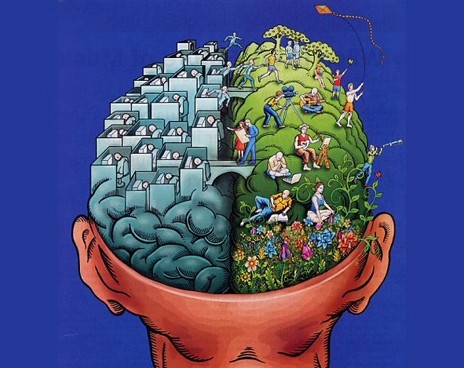
Neurobiologists can already make a person agree with injustice. True, so far only in the laboratories during the experiments. This was told on Wednesday by a neurobiologist from Swiss University Basel Vasily Klyucharev at the lecture "Neuroecons. How does the brain make decisions? " In the Polytechnic Museum. He said that, perhaps, in the future, the whole microeconomics will reduce the neurobiology of decisions when, studying the activity of individual neurons and areas of the brain with the help of tomographs and electrodes, it will be possible to predict the behavior of people and, accordingly, firms. Moreover, according to Klyucharev, there is no freedom of will - there are decisions made by neurons, and the algorithms for making these decisions are quite rigidly set. Most of all, the audience was interested in human management projects using electronics. They are still in the experiments, but who knows how quickly they will go beyond the walls of the laboratories.
The blue light turned on - goodbye, sadness! Optogenetics - remember this word. This is a rather complicated technique that includes the transfer of the gene responsible for sensitivity to light, and the introduction of it using the virus into the neurons of the brain. The bottom line is that after such an operation, the brain begins to respond to light. In the experiment, which was conducted by the team of Karl Disserot from Stanford, a certain area of the mouse brain was made sensitive to blue . If you illuminate it with a blue lamp, then the neurons began to work differently, as a result of which the brain began to function better and depression disappeared, fear and anxiety disappeared. How to illuminate the brain, is it under the cranial box? A Svetovod was introduced into the brain.
Slon considers this experiment promising. Perhaps in the future it will be possible to regulate other types of brain activity not only in mice, but also in humans. It's time to fantasize what it can result in a dozen years. People will replace the parts of the cranial box with a high -strength glass: he shone with a blue flashlight in his forehead and relaxed, red -centered red, yellow - fell asleep. Maybe the glass will be inserted into the forehead upon receipt of the passport so that the police with the help of spotlights can disperse the dissatisfied.
For opponents of vulgar totalitarianism, there is a different option: those who wish will be inserted inside the brain, which will end with a plug on a cranial box, almost inconspicuous under the hairstyle. The advanced IPOD player of the 2020 release will receive not only the exit to the headphones, but also the light cable connected to the plug in the skull. And in iTunes you can buy light music videos that regulate the mood.
Ideal drugs - until the battery ends Experiments with the mouse, which implanted the electrode into the center of pleasure in the brain, and placed the pedal that supplies an electric impulse on this part of the brain has long become classic. The mouse did not eat, did not drink, but only pressed the pedal until it died of exhaustion - the brain enjoys not from food in itself, but from the fact that it stimulates the corresponding neurons of the brain.
Do we wait for the appearance of underground neurosurgeons who will implant electrodes in illegal clinics and give electric drug addicts a button with a battery? In cheap neurosurgeons, instruments, of course, will not be quite sterile, but it doesn’t matter - perhaps, drug addicts of the 21st century will die from endless pressing the button earlier than from the infection. I wonder what will feel a person who will begin to break from the sowing battery?
Brought the magnet to the head - and the disagreement immediately became consonant Transcranial (in other words, “through the cranial”) magnetic stimulation ( TMS ) is when magnets directly brought to the head cause weak electric currents in the brain. Since the cells of the brain (neurons) by and large are electrical devices like transistors or, rather, amplifiers and mixers, the current changes their normal operation. By bringing a magnet to different zones of the brain, you can change various aspects of behavior.
Klyucharev describes such an experiment. The person initially laid down a sense of justice, and experiments on monkey-kapucinas show that not only in a person. For example, if one monkey in exchange for a special token receives a cucumber, and the second in her eyes behind the same token - a delicious grape, then the first begins to rebel. She stops taking cucumbers in general and persistently sticks the biologist into the hands of the tokens again and again, expecting grapes, although from a rational point of view it is better to get a cucumber than nothing. With people, the same thing - they tend to refuse reward in general, if they consider it too small.
For the decision, which reward is considered too small, a certain group of neurons in the brain is responsible. By stimulating it with a magnetic field, you can change the behavior of a person: he will continue to tell a biologist who is conducting the experiment that payment is small, but nevertheless begins to accept it.
This experiment aroused the greatest interest among the listeners. It is not surprising: recently, demonstrations of protest were swept over the unfair elections to the State Duma - if the police had transcranial magnetic stimulants of aimed action (approximately the same as in the Strugatsky novel “Inhabited Island”), the crowd would have dispersed much earlier. One of those present inquired of the long -standing of existing devices. It turned out that it is small: to play the “Lord of the World” based on the novel by Alexander Belyaev or in “Unknown Fathers” from the same “Inhabited Island”. The idea of embeding a TMS in the head restraint of the seats of State Duma deputies sounded in order to exclude the possibility of improper voting in the bud. Mr. Klyucharev said that Russian deputies without magnets always vote correctly, but he heard about the development of military helmets with a TMS, although he himself has nothing to do with such developments.
By this link you can download the full audio recording of the lecture (33 megabytes).