
Translated material
Iran: exacerbation
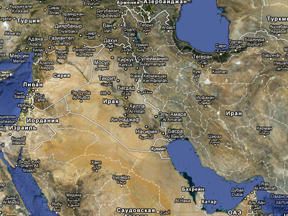
The conflict around Iran began to grow rapidly, and, accordingly, is actively discussed, after the publication of the Magate report (November 2011), which was clearly reported that Iran was close to the creation of nuclear weapons. Spiegel magazine on this occasion published the material that the report itself has already made the effect of an exploding bomb. It also said that if Israel as a result struck Iran, then this will happen due to insufficient support of the international community, which uses too weak methods of influencing Iran, and Israel, thus, will be one on one with an armed enemy, which has long expressed intentions to erase it from the political map of the world. The author expressed the opinion that the war should not be allowed in any case and that the world community should urgently tighten sanctions against Iran. And Russia and China, having convinced Iran’s maliciousness, will probably cease to withstand sanctions, and then they will become much more effective.
The Opendemocracy Columonist Paul Rogers (Paul Rogers) represents the picture as follows. There is a threat of another dangerous nuclear state in addition to North Korea. Actions aimed at preventing the emergence of this situation have been conducted for a long time, but mainly in the form of sanctions, as well as subversive activities - in particular, this was manifested in the spread of the Stuxnet virus, the purpose of which was to damage the information support of the nuclear program, discarding the development of the nuclear program back; And in the murder of Iranian nuclear scientists.
In November, US Secretary of Defense Leon Panetta curled up that war is the most extreme and unlikely measure, and in general, a blow to Iran’s nuclear objects would postpone his program for several years. However, then Paul Rogers noticed , if Israel would attack Iran, then the United States will most likely have to support him. And this means that the war will begin, in which, in his opinion, the entire region will be involved and which will have the most severe consequences for the whole world. Israel will not act alone - he will need local allies, and the most likely candidates are Northern Iraq (Kurds) and Azerbaijan. The latter means that Israel will have to take an appropriate position on the Nagorno-Karabakh conflict, in which Iran supports Armenia. Iran in response will use the ties with Hizballa in Lebanon and can attack Azerbaijan. And given that Azerbaijan is a rich source of oil, the conflict will supposedly instantly affect world markets. In addition, since no one knows what kind of development the production of Iranian nuclear weapons is at, there is reason to believe that Iran, using universal confusion, will quickly finish everything and thereby receive a new lever of influence.
In mid -December, the United States began to recognize the permissibility of war on the prospect of war. The votes of supporters of the tough course became more audible - among them the Republicans are traditionally distinguished, which is especially significant on the eve of the American presidential elections. In particular, the statements of the presidential candidate Newt Gingrich are indicative. The US government was more evasively, but, nevertheless, it is that the possibility of war is not excluded.
The polemic, the Summary of Paul Rogers, is now represented by the following opinions. Some say that war is inevitable, because Iran does not resist other means. The main objection to this is the possible uncontrolled consequences of military operations. Others say that one should not think about the war yet: the nuclear program is still developing, there is a chance to influence Iran with diplomatic methods. Only if this does not work, and the program will be completely close to completion, you will have to turn to military methods. Finally, others believe that war is unacceptable under any conditions. If Iran has a nuclear bomb, then this will just have to come to terms, as in the case of North Korea.
Rogers calls one of the factors of influence on US policy in the region the religious and political movement of American Christian Zionists. Their idea is that Israel is a country with a sacred mission, and Iran, if it has nuclear weapons, will destroy it first. Until this happened, Iran himself needs to be destroyed. Such considerations of politicians do not perceive directly. But they take into account the opinion of voters, and since the number of Christian Zionists in the United States is at least 30 million people, and they are mainly fierce republicans, this impulse can eventually affect politics.
On the other hand, in the circles of the Iranian elite, Paul Rogers believes, there are three camps. One group believes that Iran’s nuclear weapon is necessary and that it can and should be used (mirror reflection of the position of Christian Zionists). Another group, more, believes that nuclear weapons need to be created (but not used) so that Iran will strengthen its position in the region. This is especially true against the backdrop of the withdrawal of American troops from Iraq. The third and largest group believes that nuclear weapons (or at least universal conviction of its presence) are necessary in order to avoid the Libyan script and other forms of external intervention.
Finally, according to Rogers , the explosive situation is created by the fact that some forces in Iran themselves are interested in provoking hostilities. Firstly, these are the guards of the Islamic Revolution, for whom this would be an occasion to affirm their influence. Secondly, this is the regime of Ahmadi-Nedzhad, which would be beneficial if the discontent of citizens (especially in view of the economic problems caused, not least, international sanctions) switched from him to an external enemy.
Thus, Rogers believes, any careless movement can lead to a war, from which it will be difficult to get out. He sees the opportunity to prevent a crisis in diplomatic activity-first of all, in efforts to reduce tension along the lines of Israel-Palestinian autonomy and Iran-Saudi Arabia.
An alternative opinion is expressed by George Friedman from the analytical center Stratfor. Stratfort with his aggravated interest in geopolitical problems has long and closely monitor the situation in the Middle East. The center came to the conclusion that the nuclear threat from Iran is a completely irrelevant topic. That is, nuclear weapons, of course, are also important, but without it Iran is a big problem.
The problem, says Friedman, is that Iran can now form a significant area of influence. One of the main candidates for joining it is Iraq, from which American troops have now left. In addition, Iran provides support for the current regime in Syria (and its regime, respectively, Iran), which is now in the threat of overthrow, but, nevertheless, has a great chance of survival, because to influence the situation in Syria from the outside is supposedly much more difficult than, for example, in the case of Libya. Finally, there is also a Lebanon, which, given the connection of Iran and Hizballa, will also be in the field of influence. Armed with all this, Iran will be able to influence Saudi Arabia and other states of the Persian Gulf, which already complain that he intervenes in their affairs. Thus, Iran in the future can receive significant power in the region, and this is what causes the greatest fears among Israel and the USA.
It follows that the strategy for the fight against Iran should be double. On the one hand, it is necessary to put pressure on him so that he revises his capabilities and goals. On the other hand, the United States and Israel should make efforts to change the regime in Syria and to influence the political situation in Iraq. In the case of Syria, military intervention analysts of the Center consider excluded, so it is necessary to provide hidden support to the rebels.
As for the US position itself, Friedman believes, three options are possible here in the future. You can adapt to new conditions in a changing world, although it depends on how acceptable these conditions are. You can go to some compromise with Iran-in the event that he needs any compromise at all. Finally, you can start a war, but the issue of resources arises here. Be that as it may, Friedman believes, the main task now is to overthrow the Assad regime in Syria, and then it will be visible.