
Translated material
Documentary life
In early December, the updated television channel of the 24.Doc documentary film was aired. The best world hits and the most significant Russian tapes can now be watched around the clock not only by subscription, but also on the usual television “button”
“Writing a similarity to the names, a completely new, fundamentally different channel appeared on the site,” Vera Krichevskaya, creative producer of 24.doc, told The New Times. “This is a complete restart.” According to the producer, at 70% it will be world cinema, the rest is Russian. In Russia, there are very few cinema -domestics, so the channel is going to engage in producing its own films and acquire all the best that appears in Russian documentary cinema.
The faith of Krichevskaya itself is very expensive that it was possible to acquire, as she says, the key, the main masterpiece of world documentary-a picture of the Holocaust of the “Shoa” of the French director-documentary Claude Lancman-a 1985 film, which collected all world prizes and prizes. “In Russia, it has never been shown. And when I just started to engage in this project, I set myself such an internal task - to acquire the rights to this film. I wrote a bunch of letters, requests to the copyright holders - and after direct appeal to the director, they reduced the cost to the threshold that we could overcome. The creators of the channel are addressed to a thinking audience. The power of documentary cinema is much larger than that of daily journalism, Krichevskaya believes: “These films are permeated with serious basic things. War, terror, freedom and lack of freedom, courage, act ... It seems to me that this is a very important human and civil content. ” 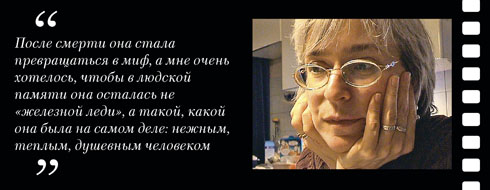
From the category of such films - the documentary “The bitter taste of freedom” dedicated to the journalist Anna Politkovskaya - in October has turned five years since the death of her terrorist. The film appeared at the Russian box office, albeit in a small circulation, in December.
As the author and director Marina Goldovskaya told The New Times, who shot Anna and carefully monitor her journalistic and human rights activities for many years, she wanted to make a picture of the Anna that only her relatives and close friends knew: “After death, she began to turn into a myth, but I really wanted her to remain“ iron lady ”, but what she was in the very same way as she was in the very same time The case: a gentle, warm, sincere person who was ready to help anyone who was in trouble. ”
The film director Goldovskaya well understands that her heroine, Anna Politkovskaya, many perceived ambiguously. “Each person has a threshold of pain. When you have to encounter negativity, with tragedies, rejection is being developed: Lord, some kind of nightmare again, the miners overwhelmed again, the ship turned over again ... To read the reports of the Politkovskaya from Chechnya, it was necessary to have courage. She understood this, but she could not help but write, believed that people should know what was happening. Her friends told how she told them: if not let's read, do not read. And many people, I think, simply internally resisted this information: they said that she did not love her homeland and protects the Chechens ... Of course, she defended, but not those Chechens who killed, but those who were without housing, without a livelihood and lost children. In the same way as the Russians who were in the same position protected. This is a normal human reaction to human suffering, ”says Marina Goldovskaya.